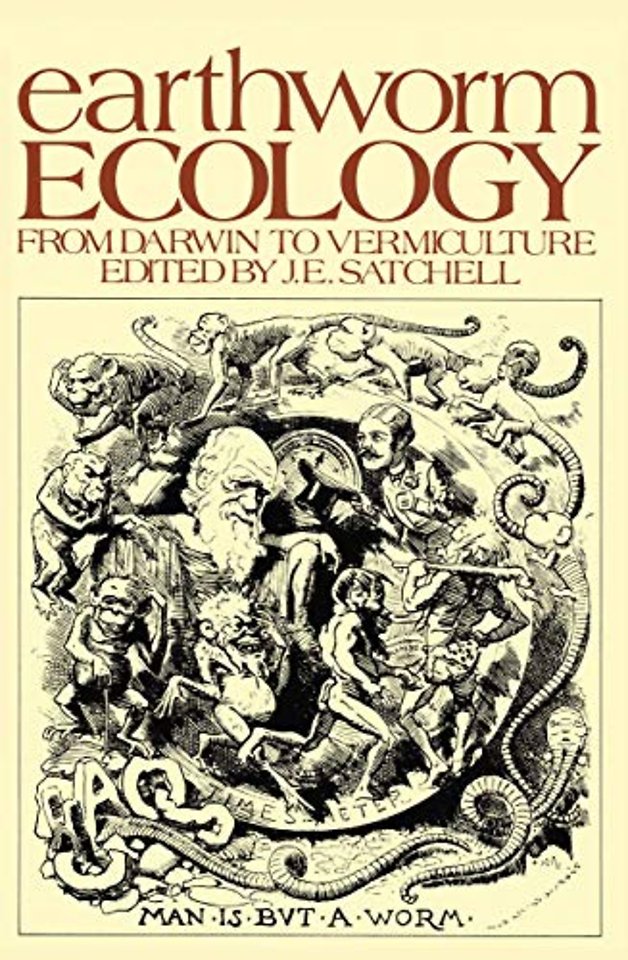
Darwin’s Contribution to Earthworm Ecology.- 1 Darwin’s Formation of Vegetable Mould- its philosophical basis.- 2 Darwin on earthworms — the contemporary background and what the critics thought.- Earthworms and Organic Matter.- 3 Darwin’s ‘vegetable mould’ and some modern concepts of humus structure and soil aggregation.- 4 Organic matter turnover by earthworms.- 5 Effect of earthworms on the disappearance rate of cattle droppings.- 6 Soil transport as a homeostatic mechanism for stabilizing the earthworm environment.- Earthworm Ecology in Grassland Soils.- 7 Earthworm ecology in grassland soils.- 8 Effect of earthworms on grassland on recently reclaimed polder soils in the Netherlands.- 9 The activities of earthworms and the fates of seeds.- Earthworm Ecology in Cultivated Soils.- 10 Earthworm ecology in cultivated soils.- 11 Nitrogen turnover by earthworms in arable plots treated with farmyard manure and slurry.- 12 Earthworm population dynamics in different agricultural rotations.- Earthworm Ecology in Forest Soils.- 13 Earthworm ecology in forest soil.- 14 Earthworm ecology in deciduous forests in central and southeast Europe.- Earthworm Ecology in Tropical and Arid Soils.- 15 Earthworms of tropical regions -some aspects of their ecology and relationships with soils.- 16 The ecology of earthworms in southern Africa.- 17 Effects of fire on the nutrient content and microfiora of casts of Pheretima alexandri.- Earthworms and Land Reclamation.- 18 Earthworms and land reclamation.- 19 Earthworm ecology in reclaimed opencast coal mining sites in Ohio.- 20 Development of earthworm populations in abandoned arable fields under grazing management.- Earthworms and Soil Pollution.- 21 Heavy metal uptake and tissue distribution III earthworms.- 22 Heavy metals in earthworms in non-contaminated and contaminated agricultural soil from near Vancouver, Canada.- 23 Earthworms and TCDD (2,3,7,8-tetrachlorodibenzo-p-dioxin) in Seveso.- Utilization of Wastes by Earthworm Culture.- 24 Earthworms as a source of food and drugs.- 25 Assimilation by the earthworm Eisenia jetida.- 26 The culture and use of Perionyx excavatus as a protein resource in the Philippines.- 27 Utilization of Eudrilus eugeniae for disposal of cassava peel.- 28 Cultivation of Eisenia fetida using dairy waste sludge cake.- 29 The earthworm bait market in North America.- 30 A simulation model of earthworm growth and population dynamics: application to organic waste conversion.- Earthworms and Microflora.- 31 Earthworm microbiology.- 32 The effects of fungi on food selection by Lumbricus terrestris (L.).- 33 Introduction of amoebae and Rhizobium japonicum into the gut of Eisenia jetida (Sav.) and Lumbricus terrestris L..- 34 Enterobacter aerogenes infection of Hoplochaetella suctoria.- Earthworms in Food Chains.- 35 Predation on earthworms by terrestrial vertebrates.- 36 Predation on earthworms by the Black-headed gull (Larus ridibundus L.).- 37 Agastrodrilus Omodeo and Vaillaud, a genus of carnivorous earthworms from the Ivory Coast.- Earthworm Evolution and Distribution Patterns.- 38 The establishment of earthworm communities.- 39 The structure of earthworm communities.- Taxonomy and Nomenclature.- 40 The scientific names of earthworms.- 41 A guide to the valid names of Lumbricidae (Oligochaeta).- Systematic index.- General Index.