,

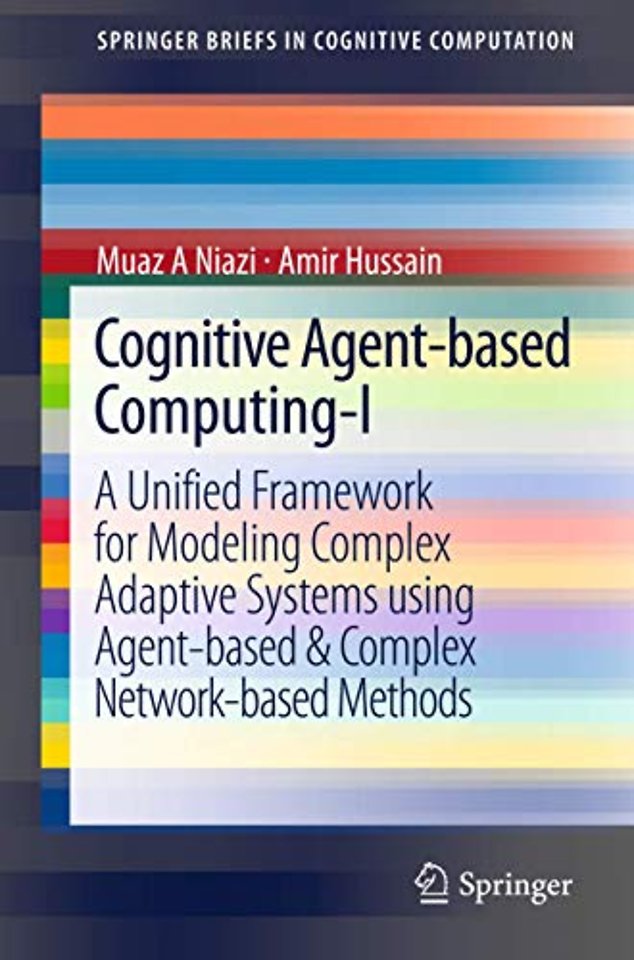
Cognitive Agent-based Computing-I

A Unified Framework for Modeling Complex Adaptive Systems using Agent-based & Complex Network-based Methods

Specificaties
Paperback, 55 blz. | Engels
Springer Netherlands | 2013e druk, 2012
ISBN13: 9789400738515
Rubricering
Springer Netherlands 2013e druk, 2012 9789400738515
€ 60,99
Levertijd ongeveer 8 werkdagen

Samenvatting

Complex Systems are made up of numerous interacting sub-components. Non-linear interactions of these components or agents give rise to emergent behavior observable at the global scale. Agent-based modeling and simulation is a proven paradigm which has previously been used for effective computational modeling of complex systems in various domains. Because of its popular use across different scientific domains, research in agent-based modeling has primarily been vertical in nature. The goal of this manuscript is to provide a single hands-on guide to developing cognitive agent-based models for the exploration of emergence across various types of complex systems. We present practical ideas and examples for researchers and practitioners for the building of agent-based models using a horizontal approach - applications are demonstrated in a number of exciting domains as diverse as wireless sensors networks, peer-to-peer networks, complex social systems, research networks, epidemiological HIV​

Specificaties

ISBN13:9789400738515
Taal:Engels
Bindwijze:paperback
Aantal pagina's:55
Uitgever:Springer Netherlands
Druk:2013

Inhoudsopgave

<p>1. Introduction</p><p>1.1 About the Agent Concept</p><p>1.2 A Framework for Complex Adaptive Systems</p><p>1.3 Modeling CAS</p><p>1.4 Motivation</p><p>1.5 Aims and Objectives</p><p>1.6 Overview of the Briefs</p><p>References </p><p> </p><p>2. A Unified Framework</p><p>2.1 Overview of the Proposed Framework </p><p>2.2 Proposed Framework Levels Formulated in Terms of CAS Study Objectives</p><p>2.3 Proposed Framework Levels Formulated in Relation to Available Data Types</p><p>2.4 Overview of the Rest of the Parts</p><p>2.4.1 Overview of Case Studies</p><p>2.4.2 Outline of the Briefs</p><p>References</p><p> </p><p>3. Complex Adaptive Systems</p><p>3.1 Overview</p><p>3.2 Complex Adaptive Systems (CAS)</p><p>3.2.1 The Seven Basics of CAS</p><p>3.2.2 Emergence </p><p>3.3 Examples of CAS</p><p>3.3.1 Natural CAS Example 1: CAS in Plants</p><p>3.3.2 Natural CAS Example 2: CAS in Social Systems</p><p>3.3.3 Artificial CAS Example 1: Complex Adaptive Communication Networks </p><p>3.3.4 Artificial CAS Example 2: Simulation of Flocking Boids</p><p>References</p><p> </p><p>4. Modeling CAS</p><p>4.1 Agent-based Modeling and Agent-based Computing</p><p>4.1.1 Agent-oriented Programming</p><p>4.1.2 Multi-agent Oriented Programming</p><p>4.1.3 Agent-based or Massively Multiagent Modeling</p><p>4.1.4 Benefits of Agent-based Thinking</p><p>4.2 A Review of an Agent-based Tool</p><p>4.2.1 NetLogo Simulation: An Overview</p><p>4.3 Verification and Validation of Simulation Models</p><p>4.3.1 Overview</p><p>4.3.2 Verification and Validation of ABMs</p><p>4.3.3 Related Work on V&amp;V of ABM</p><p>4.4 Overview of Communication Network Simulators</p><p>4.4.1 Simulation of WSNs</p><p>4.4.2 Simulation of P2P Networks</p><p>4.4.3 Simulation of Robotic Swarms</p><p>4.4.4 ABM for Complex Communication Networks Simulation</p><p>4.5 Complex Network Modeling</p><p>4.5.1 Complex Network Methods</p><p>4.5.2 Theoretical Basis</p><p>4.5.3 Centralities and Other Quantitative Measures</p><p>4.5.4 Centrality Measures</p><p>4.5.5 Software Tools for Complex Networks</p><p>4.6 Conclusions</p><p>References </p><p> </p><p>Index</p><p>
€ 60,99
Levertijd ongeveer 8 werkdagen

Rubrieken

    Personen

      Trefwoorden

        Cognitive Agent-based Computing-I