,

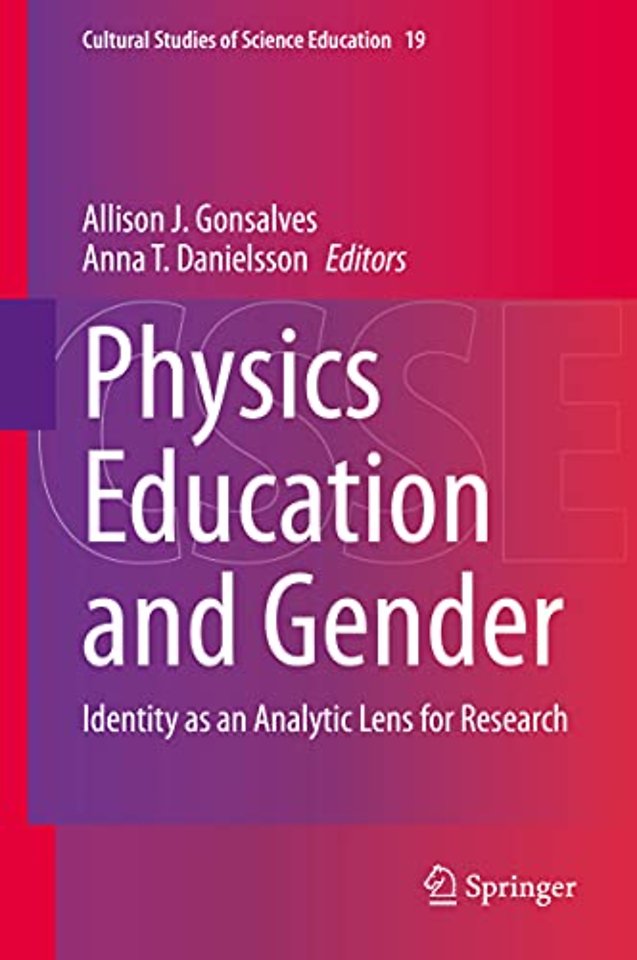
Physics Education and Gender

Identity as an Analytic Lens for Research

Specificaties
Gebonden, blz. | Engels
Springer International Publishing | e druk, 2020
ISBN13: 9783030419325
Rubricering
Springer International Publishing e druk, 2020 9783030419325
€ 156,99
Levertijd ongeveer 8 werkdagen

Samenvatting

This Edited Volume engages with concepts of gender and identity as they are mobilized in research to understand the experiences of learners, teachers and practitioners of physics. The focus of this collection is on extending theoretical understandings of identity as a means to explore the construction of gender in physics education research.

This collection expands an understanding of gendered participation in physics from a binary gender deficit model to a more complex understanding of gender as performative and intersectional with other social locations (e.g., race, class, LGBT status, ability, etc). This volume contributes to a growing scholarship using sociocultural frameworks to understand learning and participation in physics, and that seeks to challenge dominant understandings of who does physics and what counts as physics competence. Studying gender in physics education research from a perspective of identity and identity construction allows us to understand participation in physics cultures in new ways. We are able to see how identities shape and are shaped by inclusion and exclusion in physics practices, discourses that dominate physics cultures, and actions that maintain or challenge structures of dominance and subordination in physics education. The chapters offered in this book focus on understanding identity and its usefulness in various contexts with various learner or practitioner populations. This scholarship collectively presents us with a broad picture of the complexity inherent in doing physics and doing gender.

Specificaties

ISBN13:9783030419325
Taal:Engels
Bindwijze:gebonden
Uitgever:Springer International Publishing

Inhoudsopgave

Chapter 1. Introduction:  Who needs identity in physics education research? (Allison J. Gonsalves and Anna T. Danielsson).- Chapter 2. Going, going, gone: a feminist Bourdieusian analysis of young women’s trajectories in, through and out of physics, age 10-19 (Louise Archer, Emily Macleod and Julie Moote).- Chapter 3. Lighting the fuse: Cultivating the masculine physics habitus – a case study of Victor aged 10-18 (Louise Archer, Emily Macleod and Julie Moote).- Chapter 4. An intersectional physics identity framework for studying physics settings (Angela Johnson).- Chapter 5. Urban College Students Negotiate their Identities to Dis/Connect with Notions of Physics (Diane Crenshaw Jammula and Felicia Moore Mensah).- Chapter 6. Lecture jokes: mocking and reproducing celebrated subject positions in physics (Anders Johanssen and Maria Berge).- Chapter 7. “Significant matter” in sociomaterial analysis of educational choices (Marianne Løken and Margareta Serder).- Chapter 8. Disability inphysics: Learning from binary mistakes (Adrienne Traxler and Jennifer Blue).- Chapter 9. Elite British female physicists: social mobility and identity negotiations (Jaimie Miller-Friedmann).- Chapter 10. Conclusions Part I: Theoretical and methodological implications for physics education practice in higher education contexts (Dimitri R. Dounas-Frazer).- Chapter 11. Conclusions Part II: Implications of Identity Research for Upper Secondary Educators (Christopher Gosling).
€ 156,99
Levertijd ongeveer 8 werkdagen

Rubrieken

    Personen

      Trefwoorden

        Physics Education and Gender