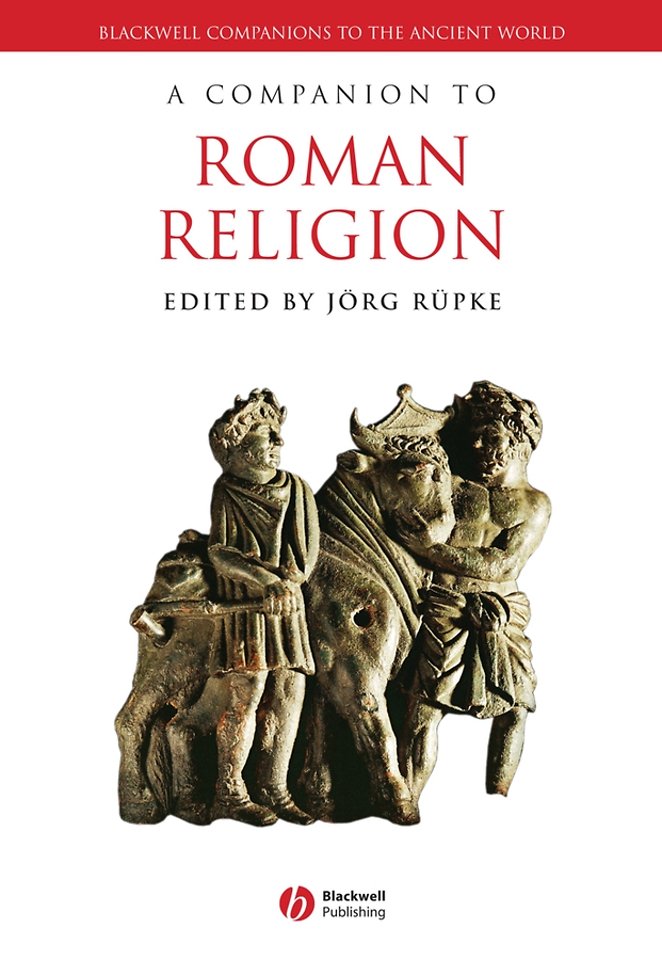
J Rupke
John Wiley & Sons
e druk, 2007
9781405129435
A Companion to Roman Religion
Specificaties
Gebonden, 576 blz.
|
Engels
John Wiley & Sons |
e druk, 2007
ISBN13: 9781405129435
Rubricering
Onderdeel van serie
Blackwell Companions to the Ancient World
Levertijd ongeveer 8 werkdagen
Samenvatting
A comprehensive treatment of the significant symbols and institutions of Roman religion, this companion places the various religious symbols, discourses, and practices, including Judaism and Christianity, into a larger framework to reveal the sprawling landscape of the Roman religion.
An innovative introduction to Roman religion
Approaches the field with a focus on the human–figures instead of the gods
Analyzes religious changes from the eighth century BC to the fourth century AD
Offers the first history of religious motifs on coins and household/everyday utensils
Presents Roman religion within its cultural, social, and historical contexts
Specificaties
Inhoudsopgave
<p>List of Figures x</p>
<p>List of Maps xiii</p>
<p>Notes on Contributors xiv</p>
<p>Acknowledgments xix</p>
<p>Abbreviations xxi</p>
<p>Maps xxviii</p>
<p>1 Roman Religion Religions of Rome 1<br /> Jörg Rüpke</p>
<p>2 Approaching Roman Religion: The Case for Wissenschaftsgeschichte 10<br /> C. Robert Phillips, III</p>
<p>Part I Changes 29</p>
<p>3 The Religion of Archaic Rome 31<br /> Christopher Smith</p>
<p>4 Pre–Roman Italy, Before and Under the Romans 43<br /> Olivier de Cazanove</p>
<p>5 Urban Religion in the Middle and Late Republic 58<br /> Eric Orlin</p>
<p>6 Continuity and Change: Religion in the Augustan Semi–Century 71<br /> Karl Galinsky</p>
<p>7 Religions and the Integration of Cities in the Empire in the Second Century ad: The Creation of a Common Religious Language 83<br /> William Van Andringa</p>
<p>8 Old Religions Transformed: Religions and Religious Policy from Decius to Constantine 96<br /> Hartmut Leppin</p>
<p>9 Religious Koine and Religious Dissent in the Fourth Century 109<br /> Michele Renee Salzman</p>
<p>Part II Media 127</p>
<p>10 The History of Roman Religion in Roman Historiography and Epic 129<br /> Denis Feeney</p>
<p>11 Religion and Roman Coins 143<br /> Jonathan Williams</p>
<p>12 Reliefs, Public and Private 164<br /> Katja Moede</p>
<p>13 Inscriptions as Sources of Knowledge for Religions and Cults in the Roman World of Imperial Times 176<br /> Rudolf Haensch</p>
<p>14 Religion in the House 188<br /> Annemarie Kaufmann–Heinimann</p>
<p>Part III Symbols and Practices 203</p>
<p>15 Roman Cult Sites: A Pragmatic Approach 205<br /> Ulrike Egelhaaf–Gaiser</p>
<p>16 Complex Rituals: Games and Processions in Republican Rome 222<br /> Frank Bernstein</p>
<p>17 Performing the Sacred: Prayers and Hymns 235<br /> Frances Hickson Hahn</p>
<p>18 Music and Dance: Forms of Representation in Pictorial and Written Sources 249<br /> Friederike Fless and Katja Moede</p>
<p>19 Sacrifices for Gods and Ancestors 263<br /> John Scheid</p>
<p>Part IV Actors and Actions 273</p>
<p>20 Religious Actors in Daily Life: Practices and Related Beliefs 275<br /> Nicole Belayche</p>
<p>21 Republican Nobiles: Controlling the Res Publica 292<br /> Veit Rosenberger</p>
<p>22 Emperors: Caring for the Empire and Their Successors 304<br /> Peter Herz</p>
<p>23 Urban Elites in the Roman East: Enhancing Regional Positions and Social Superiority 317<br /> Athanasios Rizakis</p>
<p>24 Living on Religion: Professionals and Personnel 331<br /> Marietta Horster</p>
<p>Part V Different Religious Identities 343</p>
<p>25 Roman Diaspora Judaism 345<br /> Jack N. Lightstone</p>
<p>26 Creating One s Own Religion: Intellectual Choices 378<br /> Attilio Mastrocinque</p>
<p>27 Institutionalized Religious Options: Mithraism 392<br /> Richard Gordon</p>
<p>28 The Romanness of Roman Christianity 406<br /> Stefan Heid</p>
<p>Part VI Roman Religion Outside and Seen from Outside 427</p>
<p>29 Exporting Roman Religion 429<br /> Clifford Ando</p>
<p>30 Religion in the Roman East 446<br /> Ted Kaizer</p>
<p>31 Roman Religion in the Vision of Tertullian 457<br /> Cecilia Ames</p>
<p>Bibliography 472</p>
<p>General Index 511</p>
<p>Index of Personal Names 526</p>
<p>Index of Places 537</p>
<p>List of Maps xiii</p>
<p>Notes on Contributors xiv</p>
<p>Acknowledgments xix</p>
<p>Abbreviations xxi</p>
<p>Maps xxviii</p>
<p>1 Roman Religion Religions of Rome 1<br /> Jörg Rüpke</p>
<p>2 Approaching Roman Religion: The Case for Wissenschaftsgeschichte 10<br /> C. Robert Phillips, III</p>
<p>Part I Changes 29</p>
<p>3 The Religion of Archaic Rome 31<br /> Christopher Smith</p>
<p>4 Pre–Roman Italy, Before and Under the Romans 43<br /> Olivier de Cazanove</p>
<p>5 Urban Religion in the Middle and Late Republic 58<br /> Eric Orlin</p>
<p>6 Continuity and Change: Religion in the Augustan Semi–Century 71<br /> Karl Galinsky</p>
<p>7 Religions and the Integration of Cities in the Empire in the Second Century ad: The Creation of a Common Religious Language 83<br /> William Van Andringa</p>
<p>8 Old Religions Transformed: Religions and Religious Policy from Decius to Constantine 96<br /> Hartmut Leppin</p>
<p>9 Religious Koine and Religious Dissent in the Fourth Century 109<br /> Michele Renee Salzman</p>
<p>Part II Media 127</p>
<p>10 The History of Roman Religion in Roman Historiography and Epic 129<br /> Denis Feeney</p>
<p>11 Religion and Roman Coins 143<br /> Jonathan Williams</p>
<p>12 Reliefs, Public and Private 164<br /> Katja Moede</p>
<p>13 Inscriptions as Sources of Knowledge for Religions and Cults in the Roman World of Imperial Times 176<br /> Rudolf Haensch</p>
<p>14 Religion in the House 188<br /> Annemarie Kaufmann–Heinimann</p>
<p>Part III Symbols and Practices 203</p>
<p>15 Roman Cult Sites: A Pragmatic Approach 205<br /> Ulrike Egelhaaf–Gaiser</p>
<p>16 Complex Rituals: Games and Processions in Republican Rome 222<br /> Frank Bernstein</p>
<p>17 Performing the Sacred: Prayers and Hymns 235<br /> Frances Hickson Hahn</p>
<p>18 Music and Dance: Forms of Representation in Pictorial and Written Sources 249<br /> Friederike Fless and Katja Moede</p>
<p>19 Sacrifices for Gods and Ancestors 263<br /> John Scheid</p>
<p>Part IV Actors and Actions 273</p>
<p>20 Religious Actors in Daily Life: Practices and Related Beliefs 275<br /> Nicole Belayche</p>
<p>21 Republican Nobiles: Controlling the Res Publica 292<br /> Veit Rosenberger</p>
<p>22 Emperors: Caring for the Empire and Their Successors 304<br /> Peter Herz</p>
<p>23 Urban Elites in the Roman East: Enhancing Regional Positions and Social Superiority 317<br /> Athanasios Rizakis</p>
<p>24 Living on Religion: Professionals and Personnel 331<br /> Marietta Horster</p>
<p>Part V Different Religious Identities 343</p>
<p>25 Roman Diaspora Judaism 345<br /> Jack N. Lightstone</p>
<p>26 Creating One s Own Religion: Intellectual Choices 378<br /> Attilio Mastrocinque</p>
<p>27 Institutionalized Religious Options: Mithraism 392<br /> Richard Gordon</p>
<p>28 The Romanness of Roman Christianity 406<br /> Stefan Heid</p>
<p>Part VI Roman Religion Outside and Seen from Outside 427</p>
<p>29 Exporting Roman Religion 429<br /> Clifford Ando</p>
<p>30 Religion in the Roman East 446<br /> Ted Kaizer</p>
<p>31 Roman Religion in the Vision of Tertullian 457<br /> Cecilia Ames</p>
<p>Bibliography 472</p>
<p>General Index 511</p>
<p>Index of Personal Names 526</p>
<p>Index of Places 537</p>