Barry Gerhart,
Jerry Newman,
George Milkovich
McGraw-Hill Education
14e druk, 2022
9781265078423
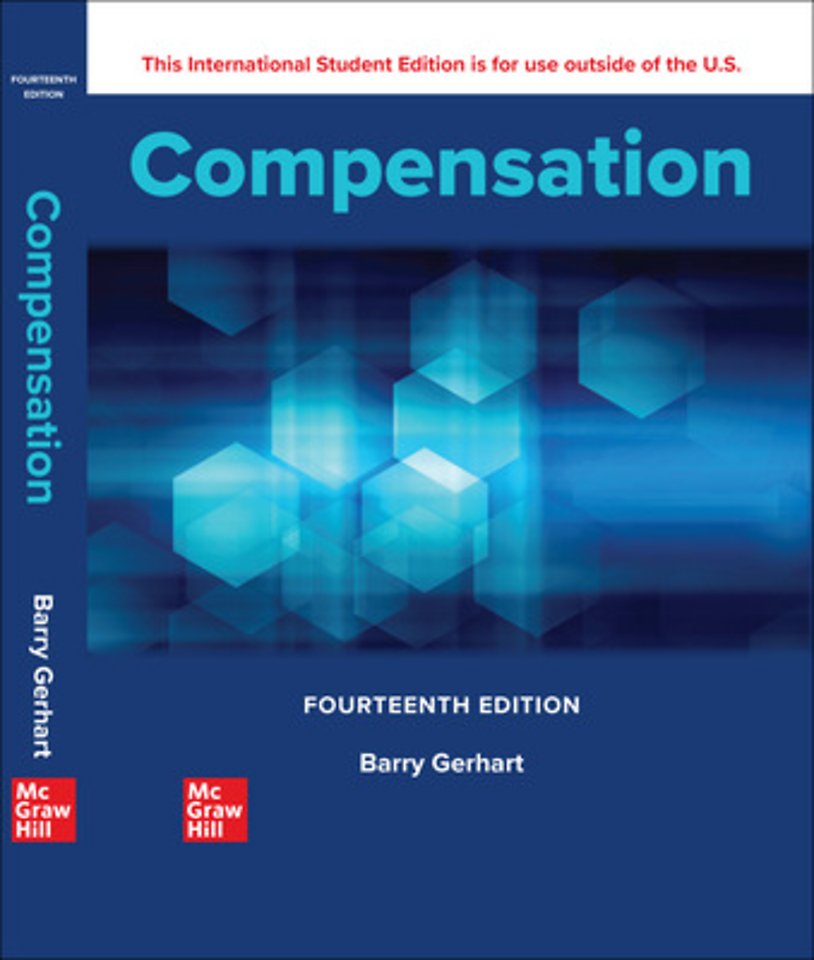
Compensation ISE
Specificaties
Paperback, blz.
|
Engels
McGraw-Hill Education |
14e druk, 2022
ISBN13: 9781265078423
Rubricering
Levertijd ongeveer 10 werkdagen
Samenvatting
Best selling title. Takes a three-pronged approach to compensation by focusing on theory, research, and practice. The 14th edition continues to emphasize the importance of total compensation and its relevance for achieving sustainable competitive advantage. Updates reflect new compensation research that has been published since the 13th edition.
Specificaties
Inhoudsopgave
PART I: Introducing the Pay Model and Pay Strategy<br>Chapter 1: The Pay Model <br>Chapter 2: Strategy: The Totality of Decisions <br><br>PART II: Internal Alignment: Determining the Structure<br>Chapter 3: Defining Internal Alignment <br>Chapter 4: Job Analysis <br>Chapter 5: Job-Based Structures and Job Evaluation <br>Chapter 6: Person-Based Structures<br><br>PART III: External Competitiveness: Determining the Pay Level<br>Chapter 7: Defining Competitiveness <br>Chapter 8: Designing Pay Levels, Mix, and Pay<br><br>PART IV: Employee Contributions: Determining Individual Pay<br>Chapter 9: Pay-for-Performance: Theory and Evidence <br>Chapter 10: Pay-for-Performance: Types of Plans <br>Chapter 11: Performance Appraisals <br><br>PART V: Employee Benefits<br>Chapter 12: The Benefit Determination Process <br>Chapter 13: Benefit Options <br><br>PART VI: Extending the System<br>Chapter 14: Compensation of Special Groups: Executives and Others <br>Chapter 15: Union Role in Wage and Salary Administration <br>Chapter 16: International Pay Systems <br><br>PART VII: Managing the System<br>Chapter 17: Government and Legal Issues in Compensation <br>Chapter 18: Management: Making It Work <br>