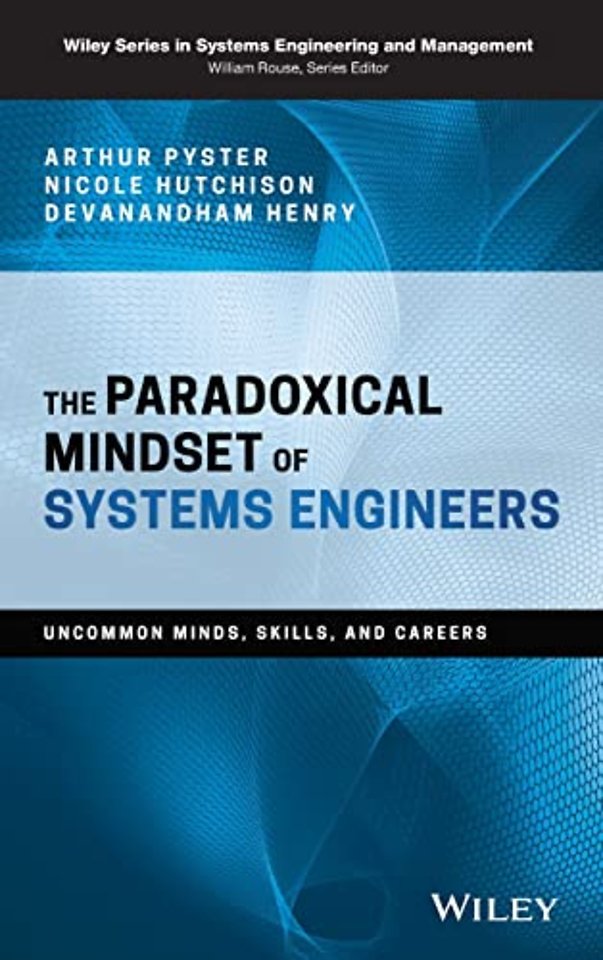
The Paradoxical Mindset of Systems Engineers
Uncommon Minds, Skills, and Careers
Samenvatting
A guide that explores what enables systems engineers to be effective in their profession and reveals how organizations can help them attain success
The Paradoxical Mindset of Systems Engineers offers an in–depth look at the proficiencies and personal qualities effective systems engineers require and the positions they should seek for successful careers. The book also gives employers practical strategies and tools to evaluate their systems engineers and advance them to higher performance. The authors explore why systems engineers are uncommon and how they can assess, improve, and cleverly leverage their uncommon strengths. These insights for being an ever more effective systems engineer apply equally well to classic engineers and project managers who secondarily do some systems engineering.
The authors have written a guide to help systems engineers embrace the values that are most important to themselves and their organizations. Solidly based on interviews with over 350 systems engineers, classic engineers, and managers as well as detailed written career descriptions from 2500 systems engineers The Paradoxical Mindset of Systems Engineers identifies behavioral patterns that effective systems engineers use to achieve success. This important resource:
-Offers aspiring systems engineers practical methods for success that are built on extensive empirical evidence and underlying theory
-Shows systems engineers how to visually document their relative strengths and weaknesses, map out their careers, and compare themselves to the best in their organizations a rich set of tools for individuals, mentors, and organizations
-Offers practical guidance to managers and executives who lead systems engineering workforce improvement initiatives
Written for systems engineers, their managers, business executives, those who do some systems engineering but primarily identify with other professions, as well as HR professionals, The Paradoxical Mindset of Systems Engineers offers the most comprehensive career guidance in the field available today.
Specificaties
Inhoudsopgave
About The Authors
Acknowledgements
Foreword
Preface
Chapter 1: Paradoxical Mindset
What is Systems Engineering?
Being A Systems Engineer
Book Structure
Career Development Ecosystem for Systems Engineers
A Short Summary of The Helix Project
Vignettes
Notes and References
Chapter 2: Six Uncommon Values
The Parable of the Three Stonecutters
What Is Greatness, Anyhow?
Value 1: Keep and Maintain The System Vision
Value 2: Translate Technical Jargon into Business or Operational Terms and Vice Versa
Value 3: Enable Diverse Teams to Successfully Develop Systems
Value 4: Manage Emergence in Both The Project and The System
Value 5: Enable Good Technical Decisions at The System Level
Value 6: Support The Business Case for The System
How Others View Systems Engineers
Notes and References
Chapter 3: Fifteen Roles Systems Engineers Play
Roles Focused on the Systems Being Developed
Roles Focused on Systems Engineering Process and Organization
Roles Focused on Teams That Build Systems
Relationship Between Roles and Values
Art Pyster at Digital Sound Corporation
Systems Engineers Often Perform Management Roles
Seniority
The Seniority Framework
Three Systems Engineers with Increasing Seniority
Junior Systems Engineer
Mid–Level Systems Engineer
Senior–Level Systems Engineer
Notes and References
Chapter 4: A Systems Engineer s Proficiencies
Engineering Proficiencies Cluster
Area 1: Math/science/general engineering
Area 2: System s domain & operational context
Systems Proficiencies Cluster
Area 3: Systems Engineering Discipline
Area 4: Systems Mindset
Professional Proficiencies Cluster
Area 5: Interpersonal Skills
Area 6: Technical Leadership Example Positions
Systems Engineers are –Shaped
The Whole Package
Notes and References
Chapter 5: Hidden in Plain Sight
Case 1: Japanese Bullet Train: Fast, Frequent, Safe and Punctual
Case 2: Boeing 777: Maintaining the Vision from Start to End
Case 3: HealthCare.gov: Disastrous Start, Incredible Recovery
Notes and References
Chapter 6: Proficiency Profiles
Assessing Proficiency
The Self–Assessment Rubric
MITRE s Early Use of Atlas and Personal Proficiency Profiles
Exemplar and Recommended Proficiency Profiles
Aggregate Proficiency Profiles
Notes and References
Chapter 7: The Three Forces of Professional Growth
Force 1: Experiences
Force 2: Mentoring
Force 3: Education & Training
Force Multipliers
Personal Characteristics as Force Multipliers
Self–Assessing Personal Characteristics
Organizational Characteristics as Force Multipliers
Notes and References
Chapter 8: The Careers of Highly Successful Systems Engineers
Nicole Hutchison Grows into a Systems Engineer
Two Datasets about Senior Systems Engineers
Four Questions
The Education of Systems Engineers
The Education of Interviewed Chief Systems Engineers
The Education of INCOSE Systems Engineering Professionals
Overall Conclusions About The Education of Systems Engineers
The Experiences of Chief Systems Engineers
Lifecycle Phases in Which Chief Systems Engineers Have Worked
Roles That Chief Systems Engineers Perform
Experiences of Expert Systems Engineering Professionals
Overall Conclusions About The Experiences of Very Senior Systems Engineers
Cathy s Career Revisited
Career maps for Pyster and Hutchison
Notes and References
Chapter 9: Secondarily a Systems Engineer
Classic Engineers
A Senior Electrical Engineer Who Is Secondarily A Systems Engineer
Systems Education for All Engineers
Proficiencies of 21st Century Classic engineers
Program and Project Managers
A Project Manager Who Is Secondarily A Systems Engineer
Notes and References
Chapter 10: Thrive
Looking Ahead
How A Junior or Mid–Level Systems Engineer Can Thrive
How A Classic engineer, Who Is Secondarily A Systems Engineer, Can Thrive
How A Manager of Systems Engineers Can Thrive
How An Executive Can Thrive
Closing Thoughts
Notes and References
Appendix A.
Biographical Sketches of Quoted Systems Engineers
Glossary and Acronyms
Index
Vaak samen gekocht


Anderen die dit boek kochten, kochten ook
-
 Arnout Jaspers€ 23,50
 -
Matt Haig€ 24,99
-
Peter Rodenburg€ 29,99
-
Wim de Bie€ 27,50
-
Ed van Hinte€ 39,95
-
Antoine de Saint-Exupéry€ 19,95