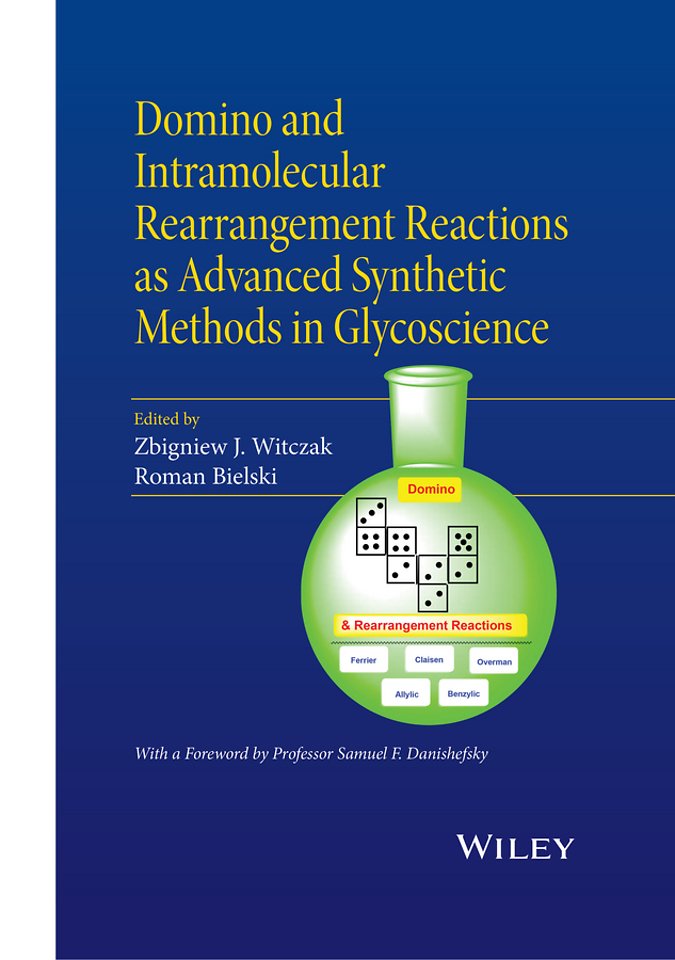
Z Witczak
John Wiley & Sons
e druk, 2016
9781119044208
Domino and Intramolecular Rearrangement Reactions as Advanced Synthetic Methods in Glycoscience
Specificaties
Gebonden, 368 blz.
|
Engels
John Wiley & Sons |
e druk, 2016
ISBN13: 9781119044208
Rubricering
Levertijd ongeveer 8 werkdagen
Specificaties
Inhoudsopgave
<p>Foreword xiii</p>
<p>Preface xv</p>
<p>Acknowledgments xix</p>
<p>List of Contributors xxi</p>
<p>Abbreviations xxv</p>
<p>1 Introduction to Asymmetric Domino Reactions 1<br />Hélène Pellissier</p>
<p>1.1 Introduction, 1</p>
<p>1.2 Asymmetric Domino Reactions using Chiral Carbohydrate Derivatives, 3</p>
<p>1.2.1 Stereocontrolled Domino Reactions of Chiral Carbohydrate Derivatives, 3</p>
<p>1.2.2 Enantioselective Domino Reactions Catalyzed by Chiral Carbohydrate Derivatives, 8</p>
<p>1.3 Conclusions, 12</p>
<p>References, 13</p>
<p>2 Organocatalyzed Cascade Reaction in Carbohydrate Chemistry 16<br />Benjamin Voigt and Rainer Mahrwald</p>
<p>2.1 Introduction, 16</p>
<p>2.2 C–Glycosides, 17</p>
<p>2.3 Amine–Catalyzed Knoevenagel–Additions, 20</p>
<p>2.4 Multicomponent Reactions, 32</p>
<p>2.5 Amine–Catalyzed Cascade Reactions of Ketoses with 1,3–Dicarbonyl Compounds, 40</p>
<p>2.6 Conclusions, 44</p>
<p>References, 44</p>
<p>3 Reductive Ring–Opening in Domino Reactions of Carbohydrates 49<br />Raquel G. Soengas, Sara M. Tomé, and Artur M. S. Silva</p>
<p>3.1 Introduction, 49</p>
<p>3.2 Bernet Vasella Reaction, 50</p>
<p>3.2.1 Domino Reductive Fragmentation/Reductive Amination, 51</p>
<p>3.2.2 Domino Reductive Fragmentation/Barbier–Type Allylation, 52</p>
<p>3.2.3 Domino Reductive Fragmentation/Barbier–Type Propargylation, 57</p>
<p>3.2.4 Domino Reductive Fragmentation/Vinylation, 59</p>
<p>3.2.5 Domino Reductive Fragmentation/Alkylation, 60</p>
<p>3.2.6 Domino Reductive Fragmentation/Olefination, 61</p>
<p>3.2.7 Domino Reductive Fragmentation/Nitromethylation, 62</p>
<p>3.3 Reductive Ring Contraction, 64</p>
<p>3.3.1 Ring Opening/Ketyl–Olefin Annulation, 65</p>
<p>3.3.2 Ring Opening/Intramolecular Carbonyl Alkylation, 69</p>
<p>3.4 Conclusions, 73</p>
<p>References, 73</p>
<p>4 Domino Reactions Toward Carbohydrate Frameworks for Applications Across Biology and Medicine 76<br />Vasco Cachatra and Amélia P. Rauter</p>
<p>4.1 Introduction, 76</p>
<p>4.2 Domino Reactions Toward Butenolides Fused to Six–Membered Ring Sugars and Thio Sugars, 77</p>
<p>4.3 Exploratory Chemistry for Amino Sugars Domino Reactions, 80</p>
<p>4.4 Domino Reactions Toward Sugar Ring Contraction, 84</p>
<p>4.4.1 Pyrano Furano Ring Contraction, 84</p>
<p>4.4.2 Ring Contraction of Furans to Oxetanes, 87</p>
<p>4.5 Macrocyclic Bislactone Synthesis via Domino Reaction, 91</p>
<p>4.6 Sugar Deoxygenation by Domino Reaction, 92</p>
<p>4.7 Conclusions, 94</p>
<p>References, 94</p>
<p>5 Multistep Transformations of BIS–Thioenol Ether–Containing Chiral Building Blocks: New Avenues in Glycochemistry 97<br />Daniele D Alonzo, Giovanni Palumbo, and Annalisa Guaragna</p>
<p>5.1 Introduction, 97</p>
<p>5.2 (5,6–Dihydro–1,4–dithiin–2–yl)Methanol: Not Simply a Homologating Agent, 98</p>
<p>5.3 Sulfur–Assisted Multistep Processes and Their Use in the De Novo Synthesis of Glycostructures, 101</p>
<p>5.3.1 Three Steps in One Process: Double Approach to 4–Deoxy l–(and d–)–Hexoses, 101</p>
<p>5.3.2 Five Steps in One Process: The Domino Way to l–Hexoses (and Their Derivatives), 102</p>
<p>5.3.3 Up to Six Steps in One Process: 4 –Substituted Nucleoside Synthesis, 105</p>
<p>5.3.4 Eight Steps in One Process: Beyond Achmatowicz Rearrangement, 109</p>
<p>5.4 Concluding Remarks, 111</p>
<p>5.5 Acknowledgments, 111</p>
<p>References, 111</p>
<p>6 Thio–Click and Domino Approach to Carbohydrate Heterocycles 114<br />Zbigniew J. Witczak and Roman Bielski</p>
<p>6.1 Introduction, 114</p>
<p>6.2 Classification and Reaction Mechanism, 114</p>
<p>6.3 Conclusions, 119</p>
<p>References, 120</p>
<p>7 Convertible Isocyanides: Application in Small Molecule Synthesis, Carbohydrate Synthesis, and Drug Discovery 121<br />Soumava Santra, Tonja Andreana, Jean–Paul Bourgault, and Peter R. Andreana</p>
<p>7.1 Introduction, 121</p>
<p>7.2 Convertible Isocyanides, 125</p>
<p>7.2.1 CIC Employed in the Ugi Reaction, 125</p>
<p>7.2.2 Resin–Bound CICs, 167</p>
<p>7.2.3 CIC Employed in the Ugi Smile Reaction, 172</p>
<p>7.2.4 CIC Employed in the Joulli´e Ugi Reaction, 172</p>
<p>7.2.5 CIC Employed in the Passerini Reaction, 175</p>
<p>7.2.6 CIC Employed in the Groebke Blackburn Bienaym´e Reaction, 178</p>
<p>7.2.7 CIC Employed in the Diels Alder Reaction, 182</p>
<p>7.2.8 Monosaccharide Isocyanides Employed in the Ugi and Passerini Reaction, 183</p>
<p>7.2.9 Methyl isocyanide in the Preparation of the Hydroxy DKP Thaxtomin A, 186</p>
<p>7.3 Conclusions, 187</p>
<p>References, 187</p>
<p>8 Adding Additional Rings to the Carbohydrate Core: Access via (SPIRO) Annulation Domino Processes 195<br />Daniel B. Werz</p>
<p>8.1 Introduction, 195</p>
<p>8.2 Spiroketals via a Domino Oxidation/Rearrangement Sequence, 196</p>
<p>8.3 Chromans and Isochromans via Domino Carbopalladation/Carbopalladation/Cyclization Sequence, 200</p>
<p>References, 208</p>
<p>9 Introduction to Rearrangement Reactions in Carbohydrate Chemistry 209<br />Zbigniew J. Witczak and Roman Bielski</p>
<p>9.1 Introduction, 209</p>
<p>9.2 Classification, 210</p>
<p>9.3 Chapman Rearrangement, 211</p>
<p>9.4 Hofmann Rearrangement, 211</p>
<p>9.5 Cope Rearrangement, 211</p>
<p>9.6 Ferrier Rearrangement, 212</p>
<p>9.7 Claisen Rearrangement, 213</p>
<p>9.8 Overman Rearrangement, 214</p>
<p>9.9 Baeyer Villiger Rearrangement, 215</p>
<p>9.10 Ring Contraction, 215</p>
<p>9.11 Conclusions, 216</p>
<p>References, 217</p>
<p>10 Rearrangement of a Carbohydrate Backbone Discovered En Route to Higher–Carbon Sugars 219<br />S³awomir Jarosz, Anna Osuch–Kwiatkowska, Agnieszka Gajewska, and Maciej Cieplak</p>
<p>10.1 Introduction, 219</p>
<p>10.2 Rearrangements Without Changing the Sugar Skeleton, 220</p>
<p>10.3 Rearrangements Connected with the Change of Sugar Unit(s), 221</p>
<p>10.4 Rearrangements Changing the Structure of a Sugar Skeleton, 224</p>
<p>10.5 Rearrangement of the Sugar Skeleton Discovered En Route to Higher–Carbon Sugars, 226</p>
<p>10.5.1 Synthesis of Higher–Carbon Sugars by the Wittig–Type Methodology, 226</p>
<p>10.5.2 The Acetylene/Vinyltin Methodology in the Synthesis of HCS, 227</p>
<p>10.5.3 The Allyltin Methodology in the Synthesis of HCS, 227</p>
<p>10.5.4 Rearrangement of the Structure of HCS, 230</p>
<p>10.5.5 Synthesis of Polyhydroxylated Carbocyclic Derivatives with Large Rings, 235</p>
<p>10.6 Conclusions, 237</p>
<p>Acknowledgments, 237</p>
<p>References, 237</p>
<p>11 Novel Levoglucosenone Derivatives 240<br />Roman Bielski and Zbigniew J. Witczak</p>
<p>11.1 Introduction, 240</p>
<p>11.2 Additions to the Double Bond of the Enone System Leading to the Formation of New Rings, 241</p>
<p>11.3 Reductions of the Carbonyl Group Followed by Various Reactions of the Formed Alcohol, 241</p>
<p>11.4 Functionalization of the Carbonyl Group by Forming Carbon–Nitrogen Double Bonds (Oximes, Enamines, Hydrazines), 242</p>
<p>11.5 Additions (But Not Cycloadditions) (Particularly Michael Additions) to the Double Bond of the Enone, 243</p>
<p>11.6 Enzymatic Reactions of Levoglucosenone, 244</p>
<p>11.7 High–Tonnage Products from Levoglucosenone, 244</p>
<p>11.7.1 Overman and Allylic Xanthate Rearrangement, 245</p>
<p>11.8 Conclusions, 246</p>
<p>References, 247</p>
<p>12 The Preparation and Reactions of 3,6–Anhydro–d–Glycals 248<br />Vikram Basava, Emi Hanawa, and Cecilia H. Marzabadi</p>
<p>12.1 Introduction, 248</p>
<p>12.2 Preparation of 3,6–Anhydro–d–Glucal Under Reductive Conditions, 250</p>
<p>12.3 Addition Reactions of 3,6–Anhydro–d–Glucal, 251</p>
<p>12.4 Preparation of 6–O–Tosyl–d–Galactal and Reduction with Lithium Aluminum Hydride, 252</p>
<p>12.5 Conclusions, 254</p>
<p>References, 254</p>
<p>13 Ring Expansion Methodologies of Pyranosides to Septanosides and Structures of Septanosides 256<br />Supriya Dey, N. Vijaya Ganesh, and N. Jayaraman</p>
<p>13.1 Introduction, 256</p>
<p>13.2 Synthesis of Septanosides, 258</p>
<p>13.2.1 Synthesis of Septanosides via Hemiacetal Formation, 258</p>
<p>13.2.2 Knoevenagel Condensation, 260</p>
<p>13.2.3 Baeyer Villiger Oxidation of Cyclohexanone Derivatives, 260</p>
<p>13.2.4 Electrophile–Induced Cyclization, 260</p>
<p>13.2.5 Metal–Catalyzed Cyclization, 261</p>
<p>13.2.6 Nicolas Ferrier Rearrangements, 262</p>
<p>13.2.7 Ring Opening of Carbohydrate–Derived Cyclopropanes, 263</p>
<p>13.2.8 Ring Opening of Glycal–Derived 1,2–Cyclopropane, 263</p>
<p>13.2.9 Ring Opening of Oxyglycal Derived 1,2–Cyclopropane, 265</p>
<p>13.2.10 Functionalization of Oxepines, 268</p>
<p>13.3 Structure and Conformation of Septanosides, 269</p>
<p>13.3.1 Solid–State Structures and Conformations, 270</p>
<p>13.3.2 Solution–Phase Conformations, 273</p>
<p>13.4 Conclusions, 275</p>
<p>Acknowledgments, 276</p>
<p>References, 276</p>
<p>14 Rearrangements in Carbohydrate Templates to theWay to Peptide–Scaffold Hybrids and Functionalized Heterocycles 279<br />Bernardo Herrad´on, Irene de Miguel, and Enrique Mann</p>
<p>14.1 Introduction, 279</p>
<p>14.2 Synthesis of the Chiral Building Blocks: Applications of the Claisen Johnson and Overman Rearrangements, 280</p>
<p>14.3 Peptide Scaffold Hybrids, 282</p>
<p>14.4 Sequential Reactions for the Synthesis of Polyannular Heterocycles, 284</p>
<p>14.5 The First Total Synthesis of Amphorogynine C, 284</p>
<p>Acknowledgments, 293</p>
<p>References, 293</p>
<p>15 Palladium– and Nickel–Catalyzed Stereoselective Synthesis of Glycosyl Trichloroacetamides and Their Conversion to – and –Urea Glycosides 297<br />Nathaniel H. Park, Eric T. Sletten, Matthew J. McKay, and Hien M. Nguyen</p>
<p>15.1 Introduction, 297</p>
<p>15.2 Development of the Palladium(II)–Catalyzed Glycal Trichloroacetimidate Rearrangement, 300</p>
<p>15.3 Stereoselective Synthesis of Glycosyl Ureas from Glycal Trichloroacetimidates, 307</p>
<p>15.4 Development of the Stereoselective Nickel–Catalyzed Transformation of Glycosyl Trichloroacetimidates to Trichloroacetamides, 310</p>
<p>15.5 Transformation of Glycosyl Trichloroacetimidates into – and –Urea Glycosides, 317</p>
<p>15.6 Mechanistic Studies on the Nickel–Catalyzed Transformation of Glycosyl Trichloracetimidates, 317</p>
<p>15.7 Conclusions, 323</p>
<p>References, 323</p>
<p>Index 325</p>
<p>Preface xv</p>
<p>Acknowledgments xix</p>
<p>List of Contributors xxi</p>
<p>Abbreviations xxv</p>
<p>1 Introduction to Asymmetric Domino Reactions 1<br />Hélène Pellissier</p>
<p>1.1 Introduction, 1</p>
<p>1.2 Asymmetric Domino Reactions using Chiral Carbohydrate Derivatives, 3</p>
<p>1.2.1 Stereocontrolled Domino Reactions of Chiral Carbohydrate Derivatives, 3</p>
<p>1.2.2 Enantioselective Domino Reactions Catalyzed by Chiral Carbohydrate Derivatives, 8</p>
<p>1.3 Conclusions, 12</p>
<p>References, 13</p>
<p>2 Organocatalyzed Cascade Reaction in Carbohydrate Chemistry 16<br />Benjamin Voigt and Rainer Mahrwald</p>
<p>2.1 Introduction, 16</p>
<p>2.2 C–Glycosides, 17</p>
<p>2.3 Amine–Catalyzed Knoevenagel–Additions, 20</p>
<p>2.4 Multicomponent Reactions, 32</p>
<p>2.5 Amine–Catalyzed Cascade Reactions of Ketoses with 1,3–Dicarbonyl Compounds, 40</p>
<p>2.6 Conclusions, 44</p>
<p>References, 44</p>
<p>3 Reductive Ring–Opening in Domino Reactions of Carbohydrates 49<br />Raquel G. Soengas, Sara M. Tomé, and Artur M. S. Silva</p>
<p>3.1 Introduction, 49</p>
<p>3.2 Bernet Vasella Reaction, 50</p>
<p>3.2.1 Domino Reductive Fragmentation/Reductive Amination, 51</p>
<p>3.2.2 Domino Reductive Fragmentation/Barbier–Type Allylation, 52</p>
<p>3.2.3 Domino Reductive Fragmentation/Barbier–Type Propargylation, 57</p>
<p>3.2.4 Domino Reductive Fragmentation/Vinylation, 59</p>
<p>3.2.5 Domino Reductive Fragmentation/Alkylation, 60</p>
<p>3.2.6 Domino Reductive Fragmentation/Olefination, 61</p>
<p>3.2.7 Domino Reductive Fragmentation/Nitromethylation, 62</p>
<p>3.3 Reductive Ring Contraction, 64</p>
<p>3.3.1 Ring Opening/Ketyl–Olefin Annulation, 65</p>
<p>3.3.2 Ring Opening/Intramolecular Carbonyl Alkylation, 69</p>
<p>3.4 Conclusions, 73</p>
<p>References, 73</p>
<p>4 Domino Reactions Toward Carbohydrate Frameworks for Applications Across Biology and Medicine 76<br />Vasco Cachatra and Amélia P. Rauter</p>
<p>4.1 Introduction, 76</p>
<p>4.2 Domino Reactions Toward Butenolides Fused to Six–Membered Ring Sugars and Thio Sugars, 77</p>
<p>4.3 Exploratory Chemistry for Amino Sugars Domino Reactions, 80</p>
<p>4.4 Domino Reactions Toward Sugar Ring Contraction, 84</p>
<p>4.4.1 Pyrano Furano Ring Contraction, 84</p>
<p>4.4.2 Ring Contraction of Furans to Oxetanes, 87</p>
<p>4.5 Macrocyclic Bislactone Synthesis via Domino Reaction, 91</p>
<p>4.6 Sugar Deoxygenation by Domino Reaction, 92</p>
<p>4.7 Conclusions, 94</p>
<p>References, 94</p>
<p>5 Multistep Transformations of BIS–Thioenol Ether–Containing Chiral Building Blocks: New Avenues in Glycochemistry 97<br />Daniele D Alonzo, Giovanni Palumbo, and Annalisa Guaragna</p>
<p>5.1 Introduction, 97</p>
<p>5.2 (5,6–Dihydro–1,4–dithiin–2–yl)Methanol: Not Simply a Homologating Agent, 98</p>
<p>5.3 Sulfur–Assisted Multistep Processes and Their Use in the De Novo Synthesis of Glycostructures, 101</p>
<p>5.3.1 Three Steps in One Process: Double Approach to 4–Deoxy l–(and d–)–Hexoses, 101</p>
<p>5.3.2 Five Steps in One Process: The Domino Way to l–Hexoses (and Their Derivatives), 102</p>
<p>5.3.3 Up to Six Steps in One Process: 4 –Substituted Nucleoside Synthesis, 105</p>
<p>5.3.4 Eight Steps in One Process: Beyond Achmatowicz Rearrangement, 109</p>
<p>5.4 Concluding Remarks, 111</p>
<p>5.5 Acknowledgments, 111</p>
<p>References, 111</p>
<p>6 Thio–Click and Domino Approach to Carbohydrate Heterocycles 114<br />Zbigniew J. Witczak and Roman Bielski</p>
<p>6.1 Introduction, 114</p>
<p>6.2 Classification and Reaction Mechanism, 114</p>
<p>6.3 Conclusions, 119</p>
<p>References, 120</p>
<p>7 Convertible Isocyanides: Application in Small Molecule Synthesis, Carbohydrate Synthesis, and Drug Discovery 121<br />Soumava Santra, Tonja Andreana, Jean–Paul Bourgault, and Peter R. Andreana</p>
<p>7.1 Introduction, 121</p>
<p>7.2 Convertible Isocyanides, 125</p>
<p>7.2.1 CIC Employed in the Ugi Reaction, 125</p>
<p>7.2.2 Resin–Bound CICs, 167</p>
<p>7.2.3 CIC Employed in the Ugi Smile Reaction, 172</p>
<p>7.2.4 CIC Employed in the Joulli´e Ugi Reaction, 172</p>
<p>7.2.5 CIC Employed in the Passerini Reaction, 175</p>
<p>7.2.6 CIC Employed in the Groebke Blackburn Bienaym´e Reaction, 178</p>
<p>7.2.7 CIC Employed in the Diels Alder Reaction, 182</p>
<p>7.2.8 Monosaccharide Isocyanides Employed in the Ugi and Passerini Reaction, 183</p>
<p>7.2.9 Methyl isocyanide in the Preparation of the Hydroxy DKP Thaxtomin A, 186</p>
<p>7.3 Conclusions, 187</p>
<p>References, 187</p>
<p>8 Adding Additional Rings to the Carbohydrate Core: Access via (SPIRO) Annulation Domino Processes 195<br />Daniel B. Werz</p>
<p>8.1 Introduction, 195</p>
<p>8.2 Spiroketals via a Domino Oxidation/Rearrangement Sequence, 196</p>
<p>8.3 Chromans and Isochromans via Domino Carbopalladation/Carbopalladation/Cyclization Sequence, 200</p>
<p>References, 208</p>
<p>9 Introduction to Rearrangement Reactions in Carbohydrate Chemistry 209<br />Zbigniew J. Witczak and Roman Bielski</p>
<p>9.1 Introduction, 209</p>
<p>9.2 Classification, 210</p>
<p>9.3 Chapman Rearrangement, 211</p>
<p>9.4 Hofmann Rearrangement, 211</p>
<p>9.5 Cope Rearrangement, 211</p>
<p>9.6 Ferrier Rearrangement, 212</p>
<p>9.7 Claisen Rearrangement, 213</p>
<p>9.8 Overman Rearrangement, 214</p>
<p>9.9 Baeyer Villiger Rearrangement, 215</p>
<p>9.10 Ring Contraction, 215</p>
<p>9.11 Conclusions, 216</p>
<p>References, 217</p>
<p>10 Rearrangement of a Carbohydrate Backbone Discovered En Route to Higher–Carbon Sugars 219<br />S³awomir Jarosz, Anna Osuch–Kwiatkowska, Agnieszka Gajewska, and Maciej Cieplak</p>
<p>10.1 Introduction, 219</p>
<p>10.2 Rearrangements Without Changing the Sugar Skeleton, 220</p>
<p>10.3 Rearrangements Connected with the Change of Sugar Unit(s), 221</p>
<p>10.4 Rearrangements Changing the Structure of a Sugar Skeleton, 224</p>
<p>10.5 Rearrangement of the Sugar Skeleton Discovered En Route to Higher–Carbon Sugars, 226</p>
<p>10.5.1 Synthesis of Higher–Carbon Sugars by the Wittig–Type Methodology, 226</p>
<p>10.5.2 The Acetylene/Vinyltin Methodology in the Synthesis of HCS, 227</p>
<p>10.5.3 The Allyltin Methodology in the Synthesis of HCS, 227</p>
<p>10.5.4 Rearrangement of the Structure of HCS, 230</p>
<p>10.5.5 Synthesis of Polyhydroxylated Carbocyclic Derivatives with Large Rings, 235</p>
<p>10.6 Conclusions, 237</p>
<p>Acknowledgments, 237</p>
<p>References, 237</p>
<p>11 Novel Levoglucosenone Derivatives 240<br />Roman Bielski and Zbigniew J. Witczak</p>
<p>11.1 Introduction, 240</p>
<p>11.2 Additions to the Double Bond of the Enone System Leading to the Formation of New Rings, 241</p>
<p>11.3 Reductions of the Carbonyl Group Followed by Various Reactions of the Formed Alcohol, 241</p>
<p>11.4 Functionalization of the Carbonyl Group by Forming Carbon–Nitrogen Double Bonds (Oximes, Enamines, Hydrazines), 242</p>
<p>11.5 Additions (But Not Cycloadditions) (Particularly Michael Additions) to the Double Bond of the Enone, 243</p>
<p>11.6 Enzymatic Reactions of Levoglucosenone, 244</p>
<p>11.7 High–Tonnage Products from Levoglucosenone, 244</p>
<p>11.7.1 Overman and Allylic Xanthate Rearrangement, 245</p>
<p>11.8 Conclusions, 246</p>
<p>References, 247</p>
<p>12 The Preparation and Reactions of 3,6–Anhydro–d–Glycals 248<br />Vikram Basava, Emi Hanawa, and Cecilia H. Marzabadi</p>
<p>12.1 Introduction, 248</p>
<p>12.2 Preparation of 3,6–Anhydro–d–Glucal Under Reductive Conditions, 250</p>
<p>12.3 Addition Reactions of 3,6–Anhydro–d–Glucal, 251</p>
<p>12.4 Preparation of 6–O–Tosyl–d–Galactal and Reduction with Lithium Aluminum Hydride, 252</p>
<p>12.5 Conclusions, 254</p>
<p>References, 254</p>
<p>13 Ring Expansion Methodologies of Pyranosides to Septanosides and Structures of Septanosides 256<br />Supriya Dey, N. Vijaya Ganesh, and N. Jayaraman</p>
<p>13.1 Introduction, 256</p>
<p>13.2 Synthesis of Septanosides, 258</p>
<p>13.2.1 Synthesis of Septanosides via Hemiacetal Formation, 258</p>
<p>13.2.2 Knoevenagel Condensation, 260</p>
<p>13.2.3 Baeyer Villiger Oxidation of Cyclohexanone Derivatives, 260</p>
<p>13.2.4 Electrophile–Induced Cyclization, 260</p>
<p>13.2.5 Metal–Catalyzed Cyclization, 261</p>
<p>13.2.6 Nicolas Ferrier Rearrangements, 262</p>
<p>13.2.7 Ring Opening of Carbohydrate–Derived Cyclopropanes, 263</p>
<p>13.2.8 Ring Opening of Glycal–Derived 1,2–Cyclopropane, 263</p>
<p>13.2.9 Ring Opening of Oxyglycal Derived 1,2–Cyclopropane, 265</p>
<p>13.2.10 Functionalization of Oxepines, 268</p>
<p>13.3 Structure and Conformation of Septanosides, 269</p>
<p>13.3.1 Solid–State Structures and Conformations, 270</p>
<p>13.3.2 Solution–Phase Conformations, 273</p>
<p>13.4 Conclusions, 275</p>
<p>Acknowledgments, 276</p>
<p>References, 276</p>
<p>14 Rearrangements in Carbohydrate Templates to theWay to Peptide–Scaffold Hybrids and Functionalized Heterocycles 279<br />Bernardo Herrad´on, Irene de Miguel, and Enrique Mann</p>
<p>14.1 Introduction, 279</p>
<p>14.2 Synthesis of the Chiral Building Blocks: Applications of the Claisen Johnson and Overman Rearrangements, 280</p>
<p>14.3 Peptide Scaffold Hybrids, 282</p>
<p>14.4 Sequential Reactions for the Synthesis of Polyannular Heterocycles, 284</p>
<p>14.5 The First Total Synthesis of Amphorogynine C, 284</p>
<p>Acknowledgments, 293</p>
<p>References, 293</p>
<p>15 Palladium– and Nickel–Catalyzed Stereoselective Synthesis of Glycosyl Trichloroacetamides and Their Conversion to – and –Urea Glycosides 297<br />Nathaniel H. Park, Eric T. Sletten, Matthew J. McKay, and Hien M. Nguyen</p>
<p>15.1 Introduction, 297</p>
<p>15.2 Development of the Palladium(II)–Catalyzed Glycal Trichloroacetimidate Rearrangement, 300</p>
<p>15.3 Stereoselective Synthesis of Glycosyl Ureas from Glycal Trichloroacetimidates, 307</p>
<p>15.4 Development of the Stereoselective Nickel–Catalyzed Transformation of Glycosyl Trichloroacetimidates to Trichloroacetamides, 310</p>
<p>15.5 Transformation of Glycosyl Trichloroacetimidates into – and –Urea Glycosides, 317</p>
<p>15.6 Mechanistic Studies on the Nickel–Catalyzed Transformation of Glycosyl Trichloracetimidates, 317</p>
<p>15.7 Conclusions, 323</p>
<p>References, 323</p>
<p>Index 325</p>