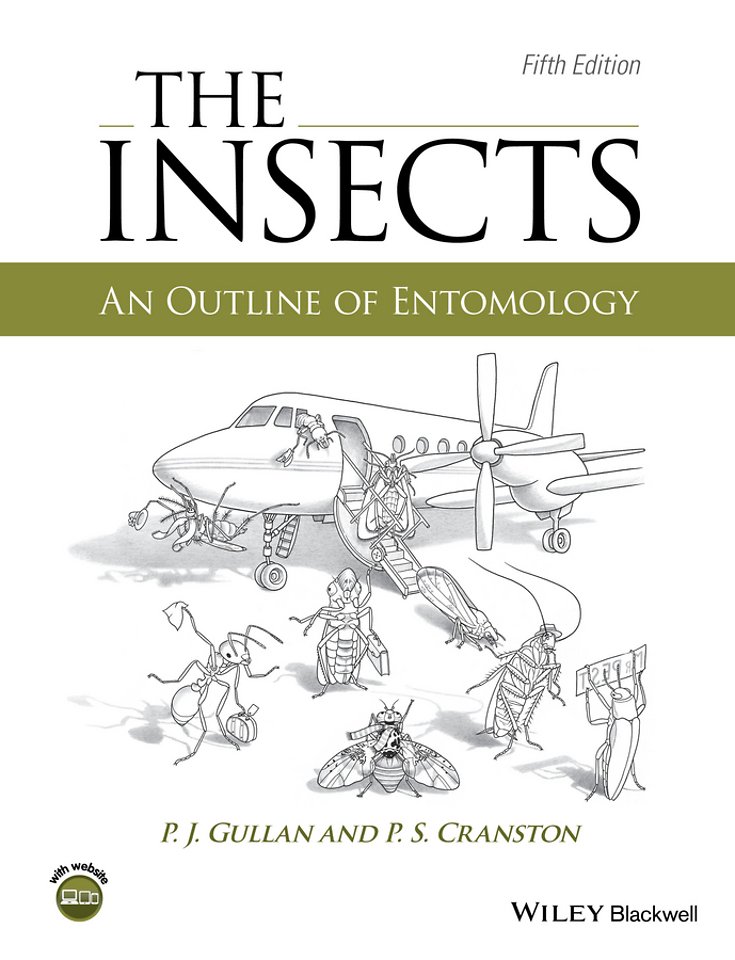
The Insects – An Outline of Entomology
An Outline of Entomology
Samenvatting
Insects represent over half of the planet s biological diversity. This popular textbook provides a comprehensive introduction to this extraordinary diversity, and places entomology central to the theory and practice of evolutionary and ecological studies.
Fully revised, this fifth edition opens with a chapter concerning the popular side of insect studies, including insects in citizen science, zoos and butterfly houses, and insects as food for humans and animals. Key features of insect
structure, function, behaviour, ecology and classification are integrated with appropriate molecular studies. Much of the book is organized around major biological themes: living on the ground, in water, on plants, in colonies, and as predators, parasites/parasitoids and prey insects. A strong evolutionary theme is maintained throughout.
There is major revision to the chapter on systematics and a new chapter, Insects in a Changing World, includes insect responses to, and the consequences of, both climate change and human–assisted global alterations to distributions. Updated Taxoboxes demonstrate topical issues and provide concise information on all aspects of each of the 28 major groupings (orders) of insects, plus the three orders of non–insect hexapods. New boxes describe a worrying increase in insect threats to landscape and commercial trees (including eucalypts, palms and coffee) and explain the value of genetic data, including evolutionary developmental biology and DNA barcoding, in insect biodiversity studies.
The authors maintain the clarity and conciseness of earlier editions, and extend the profuse illustrations with new hand–drawn figures. Over 50 colour photographs, together with the informative text and an accompanying website with links to video clips, appendices, textboxes and further reading lists, encourage a deeper scientific study of insects. The book is intended as the principal text for students studying entomology, as well as a reference text for undergraduate and graduate courses in the fields of ecology, agriculture, fisheries and forestry, palaeontology, zoology, and medical and veterinary science.
Specificaties
Inhoudsopgave
<p>List of boxes xiii</p>
<p>Preface to the fifth edition xv</p>
<p>Preface to the fourth edition xvii</p>
<p>Preface to the third edition xix</p>
<p>Preface to the second edition xxi</p>
<p>Preface and acknowledgments for first edition xxiii</p>
<p>About the companion website xxv</p>
<p>1 THE IMPORTANCE DIVERSITY AND CONSERVATION OF INSECTS 1</p>
<p>1.1 What is entomology? 2</p>
<p>1.2 The importance of insects 2</p>
<p>1.3 Insect biodiversity 6</p>
<p>1.4 Naming and classification of insects 10</p>
<p>1.5 Insects in popular culture and commerce 11</p>
<p>1.6 Culturing insects 13</p>
<p>1.7 Insect conservation 14</p>
<p>1.8 Insects as food 20</p>
<p>Further reading 25</p>
<p>2 EXTERNAL ANATOMY 26</p>
<p>2.1 The cuticle 27</p>
<p>2.2 Segmentation and tagmosis 33</p>
<p>2.3 The head 35</p>
<p>2.4 The thorax 45</p>
<p>2.5 The abdomen 52</p>
<p>Further reading 55</p>
<p>3 INTERNAL ANATOMY AND PHYSIOLOGY 56</p>
<p>3.1 Muscles and locomotion 57</p>
<p>3.2 The nervous system and co–ordination 63</p>
<p>3.3 The endocrine system and the function of hormones 66</p>
<p>3.4 The circulatory system 69</p>
<p>3.5 The tracheal system and gas exchange 73</p>
<p>3.6 The gut digestion and nutrition 77</p>
<p>3.7 The excretory system and waste disposal 86</p>
<p>3.8 Reproductive organs 90</p>
<p>Further reading 93</p>
<p>4 SENSORY SYSTEMS AND BEHAVIOUR 95</p>
<p>4.1 Mechanical stimuli 96</p>
<p>4.2 Thermal stimuli 105</p>
<p>4.3 Chemical stimuli 107</p>
<p>4.4 Insect vision 117</p>
<p>4.5 Insect behaviour 122</p>
<p>Further reading 124</p>
<p>5 REPRODUCTION 125</p>
<p>5.1 Bringing the sexes together 126</p>
<p>5.2 Courtship 128</p>
<p>5.3 Sexual selection 128</p>
<p>5.4 Copulation 131</p>
<p>5.5 Diversity in genitalic morphology 136</p>
<p>5.6 Sperm storage fertilization and sex determination 139</p>
<p>5.7 Sperm competition 140</p>
<p>5.8 Oviparity (egg–laying) 144</p>
<p>5.9 Ovoviviparity and viviparity 150</p>
<p>5.10 Other modes of reproduction 150</p>
<p>5.11 Physiological control of reproduction 153</p>
<p>Further reading 154</p>
<p>6 INSECT DEVELOPMENT AND LIFE HISTORIES 156</p>
<p>6.1 Growth 157</p>
<p>6.2 Life–history patterns and phases 158</p>
<p>6.3 Process and control of moulting 169</p>
<p>6.4 Voltinism 172</p>
<p>6.5 Diapause 173</p>
<p>6.6 Dealing with environmental extremes 174</p>
<p>6.7 Migration 178</p>
<p>6.8 Polymorphism and polyphenism 180</p>
<p>6.9 Age–grading 181</p>
<p>6.10 Environmental effects on development 183</p>
<p>Further reading 188</p>
<p>7 INSECT SYSTEMATICS: PHYLOGENY AND CLASSIFICATION 190</p>
<p>7.1 Systematics 191</p>
<p>7.2 The extant Hexapoda 201</p>
<p>7.3 Informal group Entognatha: Collembola (springtails) Diplura (diplurans) and Protura (proturans) 202</p>
<p>7.4 Class Insecta (true insects) 203</p>
<p>Further reading 224</p>
<p>8 INSECT EVOLUTION AND BIOGEOGRAPHY 227</p>
<p>8.1 Relationships of the Hexapoda to other Arthropoda 228</p>
<p>8.2 The antiquity of insects 229</p>
<p>8.3 Were the first insects aquatic or terrestrial? 236</p>
<p>8.4 Evolution of wings 238</p>
<p>8.5 Evolution of metamorphosis 241</p>
<p>8.6 Insect diversification 242</p>
<p>8.7 Insect biogeography 244</p>
<p>8.8 Insect evolution in the Pacific 245</p>
<p>Further reading 247</p>
<p>9 GROUND–DWELLING INSECTS 249</p>
<p>9.1 Insects of litter and soil 250</p>
<p>9.2 Insects and dead trees or decaying wood 260</p>
<p>9.3 Insects and dung 261</p>
<p>9.4 Insect carrion interactions 264</p>
<p>9.5 Insect fungal interactions 265</p>
<p>9.6 Cavernicolous insects 268</p>
<p>9.7 Environmental monitoring using ground–dwelling hexapods 268</p>
<p>Further reading 270</p>
<p>10 AQUATIC INSECTS 271</p>
<p>10.1 Taxonomic distribution and terminology 272</p>
<p>10.2 The evolution of aquatic lifestyles 275</p>
<p>10.3 Aquatic insects and their oxygen supplies 277</p>
<p>10.4 The aquatic environment 282</p>
<p>10.5 Environmental monitoring using aquatic insects 284</p>
<p>10.6 Functional feeding groups 285</p>
<p>10.7 Insects of temporary waterbodies 286</p>
<p>10.8 Insects of the marine intertidal and littoral zones 287</p>
<p>Further reading 288</p>
<p>11 INSECTS AND PLANTS 289</p>
<p>11.1 Coevolutionary interactions between insects and plants 291</p>
<p>11.2 Phytophagy (or herbivory) 293</p>
<p>11.3 Insects and plant reproductive biology 313</p>
<p>11.4 Insects that live mutualistically in specialized plant structures 318</p>
<p>Further reading 320</p>
<p>12 INSECT SOCIETIES 322</p>
<p>12.1 Subsociality in insects 323</p>
<p>12.2 Eusociality in insects 327</p>
<p>12.3 Inquilines and parasites of social insects 345</p>
<p>12.4 Evolution and maintenance of eusociality 348</p>
<p>12.5 Success of social insects 351</p>
<p>Further reading 353</p>
<p>13 INSECT PREDATION AND PARASITISM 354</p>
<p>13.1 Prey/host location 355</p>
<p>13.2 Prey/host acceptance and manipulation 361</p>
<p>13.3 Prey/host selection and specificity 364</p>
<p>13.4 Population biology predator/parasitoid and prey/host abundance 372</p>
<p>13.5 The evolutionary success of insect predation and parasitism 375</p>
<p>Further reading 376</p>
<p>14 INSECT DEFENCE 377</p>
<p>14.1 Defence by hiding 379</p>
<p>14.2 Secondary lines of defence 380</p>
<p>14.3 Mechanical defences 382</p>
<p>14.4 Chemical defences 384</p>
<p>14.5 Defence by mimicry 388</p>
<p>14.6 Collective defences in gregarious and social insects 392</p>
<p>Further reading 396</p>
<p>15 MEDICAL AND VETERINARY ENTOMOLOGY 397</p>
<p>15.1 Insects as causes and vectors of disease 398</p>
<p>15.2 Generalized disease cycles 399</p>
<p>15.3 Pathogens 399</p>
<p>15.4 Forensic entomology 413</p>
<p>15.5 Insect nuisance and phobia 414</p>
<p>15.6 Venoms and allergens 416</p>
<p>Further reading 417</p>
<p>16 PEST MANAGEMENT 418</p>
<p>16.1 Insects as pests 419</p>
<p>16.2 The effects of insecticides 425</p>
<p>16.3 Integrated pest management 428</p>
<p>16.4 Chemical control 429</p>
<p>16.5 Biological control 435</p>
<p>16.6 Host–plant resistance to insects 447</p>
<p>16.7 Physical control 451</p>
<p>16.8 Cultural control 451</p>
<p>16.9 Pheromones and other insect attractants 452</p>
<p>16.10 Genetic manipulation of insect pests 454</p>
<p>Further reading 455</p>
<p>17 INSECTS IN A CHANGING WORLD 457</p>
<p>17.1 Models of change 458</p>
<p>17.2 Economically significant insects under climate change 463</p>
<p>17.3 Implications of climate change for insect biodiversity and conservation 467</p>
<p>17.4 Global trade and insects 468</p>
<p>Further reading 473</p>
<p>18 METHODS IN ENTOMOLOGY:COLLECTING PRESERVATIONCURATION AND IDENTIFICATION 474</p>
<p>18.1 Collection 475</p>
<p>18.2 Preservation and curation 478</p>
<p>18.3 Identification 488</p>
<p>Further reading 491</p>
<p>TAXOBOXES 493</p>
<p>1 Entognatha: non–insect hexapods(Collembola Diplura and Protura) 493</p>
<p>2 Archaeognatha (Microcoryphia; archaeognathans or bristletails) 495</p>
<p>3 Zygentoma (silverfish) 496</p>
<p>4 Ephemeroptera (mayflies) 497</p>
<p>5 Odonata (damselflies anddragonflies) 498</p>
<p>6 Plecoptera (stoneflies) 500</p>
<p>7 Dermaptera (earwigs) 500</p>
<p>8 Zoraptera (zorapterans or angelinsects) 501</p>
<p>9 Orthoptera (grasshoppers locustskatydids and crickets) 502</p>
<p>10 Embioptera (Embiidina Emboidea;embiopterans or webspinners) 503</p>
<p>11 Phasmatodea (phasmids stick–insects or walking sticks) 503</p>
<p>12 Grylloblattodea (Grylloblattaria or Notoptera; grylloblattids ice crawlers or rock crawlers) 504</p>
<p>13 Mantophasmatodea (heelwalkers) 505</p>
<p>14 Mantodea (mantids mantises or praying mantids) 506</p>
<p>15 Blattodea: roach families (cockroaches or roaches) 507</p>
<p>16 Blattodea: epifamily Termitoidae (former order Isoptera; termites white ants ) 508</p>
<p>17 Psocodea: Psocoptera (bark lice and book lice) 509</p>
<p>18 Psocodea: Phthiraptera (chewing lice and sucking lice) 510</p>
<p>19 Thysanoptera (thrips) 511</p>
<p>20 Hemiptera (bugs moss bugs cicadas leafhoppers planthoppers spittle bugs treehoppers aphids jumping plant lice scale insects and whiteflies) 512</p>
<p>21 Neuropterida: Neuroptera (lacewings owlflies and antlions) Megaloptera (alderflies dobsonflies and fishflies) and Raphidioptera (snakeflies) 514</p>
<p>22 Coleoptera (beetles) 516</p>
<p>23 Strepsiptera (strepsipterans) 517</p>
<p>24 Diptera (true flies) 519</p>
<p>25 Mecoptera (hangingflies scorpionflies and snowfleas) 520</p>
<p>26 Siphonaptera (fleas) 521</p>
<p>27 Trichoptera (caddisflies) 522</p>
<p>28 Lepidoptera (butterflies and moths) 523</p>
<p>29 Hymenoptera (ants bees wasps sawflies and wood wasps) 524</p>
<p>Glossary 526</p>
<p>References 555</p>
<p>Index 563</p>
<p>Appendix: A reference guide to orders 589</p>