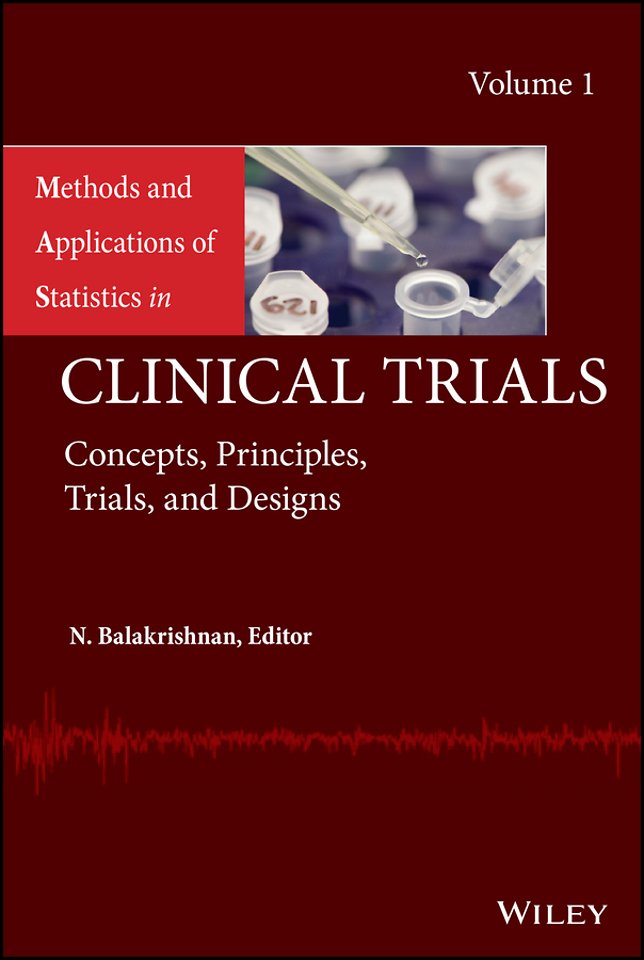
Methods and Applications of Statistics in Clinical Trials, Volume 1 – Concepts, Principles, Trials, and Designs
Concepts, Principles, Trials, and Designs
Samenvatting
A complete guide to the key statistical concepts essential for the design and construction of clinical trials
As the newest major resource in the field of medical research, Methods and Applications of Statistics in Clinical Trials, Volume 1: Concepts, Principles, Trials, and Designs presents a timely and authoritative reviewof the central statistical concepts used to build clinical trials that obtain the best results. The referenceunveils modern approaches vital to understanding, creating, and evaluating data obtained throughoutthe various stages of clinical trial design and analysis.
Accessible and comprehensive, the first volume in a two–part set includes newly–written articles as well as established literature from the Wiley Encyclopedia of Clinical Trials. Illustrating a variety of statistical concepts and principles such as longitudinal data, missing data, covariates, biased–coin randomization, repeated measurements, and simple randomization, the book also provides in–depth coverage of the various trial designs found within phase I–IV trials. Methods and Applications of Statistics in Clinical Trials, Volume 1: Concepts, Principles, Trials, and Designs also features:
Detailed chapters on the type of trial designs, such as adaptive, crossover, group–randomized, multicenter, non–inferiority, non–randomized, open–labeled, preference, prevention, and superiority trials
Over 100 contributions from leading academics, researchers, and practitioners
An exploration of ongoing, cutting–edge clinical trials on early cancer and heart disease, mother–to–child human immunodeficiency virus transmission trials, and the AIDS Clinical Trials Group
Methods and Applications of Statistics in Clinical Trials, Volume 1: Concepts, Principles, Trials, and Designs is an excellent reference for researchers, practitioners, and students in the fields of clinicaltrials, pharmaceutics, biostatistics, medical research design, biology, biomedicine, epidemiology,and public health.
Specificaties
Inhoudsopgave
<p>Preface xxix</p>
<p>1 Absolute Risk Reduction 1</p>
<p>1.1 Introduction 1</p>
<p>1.2 Preliminary Issues 1</p>
<p>1.3 Point and Interval Estimates for a Single Proportion 2</p>
<p>1.4 An Unpaired Difference of Proportions 5</p>
<p>1.5 Number Needed to Treat 8</p>
<p>1.6 A Paired Difference of Proportions 10</p>
<p>References 11</p>
<p>Further Reading 12</p>
<p>2 Accelerated Approval 14</p>
<p>2.1 Introduction 14</p>
<p>2.2 Accelerated Development Versus Expanded Access in the U.S.A 14</p>
<p>2.3 Sorting the Terminology Which FDA Initiatives Do What? 15</p>
<p>2.4 Accelerated Approval Regulations: 21 C.F.R. 314.500, 314.520, 601.40 16</p>
<p>2.5 Stages of Drug Development and FDA Initiatives 16</p>
<p>2.6 Accelerated Approval Regulations: 21 CFR 314.500, 314.520, 601.40 17</p>
<p>2.7 Accelerated Approval with Surrogate Endpoints 18</p>
<p>2.8 Accelerated Approval with Restricted Distribution 20</p>
<p>2.9 Phase IV Studies/Post Marketing Surveillance 20</p>
<p>2.10 Benefit Analysis for Accelerated Approvals Versus Other Illnesses 21</p>
<p>2.11 Problems, Solutions, and Economic Incentives 22</p>
<p>2.12 Future Directions 24</p>
<p>References 25</p>
<p>Further Reading 26</p>
<p>3 AIDS Clinical Trials Group (ACTG) 27</p>
<p>3.1 Introduction 27</p>
<p>3.2 A Brief Primer on HIV/AIDS 27</p>
<p>3.3 ACTG Overview 28</p>
<p>3.4 ACTG Scientific Activities 29</p>
<p>3.5 Development of Potent Antiretroviral Therapy (ART) 29</p>
<p>3.6 Expert Systems and Infrastructure 36</p>
<p>References 37</p>
<p>4 Algorithm–Based Designs 40</p>
<p>4.1 Phase I Dose–Finding Studies 40</p>
<p>4.2 Accelerated Designs 43</p>
<p>4.3 Model–Based Approach in the Estimation of MTD 46</p>
<p>4.4 Exploring Algorithm–Based Designs With Prespecified Targeted Toxicity Levels 48</p>
<p>References 51</p>
<p>5 Alpha–Spending Function 53</p>
<p>5.1 Introduction 53</p>
<p>5.2 Alpha Spending Function Motivation 54</p>
<p>5.3 The Alpha Spending Function 56</p>
<p>5.4 Application of the Alpha Spending Function 57</p>
<p>5.5 Confidence Intervals and Estimation 59</p>
<p>5.6 Trial Design 59</p>
<p>5.7 Conclusions 61</p>
<p>References 61</p>
<p>Further Reading 63</p>
<p>6 Application of New Designs in Phase I Trials 65</p>
<p>6.1 Introduction 65</p>
<p>6.2 Objectives of a Phase I Trial 65</p>
<p>6.3 Standard Designs and Their Shortcomings 66</p>
<p>6.4 Some Novel Designs 67</p>
<p>6.5 Discussion 72</p>
<p>References 72</p>
<p>Further Reading 73</p>
<p>7 ASCOT Trial 74</p>
<p>7.1 Introduction 74</p>
<p>7.2 Objectives 74</p>
<p>7.3 Study Design 74</p>
<p>7.4 Results 75</p>
<p>7.5 Discussion and Conclusions 77</p>
<p>References 78</p>
<p>8 Benefit/Risk Assessment in Prevention Trials 80</p>
<p>8.1 Introduction 80</p>
<p>8.2 Types of B/RAs Performed in Prevention Trials 81</p>
<p>8.3 Alternative Structures of the Benefit/Risk Algorithm used in Prevention Trials 82</p>
<p>8.4 Methodological and Practical Issues with B/RA in Prevention Trials 84</p>
<p>References 87</p>
<p>9 Biased Coin Randomization 90</p>
<p>9.1 Randomization Strategies for Overall Treatment Balance 90</p>
<p>9.2 The Biased Coin Randomization Procedure 91</p>
<p>9.3 Properties 92</p>
<p>9.4 Extensions to the Biased Coin Randomization 92</p>
<p>9.5 Adaptive Biased Coin Randomization 94</p>
<p>9.6 Urn Models 99</p>
<p>9.7 Treatment Balance for Covariates 102</p>
<p>9.8 Application of Biased Coin Designs to Response–Adaptive Randomization 103</p>
<p>References 104</p>
<p>10 Biological Assay, Overview 106</p>
<p>10.1 Introduction 106</p>
<p>10.2 Direct Dilution Assays 108</p>
<p>10.3 Indirect Dilution Assays 109</p>
<p>10.4 Indirect Quantal Assays 113</p>
<p>10.5 Stochastic Approximation in Bioassay 116</p>
<p>10.6 Radioimmunoassay 117</p>
<p>10.7 Dosimetry and Bioassay 118</p>
<p>10.8 Semiparametrics in Bioassays 119</p>
<p>10.9 Nonparametrics in Bioassays 119</p>
<p>10.10 Bioavailability and Bioequivalence Models 120</p>
<p>10.11 Pharmacogenomics in Modern Bioassays 121</p>
<p>10.12 Complexities in Bioassay Modeling and Analysis 122</p>
<p>References 122</p>
<p>Further Reading 124</p>
<p>11 Block Randomization 125</p>
<p>11.1 Introduction 125</p>
<p>11.2 Simple Randomization 125</p>
<p>11.3 Restricted Randomization Through the Use of Blocks 126</p>
<p>11.4 Schemes Using a Single Block for the Whole Trial 130</p>
<p>11.5 Use of Unequal and Variable Block Sizes 131</p>
<p>11.6 Inference and Analysis Following Blocked Randomization 134</p>
<p>11.7 Miscellaneous Topics Related to Blocked Randomization 135</p>
<p>References 136</p>
<p>Further Reading 138</p>
<p>12 Censored Data 139</p>
<p>12.1 Introduction 139</p>
<p>12.2 Independent Censoring 140</p>
<p>12.3 Likelihoods: Noninformative Censoring 143</p>
<p>12.4 Other Kinds of Incomplete Observation 143</p>
<p>References 141</p>
<p>13 Clinical Data Coordination 146</p>
<p>13.1 Introduction 146</p>
<p>13.2 Study Initiation 147</p>
<p>13.3 Study Conduct 151</p>
<p>13.4 Study Closure 158</p>
<p>13.5 Summary 161</p>
<p>References 162</p>
<p>14 Clinical Data Management 164</p>
<p>14.1 Introduction 164</p>
<p>14.2 How Has Clinical Data Management Evolved? 165</p>
<p>14.3 Electronic Data Capture 166</p>
<p>14.4 Regulatory Involvement with Clinical Data Management 167</p>
<p>14.5 Professional Societies 167</p>
<p>14.6 Look to the Future 168</p>
<p>14.7 Conclusion 169</p>
<p>References 169</p>
<p>15 Clinical Significance 170</p>
<p>15.1 Introduction 170</p>
<p>15.2 Historical Background 170</p>
<p>15.3 Article Outline 171</p>
<p>15.4 Design and Methodology 171</p>
<p>15.5 Examples 181</p>
<p>15.6 Recent Developments 181</p>
<p>15.7 Concluding Remarks 185</p>
<p>References 185</p>
<p>16 Clinical Trial Misconduct 191</p>
<p>16.1 The Scope of this Article 191</p>
<p>16.2 Why Does Research Misconduct Matter? 191</p>
<p>16.3 Early Cases 192</p>
<p>16.4 Definition 193</p>
<p>16.5 Intent 194</p>
<p>16.6 What Scientific Misconduct was Not 194</p>
<p>16.7 The Process 194</p>
<p>16.8 The Past Decade 195</p>
<p>16.9 Lessons from the U.S. Experience 196</p>
<p>16.10 Outside the United States 197</p>
<p>16.11 Scientific Misconduct During Clinical Trials 198</p>
<p>16.12 Audit 198</p>
<p>16.13 Causes 199</p>
<p>16.14 Prevalence 200</p>
<p>16.15 Peer Review and Misconduct 200</p>
<p>16.16 Retractions 201</p>
<p>16.17 Prevention 201</p>
<p>References 202</p>
<p>17 Clinical Trials, Early Cancer and Heart Disease 205</p>
<p>17.1 Introduction 205</p>
<p>17.2 Developments in Clinical Trials at the National Cancer Institute (NCI) 205</p>
<p>17.3 Developments in Clinical Trials at the National Heart, Lung, and Blood Institute (NHLBI) 209</p>
<p>References 213</p>
<p>18 Cluster Randomization 216</p>
<p>18.1 Introduction 216</p>
<p>18.2 Examples of Cluster Randomization Trials 217</p>
<p>18.3 Principles of Experimental Design 218</p>
<p>18.4 Experimental and Quasi–Experimental Designs 219</p>
<p>18.5 The Effect of Failing to Replicate 220</p>
<p>18.6 Sample Size Estimation 221</p>
<p>18.7 Cluster Level Analyses 222</p>
<p>18.8 Individual Level Analyses 223</p>
<p>18.9 Incorporating Repeated Assessments 225</p>
<p>18.10 Study Reporting 226</p>
<p>18.11 Meta–Analysis 227</p>
<p>References 228</p>
<p>19 Coherence in Phase I Clinical Trials 230</p>
<p>19.1 Introduction 230</p>
<p>19.2 Coherence: Definitions and Organization 230</p>
<p>19.3 Coherent Designs 232</p>
<p>19.4 Compatible Initial Design 233</p>
<p>19.5 Group Coherence 234</p>
<p>19.6 Real–Time Coherence 235</p>
<p>19.7 Discussion 238</p>
<p>References 238</p>
<p>20 Compliance and Survival Analysis 240</p>
<p>20.1 Compliance: Cause and Effect 240</p>
<p>20.2 All–or–Nothing Compliance 241</p>
<p>20.3 More General Exposure Patterns 242</p>
<p>20.4 Other Structural Modeling Options 242</p>
<p>References 244</p>
<p>21 Composite Endpoints in Clinical Trials 246</p>
<p>21.1 Introduction 246</p>
<p>21.2 The Rationale for Composite Endpoints 246</p>
<p>21.3 Formulation of Composite Endpoints 247</p>
<p>21.4 Examples 248</p>
<p>21.5 Interpreting Composite Endpoints 250</p>
<p>21.6 Conclusions 251</p>
<p>References 251</p>
<p>22 Confounding 252</p>
<p>22.1 Introduction 252</p>
<p>22.2 Confounding as a Bias in Effect Estimation 252</p>
<p>22.3 Confounding and Noncollapsibility 258</p>
<p>22.4 Confounding in Experimental Design 260</p>
<p>References 261</p>
<p>23 Control Groups 263</p>
<p>23.1 Introduction 263</p>
<p>23.2 History 263</p>
<p>23.3 Ethics 264</p>
<p>23.4 Types of Control Groups: Historical Controls 266</p>
<p>23.5 Types of Control Groups: Randomized Controls 268</p>
<p>23.6 Conclusion 271</p>
<p>References 271</p>
<p>24 Coronary Drug Project 273</p>
<p>24.1 Introduction 273</p>
<p>24.2 Objectives 273</p>
<p>24.3 Study Design and Methods 273</p>
<p>24.4 Results 275</p>
<p>24.5 Conclusions and Lessons Learned 281</p>
<p>References 282</p>
<p>Further Reading 284</p>
<p>25 Covariates 285</p>
<p>25.1 Universal Character of Covariates 285</p>
<p>25.2 Use of Covariates in Clinical Trials 286</p>
<p>25.3 Continuous Covariates: Categorization or Functional Form? 293</p>
<p>25.4 Reporting and Summary Assessment of Prognostic Markers 295</p>
<p>References 296</p>
<p>26 Crossover Design 300</p>
<p>26.1 Introduction 300</p>
<p>26.2 The Two–Period, Two–Treatment Design 301</p>
<p>26.3 Higher Order Designs 304</p>
<p>26.4 Model–Based Analyses 307</p>
<p>References 308</p>
<p>27 Crossover Trials 310</p>
<p>27.1 Introduction 310</p>
<p>27.2 2 x 2 Crossover Trial 312</p>
<p>27.3 Higher–Order Designs for Two Treatments 312</p>
<p>27.4 Designs for Three or More Treatments 312</p>
<p>27.5 Analysis of Continuous Data 314</p>
<p>27.6 Analysis of Discrete Data 315</p>
<p>27.7 Concluding Remarks 317</p>
<p>References 317</p>
<p>28 Diagnostic Studies 320</p>
<p>28.1 Introduction 320</p>
<p>28.2 Diagnostic Studies 320</p>
<p>28.3 Reliability 324</p>
<p>28.4 Validity 331</p>
<p>References 338</p>
<p>Further Reading 339</p>
<p>29 DNA Bank 340</p>
<p>29.1 Definition and Objectives of DNA Biobanks 340</p>
<p>29.2 Types of DNA Biobanks 343</p>
<p>29.3 Types of Samples Stored 344</p>
<p>29.4 Quality Assurance and Quality Control in DNA Biobanks 345</p>
<p>29.5 Ethical Issues 346</p>
<p>29.6 Current Biobank Initiatives 348</p>
<p>29.7 Conclusions 350</p>
<p>References 350</p>
<p>30 Up–and–Down and Escalation Designs 353</p>
<p>30.1 Introduction 353</p>
<p>30.2 Up–and–Down Designs 353</p>
<p>30.3 Escalation Designs 357</p>
<p>30.4 Comparing U&D, Escalation and Model–Based Designs 359</p>
<p>References 359</p>
<p>Further Reading 361</p>
<p>31 Dose Ranging Crossover Designs 362</p>
<p>31.1 Introduction 362</p>
<p>31.2 Titration Designs and Extension Studies 369</p>
<p>31.3 Randomized Designs 373</p>
<p>31.4 Discussion and Conclusion 376</p>
<p>References 379</p>
<p>Further Reading 382</p>
<p>32 Flexible Designs 383</p>
<p>32.1 Introduction 383</p>
<p>32.2 The General Framework 384</p>
<p>32.3 Conditional Power and Sample Size Reassessment 387</p>
<p>32.4 Extending the Flexibility to the Choice of the Number of Stages 392</p>
<p>32.5 Selection of the Test Statistic 393</p>
<p>32.6 More General Adaptations and Multiple Hypotheses Testing 393</p>
<p>32.7 An Example 395</p>
<p>32.8 Conclusion 395</p>
<p>References 396</p>
<p>33 Gene Therapy 399</p>
<p>33.1 Introduction 399</p>
<p>33.2 Requirements for Successful Therapeutic Intervention 399</p>
<p>33.3 Pre–Clinical Research 402</p>
<p>33.4 Translational Challenges of Gene Therapy Trials 404</p>
<p>33.5 Clinical Trials · 407</p>
<p>33.6 Lessons Learned 408</p>
<p>33.7 The Way Forward 411</p>
<p>References 411</p>
<p>Further Reading 422</p>
<p>34 Global Assessment Variables 423</p>
<p>34.1 Introduction 423</p>
<p>34.2 Scientific Questions for Multiple Outcomes 423</p>
<p>34.3 General Comments on the GST 424</p>
<p>34.4 Recoding Outcome Measures 424</p>
<p>34.5 Types of Global Statistical Tests (GSTs) 425</p>
<p>34.6 Other Considerations 428</p>
<p>34.7 Other Methods 430</p>
<p>34.8 Examples of the Application of GST 434</p>
<p>34.9 Conclusions 435</p>
<p>References 435</p>
<p>35 Good Clinical Practice (GCP) 438</p>
<p>35.1 Introduction 438</p>
<p>35.2 Human Rights and Protections 438</p>
<p>35.3 Informed Consent 439</p>
<p>35.4 Investigational Protocol 439</p>
<p>35.5 Investigator′s Brochure 440</p>
<p>35.6 Investigational New Drug Application 440</p>
<p>35.7 Production of the Investigational Drug 440</p>
<p>35.8 Clinical Testing 441</p>
<p>35.9 Sponsors 442</p>
<p>35.10 Contract Research Organization 444</p>
<p>35.11 Monitors 444</p>
<p>35.12 Investigators 444</p>
<p>35.13 Documentation 444</p>
<p>35.14 Clinical Holds 445</p>
<p>35.15 Inspections/Audits 446</p>
<p>References 446</p>
<p>Further Reading 446</p>
<p>36 Group–Randomized Trials 448</p>
<p>36.1 Introduction 448</p>
<p>36.2 Group–Randomized Trials in Context 449</p>
<p>36.3 The Development of Group–Randomized Trials in Public Health 450</p>
<p>36.4 The Range of GRTs in Public Health 451</p>
<p>36.5 Current Design and Analytic Practices in GRTs in Public Health 452</p>
<p>36.6 The Future of Group–Randomized Trials 453</p>
<p>36.7 Planning a New Group–Randomized Trial 456</p>
<p>References 462</p>
<p>37 Group Sequential Designs 467</p>
<p>37.1 Introduction 467</p>
<p>37.2 Classical Designs 469</p>
<p>37.3 The á–Spending Function Approach 474</p>
<p>37.4 Point Estimates and Confidence Intervals 477</p>
<p>37.5 Supplements 478</p>
<p>References 479</p>
<p>38 Hazard Ratio 483</p>
<p>38.1 Introduction 483</p>
<p>38.2 Definitions 483</p>
<p>38.3 Illustration of Hazard Rate, Hazard Ratio and Risk Ratio 484</p>
<p>38.4 Example on the Use and Usefulness of Hazard Ratios 486</p>
<p>38.5 Ad–hoc Estimator of the Hazard Ratio 486</p>
<p>38.6 Confidence Interval of the Ad–hoc Estimator 487</p>
<p>38.7 Ad–hoc Estimator Stratified for the Covariate Renal Function 491</p>
<p>38.8 Properties of the Ad–hoc Estimator 493</p>
<p>38.9 Class of Generalized Rank Estimators of the Hazard Ratio 493</p>
<p>38.10 Estimation of the Hazard Ratio with Cox′s Proportional Hazards Model 494</p>
<p>38.11 Discussion 497</p>
<p>Further Reading 499</p>
<p>References 499</p>
<p>39 Large Simple Trials 500</p>
<p>39.1 Large, Simple Trials 500</p>
<p>39.2 Small but Clinically Important Objective 500</p>
<p>39.3 Eligibility 502</p>
<p>39.4 Randomized Assignment 502</p>
<p>39.5 Outcome Measures 504</p>
<p>39.6 Conclusions 506</p>
<p>References 506</p>
<p>Further Reading 508</p>
<p>40 Longitudinal Data 510</p>
<p>40.1 Definition 510</p>
<p>40.2 Longitudinal Data from Clinical Trials 510</p>
<p>40.3 Advantages 512</p>
<p>40.4 Challenges 512</p>
<p>40.5 Analysis of Longitudinal Data 513</p>
<p>References 514</p>
<p>Further Reading 514</p>
<p>41 Maximum Duration and Information Trials 515</p>
<p>41.1 Introduction 515</p>
<p>41.2 Two Paradigms: Duration versus Information 516</p>
<p>41.3 Sequential Studies: Maximum Duration versus Information Trials 516</p>
<p>41.4 An Example of a Maximum Information Trial 519</p>
<p>References 521</p>
<p>42 Missing Data 522</p>
<p>42.1 Introduction 522</p>
<p>42.2 Methods in Common Use 524</p>
<p>42.3 An Alternative Approach to Incomplete Data 525</p>
<p>42.4 Illustration: Orthodontic Growth Data 527</p>
<p>42.5 Inverse Probability Weighting 531</p>
<p>42.6 Multiple Imputation 531</p>
<p>42.7 Sensitivity Analysis 532</p>
<p>42.8 Conclusion 533</p>
<p>References 533</p>
<p>43 Mother to Child Human Immunodeficiency Virus Transmission Trials 536</p>
<p>43.1 Introduction 536</p>
<p>43.2 The Pediatric Aids Clinical Trials Group 076 Trial 538</p>
<p>43.3 Results 538</p>
<p>43.4 The European Mode of Delivery Trial 540</p>
<p>43.5 The HIV Network for Prevention Trials 012 Trial 541</p>
<p>43.6 The Mashi Trial 544</p>
<p>References 545</p>
<p>Further Reading 549</p>
<p>44 Multiple Testing in Clinical Trials 550</p>
<p>44.1 Introduction 550</p>
<p>44.2 Concepts of Error Rates 551</p>
<p>44.3 Union–Intersection Testing 552</p>
<p>44.4 Closed Testing 553</p>
<p>44.5 Partition Testing 555</p>
<p>References 556</p>
<p>Further Reading 557</p>
<p>45 Multicenter Trials 558</p>
<p>45.1 Definitions 558</p>
<p>45.2 History 560</p>
<p>45.3 Examples 561</p>
<p>45.4 Organizational and Operational Features 563</p>
<p>45.5 Strengths 564</p>
<p>45.6 Counts 565</p>
<p>Readings 569</p>
<p>References 569</p>
<p>46 Multiple Endpoints 570</p>
<p>46.1 Introduction 570</p>
<p>46.2 Multiple Testing Methods 571</p>
<p>46.3 Multivariate Global Tests 573</p>
<p>46.4 Conclusions 574</p>
<p>References 575</p>
<p>47 Multiple Risk Factor Intervention Trial 577</p>
<p>47.1 Introduction 577</p>
<p>47.2 Trial Design 577</p>
<p>47.3 Trial Screening and Execution 579</p>
<p>47.4 Findings at the End of Intervention 580</p>
<p>47.5 Long–Term Follow–Up 581</p>
<p>47.6 Epidemiologie Findings from Long–Term Follow–up of 361,662 MRFIT Screenees 582</p>
<p>47.7 Conclusions 583</p>
<p>References 583</p>
<p>Further Reading 586</p>
<p>48 N–of–1 Randomized Trials 587</p>
<p>48.1 Introduction 587</p>
<p>48.2 Goal of N–of–1 Studies 587</p>
<p>48.3 Requirements 588</p>
<p>48.4 Design Choices and Details for N–of–1 Studies 589</p>
<p>48.5 Statistical Issues 592</p>
<p>48.6 Other Issues 593</p>
<p>48.7 Conclusions 596</p>
<p>References 596</p>
<p>49 Noninferiority Trial 598</p>
<p>49.1 Introduction 598</p>
<p>49.2 Essential Elements of Noninferiority Trial Design 598</p>
<p>49.3 Objectives of Noninferiority Trials 600</p>
<p>49.4 Measure of Treatment Effect 600</p>
<p>49.5 Noninferiority Margin 601</p>
<p>49.6 Statistical Testing for Noninferiority 603</p>
<p>49.7 Medication Nonadherence and Misclassificat ion/Measurement Error 604</p>
<p>49.8 Testing Superiority and Noninferiority 605</p>
<p>49.9 Conclusion 605</p>
<p>References 605</p>
<p>50 Nonrandomized Trials 609</p>
<p>50.1 Introduction 609</p>
<p>50.2 Randomized vs. Nonrandomized Clinical Trials 609</p>
<p>50.3 Control Groups in Nonrandomized Trials 611</p>
<p>50.4 Statistical Methods in Design and Analyses 613</p>
<p>50.5 Conclusion and Discussion 616</p>
<p>References 617</p>
<p>51 Open–Labeled Trials 619</p>
<p>51.1 Introduction 619</p>
<p>51.2 The Importance of Blinding 619</p>
<p>51.3 Reasons Why Trials Might Have to be Open–Label 622</p>
<p>51.4 When Open–Label Trials Might be Desirable 623</p>
<p>51.5 Concluding Comments 623</p>
<p>References 623</p>
<p>Further Reading 624</p>
<p>52 Optimizing Schedule of Administration in Phase I Clinical Trials 625</p>
<p>52.1 Introduction 625</p>
<p>52.2 Motivating Example 627</p>
<p>52.3 Design Issues 627</p>
<p>52.4 Trial Conduct 631</p>
<p>52.5 Extensions and Related Research 632</p>
<p>References 632</p>
<p>53 Partially Balanced Designs 635</p>
<p>53.1 Introduction 635</p>
<p>53.2 Association Schemes 635</p>
<p>53.3 Partially Balanced Incomplete Block Designs 641</p>
<p>53.4 Generalizations of PBIBDs and Related Ideas 648</p>
<p>References 655</p>
<p>54 Phase I/II Clinical Trials 658</p>
<p>54.1 Introduction 658</p>
<p>54.2 Traditional Approach 659</p>
<p>54.3 Recent Developments 660</p>
<p>54.4 Illustrations 663</p>
<p>References 665</p>
<p>55 Phase II/III Trials 667</p>
<p>55.1 Introduction 667</p>
<p>55.2 Description and Legal Basis 668</p>
<p>55.3 Better Dose–Response Studies with Phase 2/3 Designs 672</p>
<p>55.4 Principles of Phase 2/3 Designs 673</p>
<p>55.5 Inferential Difficulties 676</p>
<p>55.6 Summary 678</p>
<p>References 679</p>
<p>Further Reading 680</p>
<p>56 Phase I Trials 682</p>
<p>56.1 Introduction 682</p>
<p>56.2 Phase I in Healthy Volunteers 683</p>
<p>56.3 Phase I in Cancer Patients 684</p>
<p>56.4 Perspectives in the Future of Cancer Phase I Trials 687</p>
<p>56.5 Discussion 688</p>
<p>References 688</p>
<p>57 Phase II Trials 692</p>
<p>57.1 Introduction 692</p>
<p>57.2 Proof–of–Concept (Phase Ha) Trials 693</p>
<p>57.3 Dose–Ranging (Phase lib) Trials 695</p>
<p>57.4 Efficacy Endpoints 697</p>
<p>57.5 Oncology Phase II Trials 697</p>
<p>References 697</p>
<p>Further Reading 699</p>
<p>58 Phase III Trials 700</p>
<p>58.1 Introduction 700</p>
<p>58.2 Research Methodology in Phase III 700</p>
<p>58.3 Type of Design 706</p>
<p>58.4 Discussion 708</p>
<p>References 709</p>
<p>59 Phase IV Trials 711</p>
<p>59.1 Introduction 711</p>
<p>59.2 Definitions and Context 711</p>
<p>59.3 Different Purposes for Phase IV Trials 712</p>
<p>59.4 Essential and Desirable Features of Phase IV Trials 715</p>
<p>59.5 Examples of Phase IV Studies 715</p>
<p>59.6 Conclusion 717</p>
<p>References 717</p>
<p>Further Reading 718</p>
<p>60 Phase I Trials in Oncology 719</p>
<p>60.1 Introduction 719</p>
<p>60.2 Dose–Limiting Toxicity 719</p>
<p>60.3 Starting Dose 720</p>
<p>60.4 Dose Level Selection 720</p>
<p>60.5 Study Design and General Considerations 720</p>
<p>60.6 Traditional, Standard, or 3 + 3 Design 721</p>
<p>60.7 Continual Reassessment Method and Other Designs that Target the MTD722</p>
<p>60.8 Start–Up Rule 722</p>
<p>60.9 Phase I Trials with Long Follow–Up 722</p>
<p>60.10 Phase I Trials with Multiple Agents 723</p>
<p>60.11 Phase I Trials with the MTD Defined using Toxicity Grades 723</p>
<p>References 723</p>
<p>Further Reading 724</p>
<p>61 Placebos 725</p>
<p>61.1 History of Placebo 725</p>
<p>61.2 Definitions 725</p>
<p>61.3 Magnitude of the Placebo Effect 726</p>
<p>61.4 Influences on the Placebo Effect 727</p>
<p>61.5 Ethics of Employing Placebo in Research 728</p>
<p>61.6 Guidelines for the Use of Placebos in Research 729</p>
<p>61.7 Innovations to Improve Research Involving Placebo 731</p>
<p>61.8 Summary 732</p>
<p>References 732</p>
<p>62 Planning a Group–Randomized Trial 736</p>
<p>62.1 Introduction 736</p>
<p>62.2 The Research Question 736</p>
<p>62.3 The Research Team 737</p>
<p>62.4 The Research Design 737</p>
<p>62.5 Potential Design Problems and Methods to Avoid Them 738</p>
<p>62.6 Potential Analytic Problems and Methods to Avoid Them 739</p>
<p>62.7 Variables of Interest and Their Measures 739</p>
<p>62.8 The Intervention 740</p>
<p>62.9 Power 742</p>
<p>62.10 Summary 742</p>
<p>References 743</p>
<p>63 Postmenopausal Estrogen/Progestin Interventions Trial (PEPI) 744</p>
<p>63.1 Introduction 744</p>
<p>63.2 Design and Objectives 744</p>
<p>63.3 Study Design 746</p>
<p>63.4 Outcomes 747</p>
<p>63.5 Results 749</p>
<p>63.6 Conclusions 753</p>
<p>References 754</p>
<p>Further Reading 756</p>
<p>64 Preference Trials 759</p>
<p>64.1 Introduction 759</p>
<p>64.2 Potential Effects of Preference 759</p>
<p>64.3 The Patient Preference Design 761</p>
<p>64.4 Advantages and Disadvantages of the Patient Preference Design 761</p>
<p>64.5 Alternative Designs 764</p>
<p>64.6 Discussion 767</p>
<p>References 768</p>
<p>Further Reading 769</p>
<p>65 Prevention Trials 770</p>
<p>65.1 Introduction 770</p>
<p>65.2 Role Among Possible Research Strategies 771</p>
<p>65.3 Prevention Trial Planning and Design 773</p>
<p>65.4 Conduct, Monitoring, and Analysis 775</p>
<p>References 776</p>
<p>66 Primary Efficacy Endpoint 779</p>
<p>66.1 Defining the Primary Endpoint 779</p>
<p>66.2 Fairness of Endpoints 780</p>
<p>66.3 Specificity of the Primary Endpoint 782</p>
<p>66.4 Composite Primary Endpoints 782</p>
<p>66.5 Missing Primary Endpoint Data 784</p>
<p>66.6 Censored Primary Endpoints 784</p>
<p>66.7 Surrogate Primary Endpoints 785</p>
<p>66.8 Multiple Primary Endpoints 786</p>
<p>66.9 Secondary Endpoints 786</p>
<p>References 786</p>
<p>Further Reading 788</p>
<p>67 Prognostic Variables in Clinical Trials 789</p>
<p>67.1 Introduction 789</p>
<p>67.2 A General Theory of Prognostic Variables 791</p>
<p>67.3 Valid Covariates and Recognizable Subsets 792</p>
<p>67.4 Stratified Randomization and Analysis 793</p>
<p>67.5 Statistical Importance of Prognostic Factors 795</p>
<p>References 797</p>
<p>68 Randomization Procedures 799</p>
<p>68.1 Basics 799</p>
<p>68.2 General Classes of Randomization: Complete Versus Imbalance–Restricted Procedures 800</p>
<p>68.3 Procedures for Imbalance–Restricted Randomization 801</p>
<p>68.4 Randomization–Based Analysis and the Validation Transformation 809</p>
<p>68.5 Conclusions 810</p>
<p>References 810</p>
<p>69 Randomization Schedule 813</p>
<p>69.1 Introduction 813</p>
<p>69.2 Preparing the Schedule 814</p>
<p>69.3 Schedules for Open–Label Trials 817</p>
<p>69.4 Schedules to Mitigate Loss of Balance in Treatment Assignments Because of Incomplete Blocks 818</p>
<p>69.5 Issues Related to the use of Randomization Schedule 822</p>
<p>69.6 Summary 824</p>
<p>References 825</p>
<p>Further Reading 826</p>
<p>70 Repeated Measurements 827</p>
<p>70.1 Introduction and Case Study 827</p>
<p>70.2 Linear Models for Gaussian Data 828</p>
<p>70.3 Models for Discrete Outcomes 831</p>
<p>70.4 Design Considerations 836</p>
<p>70.5 Concluding Remarks 837</p>
<p>References 838</p>
<p>71 Simple Randomization 841</p>
<p>71.1 Introduction 841</p>
<p>71.2 Concept of Randomization 841</p>
<p>71.3 Why is Randomization Needed? 842</p>
<p>71.4 Methods: Simple Randomization 842</p>
<p>71.5 Advantages and Disadvantages of Randomization 845</p>
<p>71.6 Other Randomization Methods 846</p>
<p>71.7 Stratified Randomization 846</p>
<p>References 849</p>
<p>Further Reading 849</p>
<p>72 Subgroups 850</p>
<p>72.1 Introduction 850</p>
<p>72.2 The General Problem 851</p>
<p>72.3 Definitions 851</p>
<p>72.4 Subgroup Effects and Interactions 852</p>
<p>72.5 Tests of Interactions and the Problem of Power 853</p>
<p>72.6 Subgroups and the Problem of Multiple Comparisons 856</p>
<p>72.7 Demographic Subgroups 858</p>
<p>72.8 Physiological Subgroups 861</p>
<p>72.9 Target Subgroups 861</p>
<p>72.10 Improper Subgroups 863</p>
<p>72.11 Summary 865</p>
<p>References 865</p>
<p>73 Superiority Trials 867</p>
<p>73.1 Introduction 867</p>
<p>73.2 Clinicians Ask One–Sided Questions, and Want Immediate Answers 867</p>
<p>73.3 But Traditional Statistics Is Two–Sided 867</p>
<p>73.4 The Consequences of Two–Sided Answers to One–Sided Questions 868</p>
<p>73.5 The Fallacy of the "Negative" Trial 868</p>
<p>73.6 The Solution Lies in Employing One–Sided Statistics 868</p>
<p>73.7 Examples of Employing One–Sided Statistics 868</p>
<p>73.8 One–Sided Statistical Analyses Need to be Specified Ahead of Time 869</p>
<p>73.9 A Graphic Demonstration of Superiority and Noninferiority 869</p>
<p>73.10 How to Think about and Incorporate Minimally Important Differences 870</p>
<p>73.11 Incorporating Confidence Intervals for Treatment Effects 871</p>
<p>73.12 Why We Should Never Label an "Indeterminate" Trial Result as "Negative" or as Showing "No Effect" 871</p>
<p>73.13 How Does a Treatment Become "Established Effective Therapy"? 872</p>
<p>73.14 Most Trials are Too Small to Declare a Treatment "Established Effective Therapy" 872</p>
<p>73.15 How Do We Achieve a Superiority Result? 872</p>
<p>73.16 Superiority and Noninferiority Trials when Established Effective Therapy Already Exists 872</p>
<p>73.17 Exceptions to the Rule that It Is Always Unethical to Substitute Placebos for Established Effective Therapy 873</p>
<p>73.18 When a Promising New Treatment Might be Added to Established Effective Therapy 873</p>
<p>73.19 Using Placebos in a Trial Should Not Mean the Absence of Treatment 874</p>
<p>73.20 Demonstrating Trials of Promising New Treatments Against (or in Addition to) Established Effective Therapy 874</p>
<p>73.21 Why We Almost Never Find, and Rarely Seek, True "Equivalence" 874</p>
<p>73.22 The Graphical Demonstration of "Superiority" and "Noninferiority" 876</p>
<p>73.23 Completing the Circle: Converting One–Sided Clinical Thinking into One–Sided Statistical Analysis 876</p>
<p>73.24 A Final Note on Superiority and Noninferiority Trials of "Me–Too" Drugs 877</p>
<p>References 877</p>
<p>Further Reading 877</p>
<p>74 Surrogate Endpoints 878</p>
<p>74.1 Introduction 878</p>
<p>74.2 Illustrations 879</p>
<p>74.3 Validation of Surrogates 880</p>
<p>74.4 Auxiliary Variables 883</p>
<p>74.5 Conclusions 884</p>
<p>References 885</p>
<p>75 TNT Trial 887</p>
<p>75.1 Introduction 887</p>
<p>75.2 Objectives 887</p>
<p>75.3 Study Design 887</p>
<p>75.4 Results 888</p>
<p>75.5 Conclusions 892</p>
<p>References 892</p>
<p>Further Reading 893</p>
<p>76 UGDP Trial 894</p>
<p>76.1 Introduction 894</p>
<p>76.2 Design and Chronology 895</p>
<p>76.3 Results 906</p>
<p>76.4 Conclusion and Discussion 909</p>
<p>References 914</p>
<p>77 Women′s Health Initiative Hormone Therapy Trials 918</p>
<p>77.1 Introduction 918</p>
<p>77.2 Objectives 918</p>
<p>77.3 Study Design 918</p>
<p>77.4 Results 919</p>
<p>77.5 Conclusions 927</p>
<p>References 928</p>
<p>78 Women′s Health Initiative Dietary Modification Trial 931</p>
<p>78.1 Rationale for Biomarker Calibration of Self–Report Measures of Diet 931</p>
<p>78.2 Nutrient Biomarker Study Energy and Protein Calibration 932</p>
<p>78.3 Measurement Error Properties of 4DFR, 24HR, and FFQ 933</p>
<p>78.4 Calibration of Self–Report Measures of Physical Activity 933</p>
<p>78.5 Psychosocial Measures and Biomarker–Calibrated Intake 936</p>
<p>78.6 Calibrated Energy, Protein, Protein Density, and Cardiovascular Disease Incidence 937</p>
<p>78.7 Diabetes and Calibrated Consumption 938</p>
<p>78.8 Cancer and Calibrated Intake 940</p>
<p>78.9 Associations Between Protein Intake, Frailty, and Renal Function 940</p>
<p>78.10 Summary and Future Directions 941</p>
<p>References 943</p>
<p>Index 945</p>