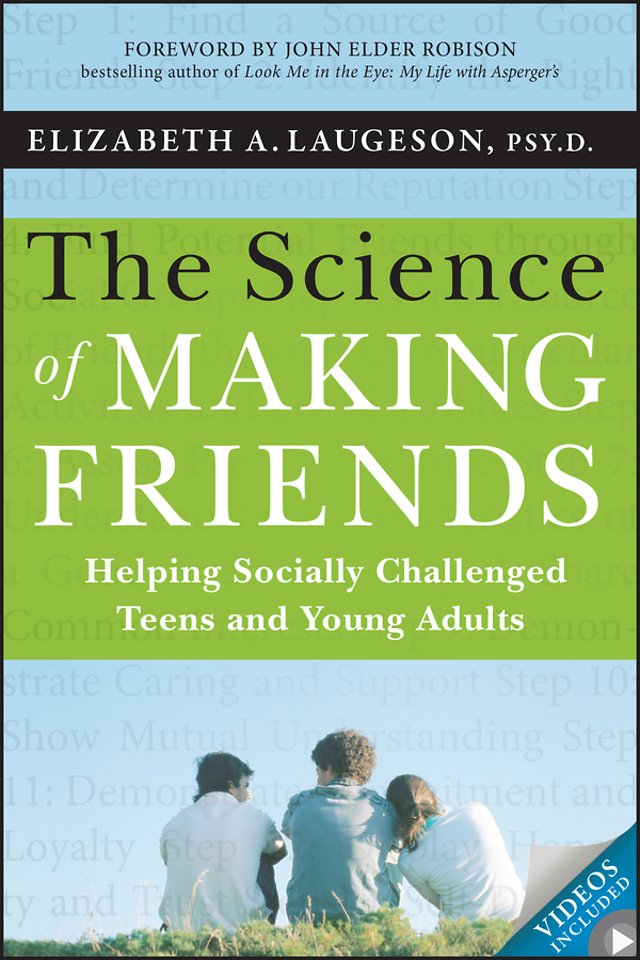
The Science of Making Friends
Helping Socially Challenged Teens and Young Adults (w/DVD)
Samenvatting
The groundbreaking book that puts the focus on teens and young adults with social challenges
This book offers parents a step–by–step guide to making and keeping friends for teens and young adults with social challenges such as those diagnosed with autism spectrum disorder, ADHD, bipolar, or other conditions. With the book s concrete rules and steps of social etiquette, parents will be able to assist in improving conversational skills, expanding social opportunities, and developing strategies for handling peer rejection.
Each chapter provides helpful overview information for parents; lessons with clear bulleted lists of key rules and steps; and expert advice on how to present the material to a teen or young adult. Throughout the book are role–playing exercises for practicing each skill, along with homework assignments to ensure the newly learned skills can be applied easily to a school, work, or other "real life" setting. The bonus DVD shows role–plays of skills covered, demonstrating the right and wrong way to enter conversations, schedule get–togethers, deal with conflict, and much more.
PART ONE: GETTING READY
Ch. 1: Why Teach Social Skills to Teens and Young Adults?
PART TWO: THE SCIENCE OF DEVELOPING AND MAINTAINING FRIENDSHIPS
Ch. 2: Finding and Choosing Good Friends
Ch. 3: Good Conversations: The Basics
Ch. 4: Starting and Entering Conversations
Ch. 5: Exiting Conversations
Ch. 6: Managing Electronic Communication
Ch. 7: Showing Good Sportsmanship
Ch. 8: Enjoying Successful Get–Togethers
PART THREE: THE SCIENCE OF HANDLING PEER CONFLICT AND REJECTION: HELPFUL STRATEGIES
Ch. 9: Dealing With Arguments
Ch. 10: Handling Verbal Teasing
Ch. 11: Addressing Cyber Bullying
Ch. 12: Minimizing Rumors and Gossip
Ch. 13: Avoiding Physical Bullying
Ch. 14: Changing a Bad Reputation
Epilogue: Moving Forward
Specificaties
Inhoudsopgave
<p>FOREWORD JOHN ELDER ROBISON XI</p>
<p>PREFACE XIII</p>
<p>ACKNOWLEDGMENTS XV</p>
<p>ABOUT THE AUTHOR XVII</p>
<p>P A R T O N E</p>
<p>GETTING READY</p>
<p>1 WHY TEACH SOCIAL SKILLS TO TEENS AND YOUNG ADULTS? 1</p>
<p>P A R T T W O</p>
<p>THE SCIENCE OF DEVELOPING AND MAINTAINING FRIENDSHIPS</p>
<p>2 FINDING AND CHOOSING GOOD FRIENDS 17</p>
<p>3 GOOD CONVERSATIONS: THE BASICS 51</p>
<p>COPYRIGHTED MATERIAL</p>
<p>4 STARTING AND ENTERING CONVERSATIONS 97</p>
<p>5 EXITING CONVERSATIONS 121</p>
<p>6 MANAGING ELECTRONIC COMMUNICATION 145</p>
<p>7 SHOWING GOOD SPORTSMANSHIP 179</p>
<p>8 ENJOYING SUCCESSFUL GET–TOGETHERS 199</p>
<p>P A R T T H R E E</p>
<p>THE SCIENCE OF HANDLING PEER CONFLICT AND REJECTION: HELPFUL STRATEGIES</p>
<p>9 DEALING WITH ARGUMENTS 231</p>
<p>10 HANDLING VERBAL TEASING 247</p>
<p>11 ADDRESSING CYBER BULLYING 267</p>
<p>12 MINIMIZING RUMORS AND GOSSIP 281</p>
<p>13 AVOIDING PHYSICAL BULLYING 307</p>
<p>14 CHANGING A BAD REPUTATION 323</p>
<p>EPILOGUE: MOVING FORWARD 341</p>
<p>HOW TO USE THE DVD 348</p>
<p>BIBLIOGRAPHY 349</p>
<p>INDEX 359</p>
Anderen die dit kochten, kochten ook
-
 Jitske Kramer€ 27,50
 -
Natascha van Weezel€ 17,99
-
Hans Kaldenbach€ 9,99
-
Hester Bais€ 25,00
-
Dirk De Wachter€ 24,99
-
Jelleke de Nooy van Tol€ 29,95