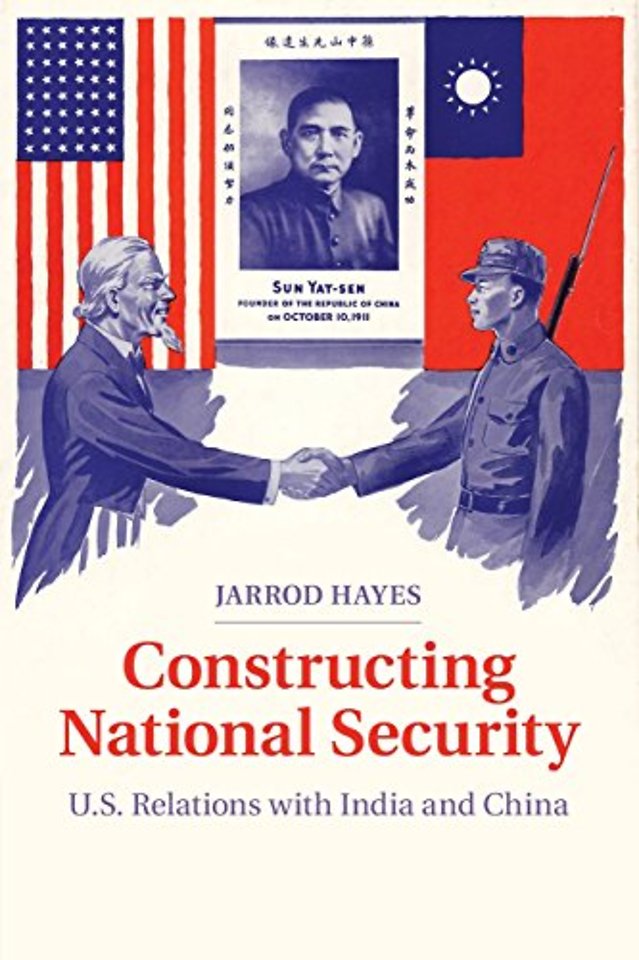
,

Constructing National Security

U.S. Relations with India and China

Specificaties
Paperback, 224 blz. | Engels
Cambridge University Press | e druk, 2015
ISBN13: 9781107645165
Rubricering
Cambridge University Press e druk, 2015 9781107645165
€ 36,80
Levertijd ongeveer 8 werkdagen

Samenvatting

Jarrod Hayes explores why democracies tend not to use military force against each other. He argues that democratic identity - the shared understanding within democracies of who 'we' are and what 'we' expect from each other - makes it difficult for political leaders to construct external democracies as threats. At the same time, he finds that democratic identity enables political actors to construct external non-democracies as threats. To explore his argument, he looks at US relations with two rising powers: India and China. Through his argument and case studies, Professor Hayes addresses not just the democratic peace but also the larger processes of threat construction in international security, the role of domestic institutions in international relations, and the possibility for conflict between the United States and the world's two most populous countries.

Specificaties

ISBN13:9781107645165
Taal:Engels
Bindwijze:Paperback
Aantal pagina's:224

Inhoudsopgave

Preface; Introduction: constructing democratic security; 1. Securization, identity, and security outcomes; Part I. Democracy, Security, and the Relationship between India and the United States: 2. Near miss: the Bangladesh war, India, and the United States in 1971; 3. Nuclear games: the United States, India, and the de-securitization of nuclear weapons; Part II. The Non-Democratic 'Other': The Sino-American Relationship: 4. Near miss: China and the United States in the 1995–6 Taiwan Strait crisis; 5. The 2001 Hainan Island EP-3 incident; Conclusion: the social construction of security.
€ 36,80
Levertijd ongeveer 8 werkdagen

Rubrieken

    Personen

      Trefwoorden

        Constructing National Security