,

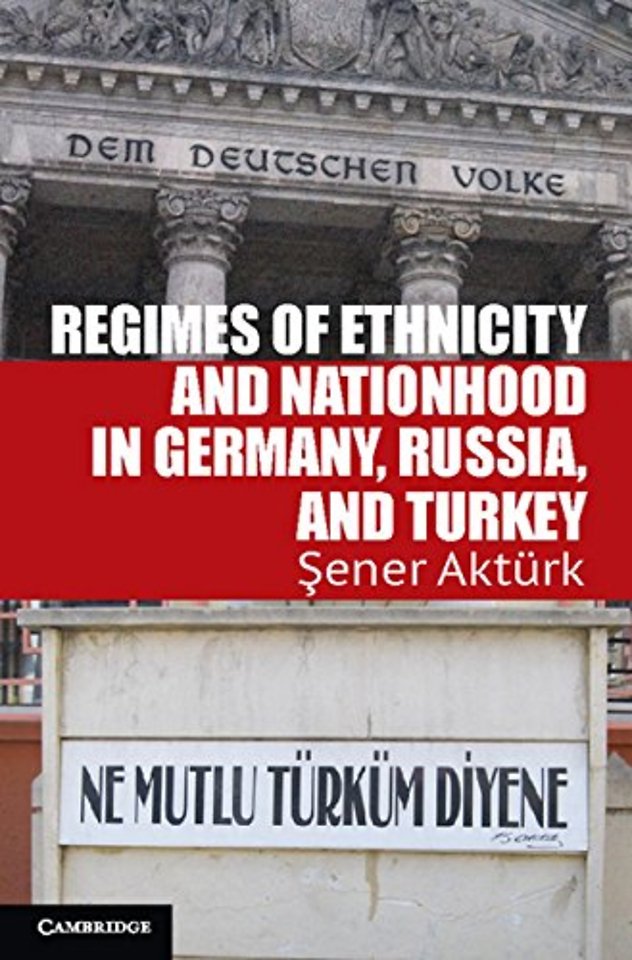
Regimes of Ethnicity and Nationhood in Germany, Russia, and Turkey

Specificaties
Paperback, 321 blz. | Engels
Cambridge University Press | e druk, 2012
ISBN13: 9781107614253
Rubricering
Cambridge University Press e druk, 2012 9781107614253
Onderdeel van serie Problems of Internat
€ 38,58
Levertijd ongeveer 8 werkdagen

Samenvatting

Akturk discusses how the definition of being German, Soviet, Russian and Turkish radically changed at the turn of the twenty-first century. Germany's ethnic citizenship law, the Soviet Union's inscription of ethnic origins in personal identification documents and Turkey's prohibition on the public use of minority languages, all implemented during the early twentieth century, underpinned the definition of nationhood in these countries. Despite many challenges from political and societal actors, these policies did not change for many decades, until around the turn of the twenty-first century, when Russia removed ethnicity from the internal passport, Germany changed its citizenship law and Turkish public television began broadcasting in minority languages. Using a new typology of 'regimes of ethnicity' and a close study of primary documents and numerous interviews, Sener Akturk argues that the coincidence of three key factors – counterelites, new discourses and hegemonic majorities – explains successful change in state policies toward ethnicity.

Specificaties

ISBN13:9781107614253
Taal:Engels
Bindwijze:Paperback
Aantal pagina's:321

Inhoudsopgave

Part I. Theoretical Framework and Empirical Overview: 1. Regimes of ethnicity: comparative analysis of Germany, Soviet Union, post-Soviet Russia, and Turkey; Part II. Germany: 2. The challenges to the monoethnic regime in Germany, 1955–1982; 3. The construction of an assimilationist discourse and political hegemony: transition from a monoethnic to an antiethnic regime in Germany, 1982–2000; Part III. Turkey: 4. Challenges to the ethnicity regime in Turkey: Alevi and Kurdish demands for recognition, 1923–1980; 5. From social democracy to Islamic multiculturalism: failed and successful attempts to reform the ethnicity regime in Turkey, 1980–2009; Part IV. Soviet Union and the Russian Federation: 6. The nation that wasn't there?: Sovetskii narod discourse, nation-building, and passport ethnicity, 1953–1983; 7. Ethnic diversity and state-building in post-Soviet Russia: removal of ethnicity from the internal passport and its aftermath, 1992–2008; Part V. Conclusion: 8. Dynamics of persistence and change in ethnicity regimes.
€ 38,58
Levertijd ongeveer 8 werkdagen

Rubrieken

    Personen

      Trefwoorden

        Regimes of Ethnicity and Nationhood in Germany, Russia, and Turkey