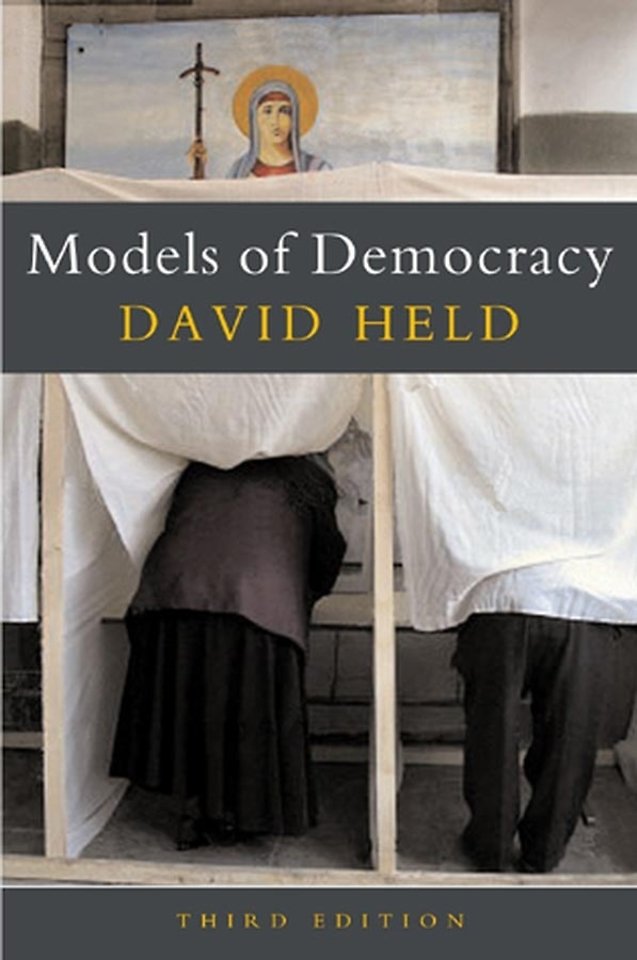
David Held
John Wiley & Sons
e druk, 2019
9780745631479
Models of Democracy
Specificaties
Gebonden, 408 blz.
|
Engels
John Wiley & Sons |
e druk, 2019
ISBN13: 9780745631479
Rubricering
Levertijd ongeveer 7 werkdagen
Samenvatting
* Third edition of this hugely successful textbook which has proven immensely popular among students and specialists worldwide. * Provides a comprehensive and accessible introduction to central accounts of democracy from classical Greece to the present and a critical discussion of what democracy should mean today.
Specificaties
ISBN13:9780745631479
Taal:Engels
Bindwijze:gebonden
Aantal pagina's:408
Uitgever:John Wiley & Sons
Verschijningsdatum:27-6-2019
Hoofdrubriek:Mens en maatschappij
Inhoudsopgave
-List of Figures and Tables
-Preface
-Introduction
-Part One: Classic Models
-Chapter 1 Classical Democracy: Athens
-Political ideas and aims
-Institutional features
-The exclusivity of an ancient democracy
-The critics
-In sum: Model I
-Chapter 2 Republicanism: Liberty, Self Government and the Active Citizen
-The eclipse and re emergence of homo politicus
-The reforging of republicanism
-Republicanism, elective government and popular sovereignty
-From civic life to civic glory
-In sum: Model IIa
-The republic and the general will
-In sum: model IIb
-The public and the private
-Chapter 3 The Development of Liberal Democracy: For and Against the State
-Power and Sovereignty
-Citizenship and the Constitutional State
-Separation of Powers
-The problem of factions
-Accountability and Markets
-In sum: model IIIa
-Liberty and the development of democracy
-The dangers of despotic power and an overgrown state
-Representative government
-The subordination of women
-Competing conceptions of the `ends of government
-In sum: Model IIIb
-Chapter 4 Direct Democracy and the End of Politics
-Class and class conflict
-History as evolution and the development of captialism
-Two theories of the state
-The end of politics
-Competing conceptions of Marxism
-Part Two: Variants from the Twentieth Century
-Chapter 5 Competitive ELitism and the Technocratic Vision
-Classes, power and conflict
-Bureaucracy, parliaments and nation states
-Competitive elitist democracy
-Liberal democracy at the crossroads
-The last vestige of democracy?
-Democracy, capitalism and socialism
-`Classical v. modern democracy
-A technocratic vision
-In sum: model V
-Chapter 6 Pluralism, Corporate Capitalism and the State
-Group politics, government and power
-Politics, consensus and the distribution of power
-Democracy, corporate capitalism and the state
-In sum: Model VI
-Accumulation, legitimation and the restricted sphere of the political
-The changing form of representative institutions
-Chapter 7 From Post War Stability to Political Crisis: The Polarization of Political Ideas
-A legitimate democratic order or a repressive regime?
-Overloaded state or legitimation crisis?
-Crisis theories: an assessment
-Law, liberty and democracy
-In sum: model VII
-Participation, liberty and democracy
-In sum: model VII
-Chapter 8 Democracy after Soviet Communism
-The historical backdrop
-The triumph of economic and political liberalism
-The renewed necessity of Marxism and democracy from `below ?
-Chapter 9 Deliberative Democracy and the Defence of the Public Realm
-Reason and Participation
-The limits of democratic theory
-The aims of deliberative democracy
-What is sound about public reasoning? Impartialism and it s critics
-Institutions of deliberative democracy
-Value pluralism and democracy
-In sum: Model IX
-Part Three: What Should Democracy Mean Today?
-Chapter 10 Democratic Autonomy
-The appeal of democracy
-The principle of autonomy
-Enacting the principle
-The heritage of classic and twentieth century democratic theory
-Democracy: A double sided process
-Democratic autonomy: compatibilities and incompatibilities
-In sum: Model Xa
-Chapter 11 Democracy, the Nation State and the Global System
-Democratic legitimacy and borders
-Regional and global flows: old and new
-Sovereignty, autonomy and disjunctures
-Rethinking democracy for a more global age: the cosmopolitan model
-In sum: model Xb
-Acknowledgements
-References and Select Bibliography
-Index
-Preface
-Introduction
-Part One: Classic Models
-Chapter 1 Classical Democracy: Athens
-Political ideas and aims
-Institutional features
-The exclusivity of an ancient democracy
-The critics
-In sum: Model I
-Chapter 2 Republicanism: Liberty, Self Government and the Active Citizen
-The eclipse and re emergence of homo politicus
-The reforging of republicanism
-Republicanism, elective government and popular sovereignty
-From civic life to civic glory
-In sum: Model IIa
-The republic and the general will
-In sum: model IIb
-The public and the private
-Chapter 3 The Development of Liberal Democracy: For and Against the State
-Power and Sovereignty
-Citizenship and the Constitutional State
-Separation of Powers
-The problem of factions
-Accountability and Markets
-In sum: model IIIa
-Liberty and the development of democracy
-The dangers of despotic power and an overgrown state
-Representative government
-The subordination of women
-Competing conceptions of the `ends of government
-In sum: Model IIIb
-Chapter 4 Direct Democracy and the End of Politics
-Class and class conflict
-History as evolution and the development of captialism
-Two theories of the state
-The end of politics
-Competing conceptions of Marxism
-Part Two: Variants from the Twentieth Century
-Chapter 5 Competitive ELitism and the Technocratic Vision
-Classes, power and conflict
-Bureaucracy, parliaments and nation states
-Competitive elitist democracy
-Liberal democracy at the crossroads
-The last vestige of democracy?
-Democracy, capitalism and socialism
-`Classical v. modern democracy
-A technocratic vision
-In sum: model V
-Chapter 6 Pluralism, Corporate Capitalism and the State
-Group politics, government and power
-Politics, consensus and the distribution of power
-Democracy, corporate capitalism and the state
-In sum: Model VI
-Accumulation, legitimation and the restricted sphere of the political
-The changing form of representative institutions
-Chapter 7 From Post War Stability to Political Crisis: The Polarization of Political Ideas
-A legitimate democratic order or a repressive regime?
-Overloaded state or legitimation crisis?
-Crisis theories: an assessment
-Law, liberty and democracy
-In sum: model VII
-Participation, liberty and democracy
-In sum: model VII
-Chapter 8 Democracy after Soviet Communism
-The historical backdrop
-The triumph of economic and political liberalism
-The renewed necessity of Marxism and democracy from `below ?
-Chapter 9 Deliberative Democracy and the Defence of the Public Realm
-Reason and Participation
-The limits of democratic theory
-The aims of deliberative democracy
-What is sound about public reasoning? Impartialism and it s critics
-Institutions of deliberative democracy
-Value pluralism and democracy
-In sum: Model IX
-Part Three: What Should Democracy Mean Today?
-Chapter 10 Democratic Autonomy
-The appeal of democracy
-The principle of autonomy
-Enacting the principle
-The heritage of classic and twentieth century democratic theory
-Democracy: A double sided process
-Democratic autonomy: compatibilities and incompatibilities
-In sum: Model Xa
-Chapter 11 Democracy, the Nation State and the Global System
-Democratic legitimacy and borders
-Regional and global flows: old and new
-Sovereignty, autonomy and disjunctures
-Rethinking democracy for a more global age: the cosmopolitan model
-In sum: model Xb
-Acknowledgements
-References and Select Bibliography
-Index
Anderen die dit boek kochten, kochten ook
-
 David Held€ 69,52
 -
David Held€ 84,43
-
Genieke Hertoghs€ 34,50
-
Marianne Heemskerk€ 29,95
-
Harm Oosterhuis€ 20,00
-
Philip J. Idenburg€ 29,95


