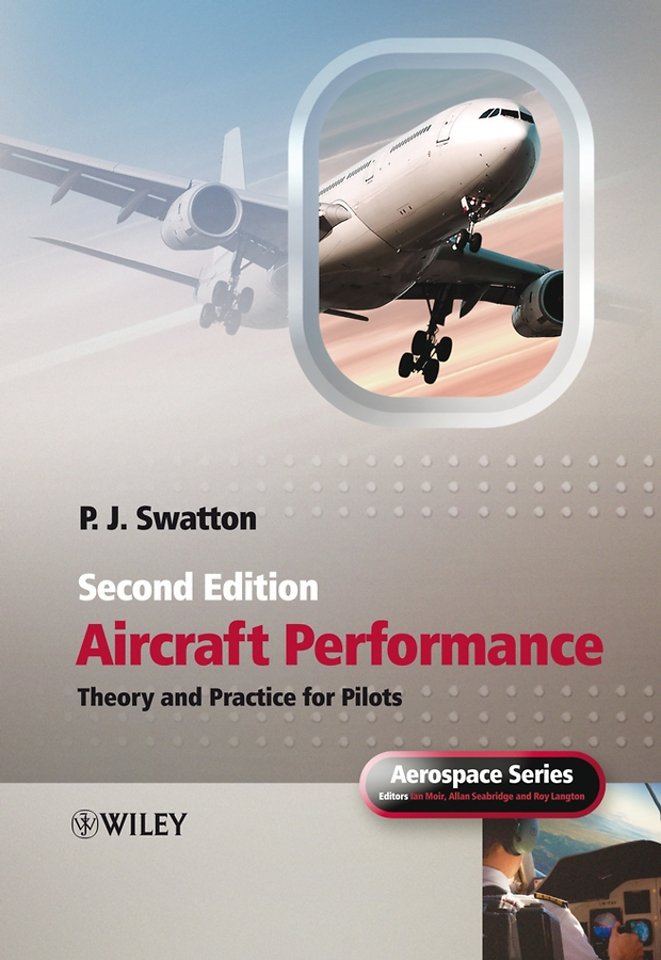
Aircraft Performance Theory and Practice for Pilots 2e
Samenvatting
Aircraft Performance Theory and Practice for Pilots, 2nd
Editionaddresses both European aircraft performance requirements (CS–23 and CS–25) and the Joint Aviation Regulations Operations rules (JAR–OPS 1) and so provides comprehensive and up to date coverage of the complex conditions within which all European public transport aeroplanes must operate today.
The subject of aircraft performance is an important part of the JAA Flight Crew Licensing syllabus for the examinations for commercial and airline transport licences, and this book provides a clear and authoritative text on a difficult topic.
It will also be of interest to commercial pilots for their annual standardization test and to flight planners, operations staff and airport operators.
Specificaties
Inhoudsopgave
<p>Preface xxv</p>
<p>Acknowledgements xxvii</p>
<p>List of Abbreviations xxix</p>
<p>Weight and Mass xxxiii</p>
<p>Introduction 1</p>
<p>PART 1 AERODYNAMIC THEORY 5</p>
<p>1 Preliminaries 7</p>
<p>1.1 Air Density 7</p>
<p>1.1.1 The Effect of Air Density 7</p>
<p>1.2 Speeds 9</p>
<p>1.3 Engine Performance 10</p>
<p>Self–Assessment Exercise 1 17</p>
<p>2 Level Flight Aerodynamics 19</p>
<p>2.1 Stability 19</p>
<p>2.2 Angle of Attack and Pitch Angle 19</p>
<p>2.3 The Four Forces 21</p>
<p>2.4 Mass 21</p>
<p>2.5 Lift 22</p>
<p>2.6 Drag 24</p>
<p>2.7 Analysis of the Total Drag Curve 27</p>
<p>2.8 The Effect of the Variables on Drag 30</p>
<p>2.9 The CL v CD Polar Diagram 32</p>
<p>2.10 Analysis of the Lift/Drag Ratio 33</p>
<p>2.11 Thrust 34</p>
<p>2.12 Analysis of the Thrust Curves 34</p>
<p>2.13 The Effect of the Variables on Thrust 36</p>
<p>2.14 Power 40</p>
<p>2.15 Analysis of the Power Curves 40</p>
<p>2.16 The Effect of the Variables on Power 42</p>
<p>2.17 Summary 45</p>
<p>Self–Assessment Exercise 2 47</p>
<p>3 Take–off and Climb Aerodynamics 53</p>
<p>3.1 Take–off 53</p>
<p>3.2 The Effect of the Variables on Take–off 54</p>
<p>3.3 Climbing Flight 55</p>
<p>3.4 The Effect of the Variables on the Climb 56</p>
<p>3.5 Climb Gradient 56</p>
<p>3.6 Rate of Climb 63</p>
<p>3.7 Aircraft Ceiling 64</p>
<p>3.8 Climb Regimes 70</p>
<p>Self–Assessment Exercise 3 75</p>
<p>4 Cruise Control 83</p>
<p>4.1 Specific Air Range (SAR) 83</p>
<p>4.2 Buffet 84</p>
<p>4.3 The Buffet Onset Boundary Chart 85</p>
<p>4.4 Cost Index 87</p>
<p>4.5 Turns 87</p>
<p>4.6 Types of Cruise 88</p>
<p>4.7 Range and Endurance: General 89</p>
<p>4.8 Cruise Techniques for Piston–engined Aeroplanes 91</p>
<p>4.9 Cruise Techniques for Turbo–prop Aeroplanes 92</p>
<p>4.10 Cruise Techniques for Jet Aeroplanes 94</p>
<p>4.11 Summary 99</p>
<p>Self–Assessment Exercise 4 101</p>
<p>5 Descent Aerodynamics 109</p>
<p>5.1 The Forces in a Descent 109</p>
<p>5.2 Gliding for Maximum Range 110</p>
<p>5.3 Gliding for Maximum Endurance 113</p>
<p>5.4 Descent Regimes 114</p>
<p>Self–Assessment Exercise 5 115</p>
<p>PART 2 Scheduled Performance Theory 119</p>
<p>6 Performance Planning 121</p>
<p>6.1 Regulations and Requirements 121</p>
<p>6.2 The Performance Class System 122</p>
<p>6.3 Performance Legislation 123</p>
<p>6.4 Aeroplane Performance Levels 125</p>
<p>6.5 Performance Planning 125</p>
<p>6.6 Altimeter Corrections 129</p>
<p>6.7 Flight Manuals 130</p>
<p>6.8 Performance Calculations and Limitations 132</p>
<p>6.9 Noise Abatement Procedures 136</p>
<p>Self–Assessment Exercise 6 139</p>
<p>7 Aerodrome Geometry 143</p>
<p>7.1 Field Lengths Available 143</p>
<p>7.2 Take–off Run Available (TORA) 144</p>
<p>7.3 Obstacles 145</p>
<p>7.4 Stopway 146</p>
<p>7.5 Accelerate/Stop Distance Available (ASDA) 147</p>
<p>7.6 Clearway 148</p>
<p>7.7 Take–off Distance Available (TODA) 150</p>
<p>7.8 Balanced and Unbalanced Field Lengths 150</p>
<p>7.9 Field–Length–Limited Take–off Mass Calculations 152</p>
<p>7.10 Runway Alignment Reduction 152</p>
<p>7.11 Runway Slope Calculation 155</p>
<p>7.12 The Effect of Runway Slope on Obstacle Calculations 156</p>
<p>7.13 Landing Distance Available (LDA) 157</p>
<p>7.14 Runway End Safety Area (RESA) 158</p>
<p>Self–Assessment Exercise 7 159</p>
<p>8 Runway Surfaces 163</p>
<p>8.1 Aerodrome Pavement Strength 163</p>
<p>8.2 The Pavement Strength Reporting System 164</p>
<p>8.3 Aircraft Classification Number (ACN) 166</p>
<p>8.4 Contaminated Surfaces 166</p>
<p>8.5 Braking Coefficient of Friction 168</p>
<p>8.6 Surface Contaminants 170</p>
<p>8.7 The Effect of Runway Contamination 172</p>
<p>8.8 Hydroplaning 178</p>
<p>Self–Assessment Exercise 8 181</p>
<p>9 The Variables 185</p>
<p>9.1 Air Density 185</p>
<p>9.2 Wind Component 187</p>
<p>9.3 Aeroplane Flap Setting 190</p>
<p>9.4 Aeroplane Mass 191</p>
<p>9.5 Runway Slope and Surface 192</p>
<p>9.6 Miscellaneous Variables 193</p>
<p>9.7 The Maximum Take–off Mass 195</p>
<p>9.8 Calculations 196</p>
<p>Self–Assessment Exercise 9 199</p>
<p>10 Speeds 205</p>
<p>10.1 General 205</p>
<p>10.2 Summary 206</p>
<p>10.3 Stalling Speeds 207</p>
<p>10.4 Take–off Speeds 209</p>
<p>10.5 V Speeds and Take–off Field Lengths 220</p>
<p>10.6 Climb Speeds 221</p>
<p>10.7 Control Speeds 223</p>
<p>10.8 Landing Speeds 224</p>
<p>10.9 Other Significant Speeds 227</p>
<p>Self–Assessment Exercise 10 231</p>
<p>PART 3 Scheduled Performance Practice 239</p>
<p>11 Class B Take–off 241</p>
<p>11.1 General Regulations 241</p>
<p>11.2 Take–off Speeds 242</p>
<p>11.3 Take–off Requirements 243</p>
<p>11.4 Take–off Distance Requirements 244</p>
<p>11.5 Class B Take–off Calculations 245</p>
<p>Self–Assessment Exercise 11 253</p>
<p>12 Class B Take–off Climb 257</p>
<p>12.1 General Requirements 257</p>
<p>12.2 Climb Minimum–Gradient Requirements 258</p>
<p>12.3 Obstacle Clearance Requirements 259</p>
<p>12.4 Take–off Climb Calculations 263</p>
<p>12.5 Climb Calculations SEP1 & MEP1 265</p>
<p>Self–Assessment Exercise 12 273</p>
<p>13 Class B En–route and Landing 277</p>
<p>13.1 En–route 277</p>
<p>13.2 Landing 280</p>
<p>Self–Assessment Exercise 13 293</p>
<p>14 Class A : Take–off Theory 297</p>
<p>14.1 General Regulations 297</p>
<p>14.2 Field–Length Requirements 299</p>
<p>14.3 Class A FLL TOM Analysis 305</p>
<p>14.4 Field–Length Requirements Analysis 306</p>
<p>14.5 Rapid Calculation Methods 316</p>
<p>Self–Assessment Exercise 14 323</p>
<p>15 Take–off Calculations 327</p>
<p>15.1 Field–Length–Limited Take–off Mass 327</p>
<p>15.2 The Aeroplane Flight Manual (AFM) 327</p>
<p>15.3 CAP 698 Section 4 328</p>
<p>15.4 Take–off Mass and Distance Calculations 328</p>
<p>15.5 Take–off Abnormalities 336</p>
<p>15.6 The Maximum Take–off Mass 344</p>
<p>Self–Assessment Exercise 15 345</p>
<p>16 Class A Take–off Climb 349</p>
<p>16.1 The Take–off Climb Requirements 349</p>
<p>16.2 The Relationship of NFP to GFP 353</p>
<p>16.3 Climb–Limited TOM 357</p>
<p>16.4 MRJT Climb–Limited TOM Calculations 362</p>
<p>16.5 Obstacle Clearance 363</p>
<p>16.6 MRJT Obstacle–Limited TOM Calculations 365</p>
<p>16.7 Planned Turns 367</p>
<p>16.8 The Performance–Limited Take–off Mass 371</p>
<p>Self–Assessment Exercise 16 373</p>
<p>17 Class A En–Route 381</p>
<p>17.1 En–route Required Navigation Performance 381</p>
<p>17.2 Descent Gradient Diminishment Requirements 382</p>
<p>17.3 Terminal Aerodromes 382</p>
<p>17.4 En–Route Requirements for all Class A Aircraft 383</p>
<p>17.5 En–Route Requirements for Three and Four–engined Aircraft 384</p>
<p>17.6 En–Route Requirements for Twin–engined Aircraft 385</p>
<p>Passenger Seats 385</p>
<p>17.7 Maximum Distance from an Adequate Aerodrome (Non–ETOPS Aeroplanes) 386</p>
<p>17.8 ETOPS Aeroplanes 387</p>
<p>17.9 Obstacle Clearance Requirements: All Class A Aeroplanes 389</p>
<p>17.10 Ceilings 390</p>
<p>17.11 Drift–Down Technique 391</p>
<p>17.12 Stabilizing Altitudes 392</p>
<p>17.13 Route Profile Comparisons 393</p>
<p>17.14 En–route Alternate Aerodromes 395</p>
<p>17.15 Fuel Jettisoning 395</p>
<p>17.16 En–route Calculations 397</p>
<p>Self–Assessment Exercise 17 405</p>
<p>18 Class A Landing 409</p>
<p>18.1 The Landing Regulations 409</p>
<p>18.2 The Landing Field–Length Requirements 410</p>
<p>18.3 Approaches 415</p>
<p>18.4 Short–field Landings 415</p>
<p>18.5 The Climb–Limited Landing Mass 416</p>
<p>18.6 Climb–Limited Landing Mass Calculations 417</p>
<p>18.7 Normal Field–Length Limited Landing Mass Calculations 419</p>
<p>18.8 Scheduled Landing Mass Calculations 421</p>
<p>18.9 The Quick Turnaround Limit 425</p>
<p>Self–Assessment Exercise 18 427</p>
<p>PART 4 CONCLUSION 431</p>
<p>19 Definitions 433</p>
<p>19.1 Speeds 433</p>
<p>19.2 Distances 439</p>
<p>19.3 Altitude, Elevation and Height 441</p>
<p>19.4 Weight and Mass 442</p>
<p>19.5 ETOPS 444</p>
<p>19.6 Obstacles 444</p>
<p>19.7 Performance 445</p>
<p>19.8 Power Unit(s) 445</p>
<p>19.9 Surfaces and Areas 446</p>
<p>19.10 Temperature 446</p>
<p>19.11 Formulae used in Performance 447</p>
<p>19.11.1 Aerodynamic Theory 447</p>
<p>20 Answers to Self–Assessment Exercises 449</p>
<p>Self–Assessment Exercise 1 449</p>
<p>Self–Assessment Exercise 2 449</p>
<p>Self–Assessment Exercise 3 450</p>
<p>Self–Assessment Exercise 4 452</p>
<p>Self–Assessment Exercise 5 452</p>
<p>Self–Assessment Exercise 6 452</p>
<p>Self–Assessment Exercise 7 454</p>
<p>Self–Assessment Exercise 8 454</p>
<p>Self–Assessment Exercise 9 455</p>
<p>Self–Assessment Exercise 10 455</p>
<p>Self–Assessment Exercise 11 459</p>
<p>Self–Assessment Exercise 12 462</p>
<p>Self–Assessment Exercise 13 464</p>
<p>Self–Assessment Exercise 14 466</p>
<p>Self–Assessment Exercise 15 470</p>
<p>Self–Assessment Exercise 16 478</p>
<p>Self–Assessment Exercise 17 482</p>
<p>Self–Assessment Exercise 18 485</p>
<p>Bibliography 487</p>
<p>Index 489</p>