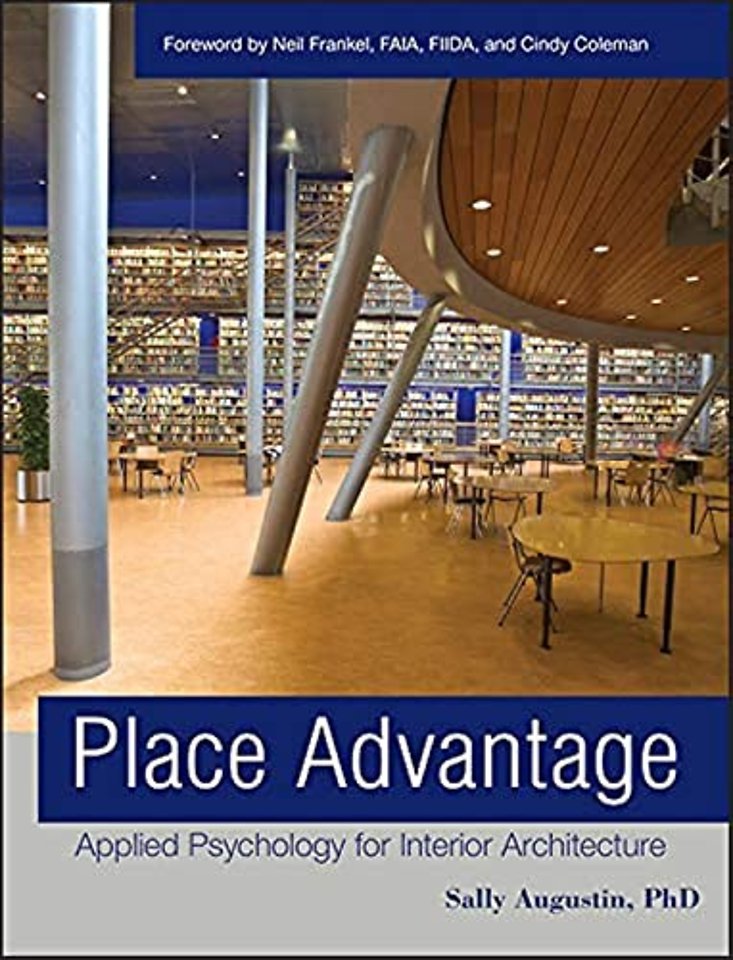
Place Advantage – Applied Psychology for Interior Architecture
Applied Psychology for Interior Architecture
Samenvatting
Using psychology to develop spaces that enrich human experience
Place design matters. Everyone perceives the world around them in a slightly different way, but there are fundamental laws that describe how people experience their physical environments. Place science principles can be applied in homes, schools, stores, restaurants, workplaces, healthcare facilities, and the other spaces people inhabit. This guide to person–centered place design shows architects, landscape architects, interior designers, and other interested individuals how to develop spaces that enrich human experience using concepts derived from rigorous qualitative and quantitative research.
In Place Advantage: Applied Psychology for Interior Architecture, applied environmental psychologist Sally Augustin offers design practitioners accessible environmental psychological insights into how elements of the physical environment influence human attitudes and behaviors. She introduces the general principles of place science and shows how factors such as colors, scents, textures, and the spatial composition of a room, as well as personality and cultural identity, impact the experience of a place. These principles are applied to multiple building types, including residences, workplaces, healthcare facilities, schools, and retail spaces.
Building a bridge between research and design practice, Place Advantage gives people designing and using spaces the evidence–based information and psychological insight to create environments that encourage people to work effectively, learn better, get healthy, and enjoy life.
Specificaties
Inhoudsopgave
<p>ACKNOWLEDGMENTS.</p>
<p>1 OVERVIEW OF THE PSYCHOLOGICAL EXPERIENCE OF SPACE.</p>
<p>2 FOUNDATIONS OF HUMAN INTERACTIONS WITH THEIR PHYSICAL WORLD.</p>
<p>3 BASIC HUMAN NEEDS SATISFIED THROUGH PLACE DESIGN.</p>
<p>4 UNIVERSAL FEATURES OF WELL–DESIGNED SPACES.</p>
<p>5 EMOTIONAL AND COGNITIVE RESPONSES TO SENSORY INFORMATION.</p>
<p>6 HUMAN REACTIONS TO STATIC ELEMENTS.</p>
<p>7 PLACE DESIGN THAT REFLECTS INDIVIDUAL PERSONALITY AND ORGANIZATIONAL CULTURE.</p>
<p>8 NATIONAL CULTURE AND PLACE EXPERIENCE.</p>
<p>9 PREDOMINANT ACTIVITY AND THE DESIGN OF PHYSICAL ENVIRONMENTS.</p>
<p>10 INTEGRATED APPLICATIONS OF PSYCHOLOGY–BASED PLACE DESIGN PRINCIPLES.</p>
<p>11 RESEARCH METHODS FOR PLACE DESIGNERS.</p>
<p>12 SPECIAL FOCUS: HOMES.</p>
<p>13 SPECIAL FOCUS: WORKPLACES.</p>
<p>14 SPECIAL FOCUS: RETAIL SPACES.</p>
<p>15 SPECIAL FOCUS: LEARNING ENVIRONMENTS.</p>
<p>16 SPECIAL FOCUS: HEALTHCARE FACILITIES.</p>
<p>17 PLACE DESIGNERS VITAL INFLUENCE ON HUMAN WELL–BEING.</p>
<p>IMPORTANT SOURCES/RELATED READINGS.</p>
<p>INDEX.</p>