Gratis boekenweekgeschenk bij een bestelling boven de €17,50 (geldt alleen voor Nederlandstalige boeken)
,

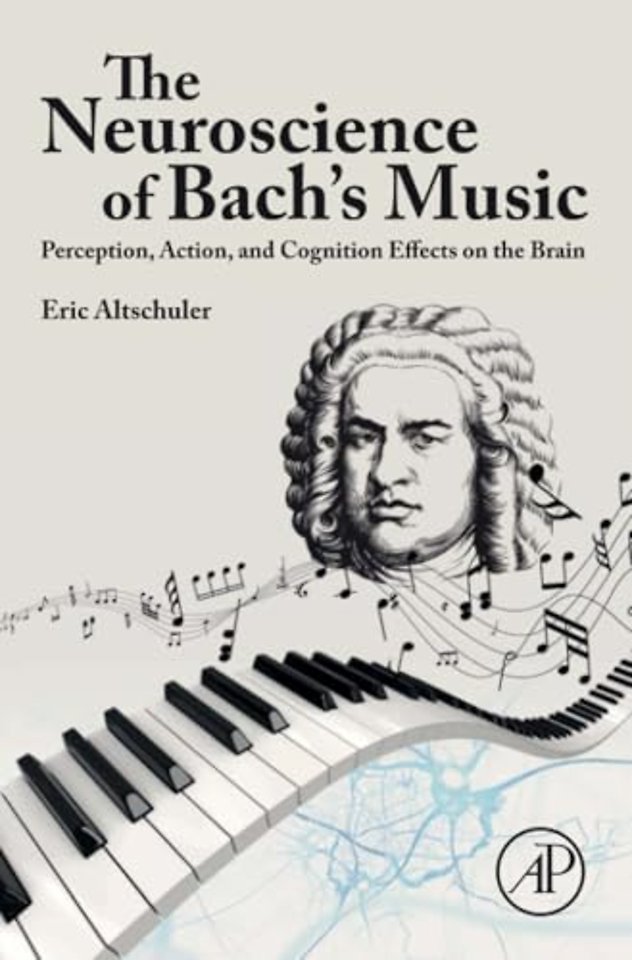
The Neuroscience of Bach’s Music

Perception, Action, and Cognition Effects on the Brain

Specificaties
Paperback, blz. | Engels
Elsevier Science | e druk, 2024
ISBN13: 9780443135194
Rubricering
Elsevier Science e druk, 2024 9780443135194
€ 157,00
Levertijd ongeveer 8 werkdagen

Samenvatting

The Neuroscience of Bach’s Music: Perception, Action, and Cognition Effects on the Brain is a comprehensive study of Johann Sebastian Bach’s music through the lens of neuroscience, examining neuroscience using Bach’s music as a tool. This book synthesizes cognitive neuroscience, music theory, and musicology to provide insights into human cognition and perception. It also explores how a neuroscience perspective can improve listening and performing experiences for Bach’s music. Written by a physician-neuroscientist recognized for scholarly articles on Bach’s music, this book uses specific examples to explore neuroscience across Bach’s compositions.

The book is structured to discuss the brain’s action, perception, and cognition as connected to specific Bach concertos, tones, notes, and performances. Two guest contributors provide insight into exact mathematical, or topologic, and music theoretic aspects of Bach’s music with implications for cognitive neuroscience.

Specificaties

ISBN13:9780443135194
Taal:Engels
Bindwijze:Paperback

Inhoudsopgave

Section 1: Prelude<br>1. Introduction<br>2. Background and Overview of Johann Sebastian Bach<br>3. Basics of the Brain and Perception<br><br>Section 2: Playing Bach and the Brain – Action<br>4. Playing Bach’s Suites for Solo Cello and Experiencing One’s Actions without Perception and Clocking Libet’s “Mind Time”<br>5. Neural Performance, Action Requirements, and Challenges of Playing Bach’s Concerto for Two Violins – A Study of Synchronization and Perceptual Experience<br>6. Adding a Third Violin to Bach’s Brandenburg Concerto No. 6 – Challenges in Synchronization and Listener Experience<br>7. More than Three – Perceptual, Action, and Cognitive Challenges for Performers and Listeners<br>8. Virtuoso of Bach’s Composing and Performance Expectations<br><br>Section 3: Listening to Bach – Perception of Musical Space and Landscape<br>9. The Neuroscience of “Affekt” – Music, Emotions, and the Brain’s Limbic System<br>10. “Affekt” Related to Tempos and Effects – Bach’s Composition and Emotional Playing<br>11. The Algebra of Bach’s Transcriptions for Various Instruments and Cognitive Effects<br><br>Section 4: Bach and the Exploration of the Tonal System and Beyond – Cognition <br>12. Parallel Fifths and the Cognitive-Perceptual System<br>13. Enharmonic Notes Across Instruments in Bach’s Compositions<br>14. Modal Traces and the Cognitive-Perceptual System<br>15. Bach’s 12-Tone Row, Cognition, and Musical Perception<br>16. Present and Future Neuroimaging Studies of Bach<br><br>Section 5: Mathematical Bach <br>17. Topology in Bach I – The Brain’s Analysis of Bach’s Match to a “Möbius Strip” Structure<br>18. Topology in Bach II – The Brain’s Ability to Hear Topologic Structures<br>19. Unbroken and Broken Symmetry in Bach’s Compositions<br>20. The Perceptual Effect of Escher’s “Tiling Time”<br><br>Section 7: Conclusion <br>21. Bach and the Brain’s Action, Perception, and Cognition – Summary and Future Applications and Implications Appendix Using Perceptual and Cognitive Approaches to Finding and Using Bach’s Tempos
€ 157,00
Levertijd ongeveer 8 werkdagen

Rubrieken

    Personen

      Trefwoorden

        The Neuroscience of Bach’s Music