,

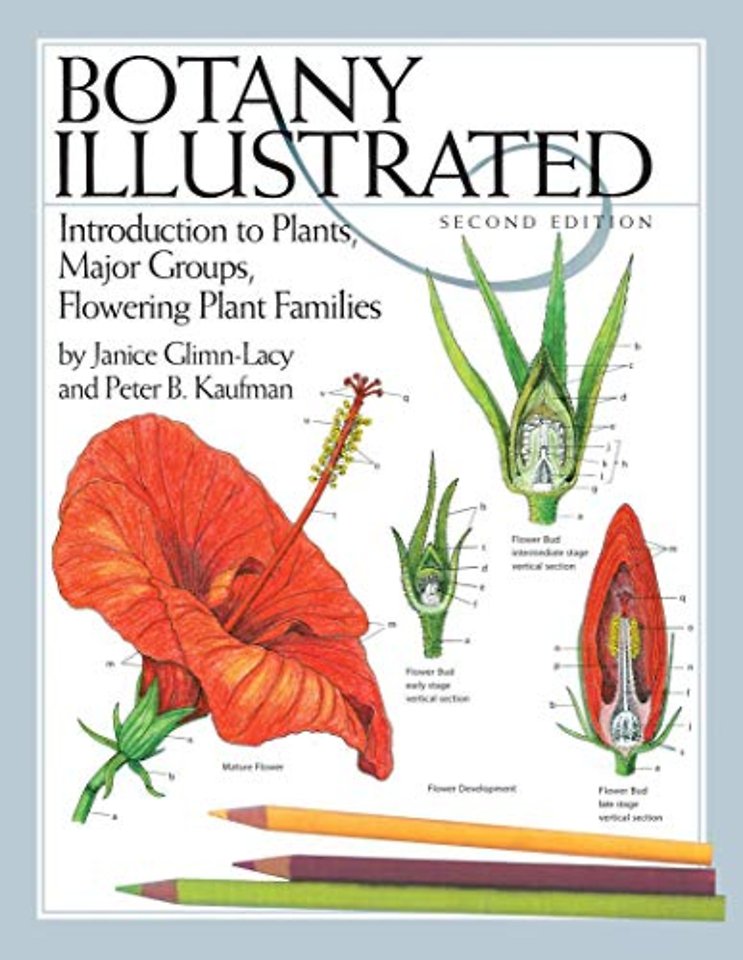
Botany Illustrated

Introduction to Plants, Major Groups, Flowering Plant Families

Specificaties
Paperback, 278 blz. | Engels
Springer US | 2e druk, 2006
ISBN13: 9780387288703
Rubricering
Springer US 2e druk, 2006 9780387288703
€ 72,99
Levertijd ongeveer 8 werkdagen

Samenvatting

Thisisadiscoverybookaboutplants. Itisforeveryone For those interested in the methods used and the interestedinplantsincludinghighschoolandcollege/ sourcesofplantmaterialsintheillustrations,anexp- university students, artists and scienti?c illustrators, nationfollows. Foradevelopmentalseriesofdrawings, senior citizens, wildlife biologists, ecologists, profes- there are several methods. One is collecting several sionalbiologists,horticulturistsandlandscapedesign- specimensatonetimeindifferentstagesofdevel- ers/architects,engineersandmedicalpractitioners,and ment;forexample,severalbudsand?owersofaplant physicaltherapistsandtheirpatients. Hereisanoppor- (see29)andbuttontomatureformsofmushrooms(see tunitytobrowseandchoosesubjectsofpersonalinter- 50,51). Then,somearecutopentoobservepartsand est,toseeandlearnaboutplantsastheyaredescribed. decidehowtopresentthem,whileothersaretousefor By adding color to the drawings, plant structures be- ?naldrawings. Anothermethodiswaitingfortheplantto come more apparent and show how they function in change,whichinvolves“forcing”stems(see14),ger- life. Thecolorcodecluestellhowtocolorforde?nition natingseeds(see40),watchingoneleafexpand(see andanillusionofdepth. Formoreinformation,thetext 69),anddrawinga?owerinoneseasonanditsmature explains the illustrations. The size of the drawings in fruitinanother(see104,109,110,111). Analternative relation to the true size of the structures is indicated towaitingforfruitistouseacollectionofdryorfrozen by ×1(thesamesize)to ×3000(enlargementfrom specimens,sothatasspring?owersappear,thelater truesize)and ×n/n(reductionfromtruesize). maturingfruitscanbeseenatthesametime(see102, 105,106). The contents re?ect a balanced selection of bota- calsubjectmatterwithemphasison?oweringplants, Inthe?rstsection,introductiontoplants,thereares- the dominant plants of the earth. After a page about eral sources for various types of drawings. Hypoth- plantnamesandterms,thebookisdividedintothree ical diagrams show cells, organelles, chromosomes, sections. The ?rst is an introduction to plants, show- the plant body indicating tissue systems and expe- ingstructureandfunction;then,majorgroups,provid- mentswithplants,and?owerplacentationandrep- inganoverviewofthediverseforms;andlastly,one- ductivestructures. Forexample,thereisnoaverageor seventhofthe?oweringplantfamilies,withtheaccent standard-looking ?ower; so, to clearly show the parts onthoseofeconomicimportance. Thesequenceinthe ofa?ower(see27),adiagramshowsastretchedout sectionsissimpletocomplex(celltoseed),primitiveto and exaggerated version of a pink (Dianthus) ?ower advanced(blue-greensto?oweringplants),andunspe- (see 87). A basswood (Tilia) ?ower is the basis for cializedtospecialized(magnoliastoastersandwater- diagrams of ?ower types and ovary positions (see plantainstoorchids). Whereappropriate,an“ofinter- 28). Another source for drawings is the use of p- est”paragraphlistswaysthesegeneraarerelevantin paredmicroscopeslidesofactualplanttissues. Some ourlives(categoriesincludeuseasfood,ornamentals, are traced from microscope slide photographs such lumber,medicines,herbs,dyes,fertilizers;noticeofwild ascross-sections,vascularbundles,andtransections. or poisonous; and importance in the ecosystem).

Specificaties

ISBN13:9780387288703
Taal:Engels
Bindwijze:paperback
Aantal pagina's:278
Uitgever:Springer US
Druk:2

Inhoudsopgave

to Plants.- Names and Terms.- Cell Structure.- Cell Organelles.- Cell Pigments.- Cell—Water Movement.- Cell Chromosomes.- Cell—Mitosis.- Cell Types.- Tissue Systems of the Plant Body.- Tissue—Epidermis.- Tissue—Primary Vascular System.- Root Types and Modifications.- Root Tissues.- Stem Structure.- Stem Tissues.- Stem Modifications.- Stem—Water Transport.- Stem—Food Transport.- Stem—Apical Dominance.- Stem—Growth Movements.- Leaf Types and Arrangement.- Leaf Tissues.- Leaf Modifications.- Leaf—Photosynthesis.- Leaf—Nutrient Deficiency Symptoms.- Flower Initiation in Response to Daylength.- Flower Structure.- Flower Structure Variations.- Flower Development.- Flower—Meiosis.- Flower—Pollen Development.- Flower—Ovule Development.- Flower Pollination by Insects.- Flower Pollination by Insects (continued).- Flower Pollination by Wind.- Flower Pollination by Birds and Bats.- Flower—Fertilization and Embryo Development.- Fruit—Dry Types.- Fruit—Fleshy Types, Compound.- Seed Structure and Germination.- Major Groups.- Major Groups; Geologic Time Scale.- Fossils.- Fossils (continued).- Blue-greens.- Slime Molds.- Water Molds, Downy Mildews, White Rusts; Chytrids and Allies.- Fungi.- Molds, Mildews, Morels (Sac Fungi).- Rusts, Smuts, Jelly Fungi (Club Fungi).- Gill Fungi.- Gill and Pore Fungi.- Pore, Coral and Toothed Fungi.- Puffballs, Stinkhorns, Bird’s-nest Fungi.- Lichens.- Dinoflagellates.- Golden Algae, Yellow-green Algae, Diatoms.- Red Algae.- Green Algae.- Brown Algae.- Brown Algae (continued).- Brown Algae (continued).- Stoneworts.- Liverworts, Hornworts, Mosses.- Whisk Ferns.- Clubmosses, Spikemosses, Quillworts.- Horsetails.- Ferns.- Common Ferns.- Fern Leaf Development.- Water Ferns.- Cycads.- Ginkgo.- Conifers.- Gnetes.- Flowering Plant Classification.- Major Land Plant Communities.- Flowering Plant Families.- Magnolia Family (Magnoliaceae).- Laurel Family (Lauraceae).- Water Lily Family (Nymphaeaceae).- Buttercup Family (Ranunculaceae).- Witch Hazel Family (Hamamelidaceae).- Elm Family (Ulmaceae).- Beech Family (Fagaceae).- Birch Family (Betulaceae).- Cactus Family (Cactaceae).- Cactus Family (continued).- Pink Family (Caryophyllaceae).- Goosefoot Family (Chenopodiaceae).- Buckwheat Family (Polygonaceae).- Mallow Family (Malvaceae).- Pitcher-plant Family (Sarraceniaceae).- Violet Family (Violaceae).- Begonia Family (Begoniaceae).- Gourd Family (Cucurbitaceae).- Willow Family (Salicaceae).- Mustard Family (Brassicaceae).- Heath Family (Ericaceae).- Saxifrage Family (Saxifragaceae).- Rose Family (Rosaceae).- Pea Family (Fabaceae).- Dogwood Family (Cornaceae).- Staff-tree Family (Celastraceae).- Spurge Family (Euphorbiaceae).- Grape Family (Vitaceae).- Maple Family (Aceraceae).- Cashew Family (Anacardiaceae).- Rue Family (Rutaceae).- Geranium Family (Geraniaceae).- Carrot Family (Apiaceae).- Milkweed Family (Asclepiadaceae).- Nightshade Family (Solanaceae).- Morning Glory Family (Convolvulaceae).- Mint Family (Lamiaceae).- Olive Family (Oleaceae).- Figwort Family (Scrophulariaceae).- Gesneria Family (Gesneriaceae).- Honeysuckle Family (Caprifoliaceae).- Teasel Family (Dipsacaceae).- Aster Family (Asteraceae).- Water-plantain Family (Alismataceae).- Spiderwort Family (Commelinaceae).- Sedge Family (Cyperaceae).- Grass Family (Poaceae).- Arrowroot Family (Marantaceae).- Palm Family (Arecaceae).- Palm Family (continued).- Arum Family (Araceae).- Lily Family (Liliaceae).- Iris Family (Iridaceae).- Orchid Family (Orchidaceae).
€ 72,99
Levertijd ongeveer 8 werkdagen

Rubrieken

    Personen

      Trefwoorden

        Botany Illustrated