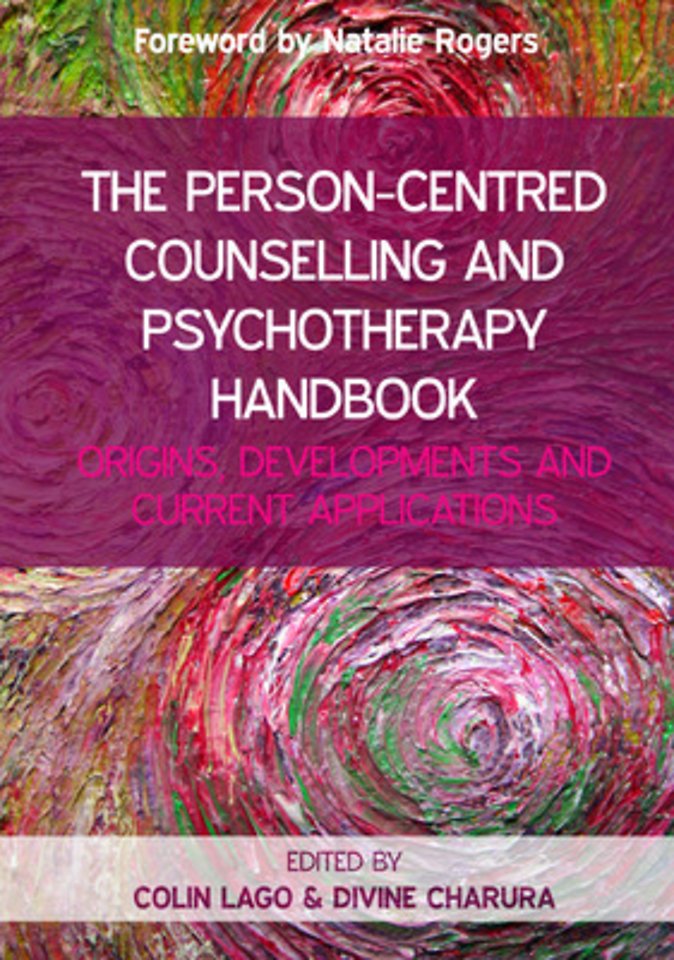
The Person-Centred Counselling and Psychotherapy Handbook: Origins, Developments and Current Applications
Samenvatting
From the origins of Carl Rogers’ person-centred approach to the cutting-edge developments of therapy today, The Person-Centred Counselling and Psychotherapy Handbook charts the journey of an ambitious vision to its successful reality. In this book, Lago and Charura bring together history, theory, research and practice to deliver a complete and unique perspective on the person-centred approach.
Key topics include:
• The groundbreaking journey of PCA’s early decades, spearheaded by Carl Rogers• Developments and extensions of the original theory and practice• The influence of PCA in developing new therapies and practice• The frontier of contemporary PCA, and therapists' work with client groups of difference and diversity
With its broad view that explores the origins, variations and applications of PCA, The Person-Centred Counselling and Psychotherapy Handbook gives a comprehensive overview of the knowledge required and the issues faced by practitioners, making it an important resource for the seasoned and training practitioner alike. "This particularly welcome contribution is distinctive in fostering a contemporary, contextualised and transcultural person-centred practice, edited as it is by two leading UK figures in the field of diversity in counselling and psychotherapy."Review in Therapy Today, October 2016
Specificaties
Inhoudsopgave
Anderen die dit kochten, kochten ook
-
 Hugo Reitsma€ 21,99
 -
Marianne Heemskerk€ 29,95
-
Bram Schaper€ 24,99
-
Lammert Kamphuis€ 18,99
-
Dirk De Wachter€ 24,99
-
John Macionis€ 66,95