
Herminia Dominguez,
Leonel Pereira,
Stefan Kraan
Elsevier Science
e druk, 2023
9780323988193
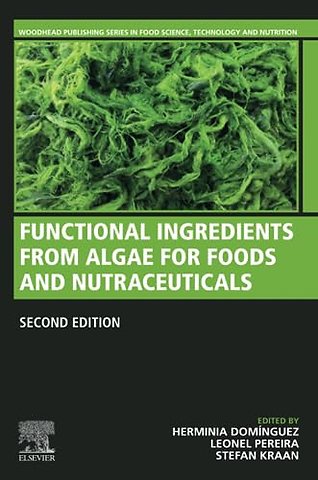
Functional Ingredients from Algae for Foods and Nutraceuticals
Specificaties
Paperback, blz.
|
Engels
Elsevier Science |
e druk, 2023
ISBN13: 9780323988193
Rubricering
Onderdeel van serie
Woodhead Publishing Series in Food Science, Technology and Nutrition
Levertijd ongeveer 8 werkdagen
Samenvatting
Functional Ingredients from Algae for Foods and Nutraceuticals, Second Edition presents an overview on the composition, properties and potential to develop novel ingredients and additives for functional foods and nutraceuticals. This revised edition includes recent data on the composition and biological properties of algae, along with examples of the development of novel algae products and their performance. It includes a new chapter on both conventional and green technologies for product development and will be of interest to nutrition researchers, food technologists and marine scientists, as well as those with an interest in natural product development.
Specificaties
Inhoudsopgave
<p>Section 1: Introduction<br>1. Algae as a source of biologically active ingredients for the formulation of functional foods and nutraceuticals<br>2. Challenges for the development of functional foods and nutraceuticals from algae<br>3. Seaweeds foods and their nutritional value<br>4.Green extraction of bioactive compounds from microalgae and seaweeds</p> <p>Section 2: Major components<br>5. Algal polysaccharides<br>6. Phenolic compounds<br>7. Algal proteins, peptides and amino acids<br>8. Algal lipids, fatty acids and sterols<br>9. Minerals, pigments and minor compounds in algae</p> <p>Section 3: Biological properties<br>10. Antioxidant activity of compounds isolated from algae<br>11. Antimicrobial activity of compounds isolated from algae<br>12. Anticancer agents derived from algae<br>13. Anti-inflammatory properties of algae<br>14. Algae and cardiovascular-health<br>15. Gastric and hepatic protective effects of algal components<br>16. Anti-obesity and anti-diabetic activities of algae<br>17. Neuroprotection<br>18. High-intensity energy performance<br>19. Inmunostimulant properites of algae</p> <p>Section 4: Novel foods and nutraceuticals<br>20. Prebiotic properties of algae and algae-supplemented products<br>21. Development of nutraceuticals containing marine algal oils<br>22. Design of healthy foods and beverages containing whole algae<br>23. Algal hydrocolloids for the delivery of active compounds<br>24. Cosmeceuticals from algae<br>25. Algae for the formulation of gluten-free bakery products<br>26. Spirulina for the food and functional food industries</p>