
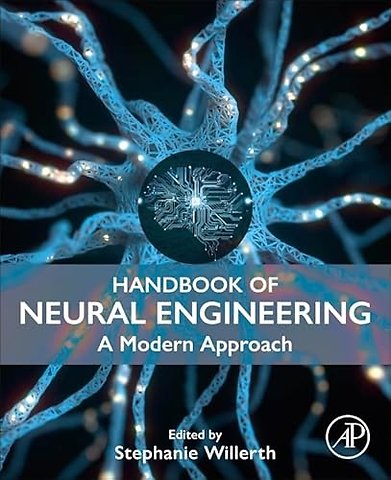
Handbook of Neural Engineering

A Modern Approach

Specificaties
Paperback, blz. | Engels
Elsevier Science | e druk, 2024
ISBN13: 9780323957304
Rubricering
Elsevier Science e druk, 2024 9780323957304
€ 211,00
Levertijd ongeveer 8 werkdagen

Samenvatting

Handbook of Neural Engineering: A Modern Approach provides a comprehensive overview of the field from biology to recent technological advances through an interdisciplinary lens. The book is divided into three sections: 1) Biological Considerations for Neural Engineering, 2) Neural Engineering Strategies, and 3) Emerging Technologies for Neural Engineering. It provides the first comprehensive text that addresses this combination of subjects. Neurodegenerative diseases, including Alzheimer’s, Parkinson’s and Multiple Sclerosis, represent an enormous healthcare burden, and many of these diseases lack true cures, making it imperative to study the biological systems that become disordered to understand potential treatment options.

This book covers the basic neurobiology and physiology, common neural engineering strategies, and emerging technologies in this field. It is designed to support an upper year/graduate elective course in neural engineering, and will provide a foundational overview of the field for interdisciplinary researchers, clinicians, engineers, and industry professionals. The handbook provides readers with a strong base in both biological and engineering principles along with the concepts necessary to implement solutions using Neural Engineering.

Specificaties

ISBN13:9780323957304
Taal:Engels
Bindwijze:Paperback

Inhoudsopgave

Contributors xiii<br>Preface xix<br>Acknowledgments xxi<br>1. Introduction to neural engineering 1<br>Stephanie Willerth<br>1 Introduction 1<br>2 Biomedical engineering and the evolution of neural engineering 5<br>3 Biological considerations for neural engineering 7<br>4 Neural engineering strategies 10<br>5 Emerging technologies for neural engineering 11<br>6 Conclusions 13<br>References 13<br>SECTION 1 Biological considerations for neural engineering<br>2. Overview of the structure and function of the nervous system 17<br>1 Introduction 17<br>2 Early development of the nervous system 18<br>3 Functional anatomy of the CNS 21<br>4 Cell types 26<br>5 Neuronal communication 32<br>6 Summary and conclusions 41<br>References 41<br>3. Cellular biology of the central nervous system 49<br>1 Introduction 49<br>2 Neurons 49<br>3 Astrocytes 60<br>4 Microglia 66<br>5 Oligodendrocytes 72<br>6 Summary and conclusions 78<br>References 78<br>4. Extracellular matrix of the nervous system 97<br>1 Introduction 99<br>2 Composition and assembly of ECM in the nervous system 100<br>3 ECM during brain development 108<br>4 Neural ECM in aging and disease 115<br>5 Engineering ECM for human brain tissue models 120<br>6 Summary 130<br>References 131<br>5. The immune system and its role in the nervous system 149<br>1 Introduction 149<br>2 Overview of the immune system 150<br>3 Immunology within the nervous system 153<br>4 Interactions between the nervous system and the systemic<br>immune system 158<br>5 Neuroimmunity in injury, disease, and aging 159<br>6 Methods in neuroimmunology 162<br>7 Neuroimmune engineering 165<br>8 Conclusion 171<br>References 171<br>6. Modulating disease states of the central nervous system:<br>Outcomes of neuromodulation on microglia 179<br>1 Introduction 179<br>2 CNS seen from the microglial angle 183<br>3 Memory disorders 187<br>4 Disorders of inhibition 194<br>5 Disorders of consciousness and coma 203<br>6 Challenges and limitations of the techniques 212<br>7 Conclusion 213<br>References 214<br>7. The effect of traumatic injuries on the nervous system 231<br>1 Traumatic brain injury: Context and definitions 231<br>2 Primary injury and the onset of traumatic brain injury pathophysiology 234<br>3 The continuum of secondary injury 237<br>4 Acute phase 237<br>5 Subacute phase 248<br>6 Chronic phase 250<br>7 Repetitive TBI 253<br>8 Future directions in neurotrauma research 255<br>References 258<br>8. Chronic pain as a neurological disease and neural engineering strategies for its management 271<br>1 Pain is a protective mechanism necessary for survival 271<br>2 The nociceptive pain circuit 271<br>3 Chronic pain is a disease in its own right 284<br>4 Neuromodulation as an engineering approach in managing chronic pain 289<br>5 Conclusions 293<br>Acknowledgment 293<br>References 293<br>SECTION 2 Neural engineering strategies<br>9. An overview of noninvasive imaging strategies in neural engineering 301<br>1 Introduction 301<br>2 Utility of imaging modalities to neural engineering 303<br>3 Optical imaging 304<br>4 Ultrasound (US) 313<br>5 Magnetic resonance imaging (MRI) 315<br>6 X-rays and computed tomography (CT) 326<br>7 Positron emission tomography (PET) and single photon emission computed tomography (SPECT) 329<br>8 Electroencephalogram/magnetoencephalography (EEG/MEG) 333<br>9 Conclusions 335<br>References 335<br>10. Brain-computer interface 351<br>1 Defining brain-computer interface 351<br>2 History of BCI 354<br>3 Innovations in modern-day BCIS 357<br>4 Brief introduction to the nervous system 359<br>5 BCI types 360<br>6 BCI components 365<br>7 BCI applications 374<br>8 Challenges and future direction 378<br>References 380<br>11. Neuroprosthetics 389<br>1 Auditory prosthesis 389<br>2 Deep brain stimulation 394<br>3 Spinal cord neuroprosthetics 396<br>4 Neuromuscular prosthetics 398<br>5 Neuroprosthetics for internal organs 400<br>6 Outlook: The next generation of neuroprosthetics 404<br>References 406<br>12. Neural tissue engineering 413<br>1 Functional bio/nanomaterials 415<br>2 In vitro 3D tissue culture platforms for nervous system (spheroids and organoids) 430<br>3 Microfluidic systems 439<br>4 Scaffolding (implantable neural interfaces) 444<br>5 Electrical stimulations 452<br>6 Summary 457<br>References 459<br>SECTION 3 Emerging technologies for neural engineering<br>13. Optogenetics for neural tissue engineering applications 479<br>1 Biophysics of microbial rhodopsin 479<br>2 Diversity of optogenetic channels, pumps, and receptors 483<br>3 Use of light-sensitive proteins to manipulate intracellular signaling and metabolism 485<br>4 Visualization of cell activity 488<br>5 Optogenetics in biological systems 491<br>6 Optogenetics in medical applications 493<br>7 Future aims in optogenetic engineering 498<br>References 499<br>14. Neuroengineering: History, modeling, and deliverables 505<br>1 History of genomic editing 505<br>2 Neuronal cell models 510<br>3 In vivo models and applications of delivery 523<br>References 534<br>15. Recent developments in 3D bioprinting for neural tissue engineering 549<br>1 Overview of modeling neural tissue: From 2D and<br>3D culture systems to 3D bioprinting 549<br>2 How 3D bioprinting works 557<br>3 Design of biomaterial-based bioinks to mimic the neural microenvironment 561<br>4 3D bioprinted models for studying neurodegenerative diseases 576<br>5 Conclusion 579<br>References 579<br>16. Maximizing the utility of brain organoid models and overcoming their perceived limitations 593<br>1 Introduction 593<br>2 Current methods for generating brain organoids 595<br>3 Uses of brain organoids 613<br>4 Ethical considerations and limitations to data interpretation 616<br>5 Perspective and summary 616<br>References 617<br>17. Modeling the synapse and neuromuscular junction using organ-on-a-chip technology 625<br>1 Introduction 625<br>2 Synapse- and NMJ-on-a-chip: Design and fabrication 630<br>3 Applications of synapse and NMJ chips 633<br>4 Challenges and future directions 637<br>Acknowledgments 639<br>References 639<br>Index 645
€ 211,00
Levertijd ongeveer 8 werkdagen

Rubrieken

    Personen

      Trefwoorden

        Handbook of Neural Engineering