, , , e.a.

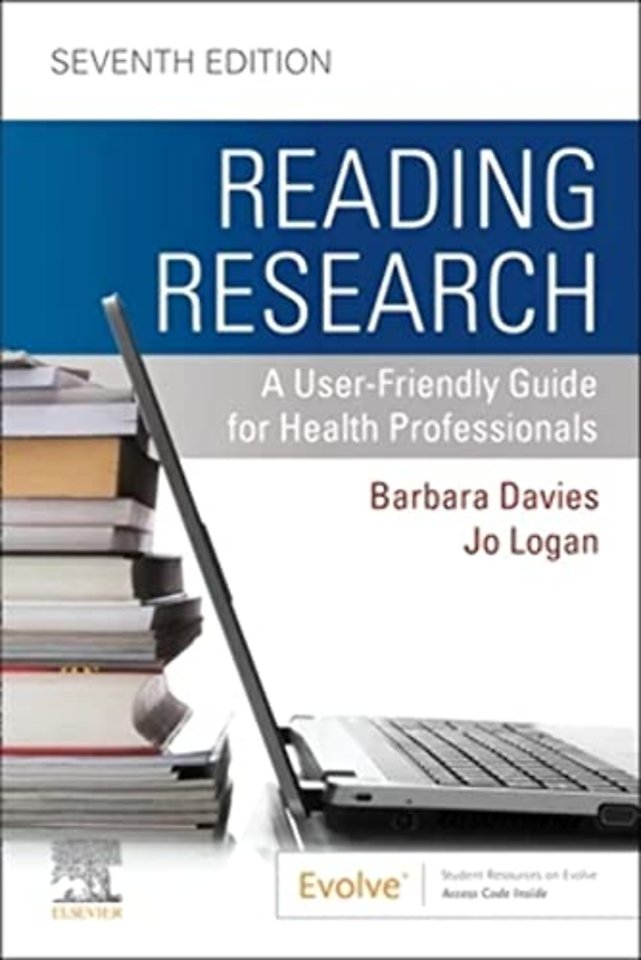
Reading Research

A User-Friendly Guide for Health Professionals

Specificaties
Paperback, blz. | Engels
Elsevier Health Sciences | e druk, 2021
ISBN13: 9780323759243
Rubricering
Elsevier Health Sciences e druk, 2021 9780323759243
€ 20,99
Levertijd ongeveer 8 werkdagen

Samenvatting

Learn how to evaluate and apply health sciences research with this beginner’s guide! Reading Research: A User-Friendly Guide for Health Professionals, 7th Edition provides a clear introduction to reading and understanding research articles, with practical guidelines for implementing research into clinical practice. It describes how to interpret common research methods including qualitative, quantitative and mixed-method approaches, and explains how to find relevant, reliable research on the internet. Written by Barbara Davies and Jo Logan, both of whom are noted educators and research experts, this easy-to-use pocket guide is ideal for both students and health professionals. Concise overview of health sciences-related research maximizes your study time and makes it easier to understand qualitative, quantitative, and mixed-methods research. Succinct introduction to reading and understanding health sciences research articles is accompanied by practice worksheets and other learning resources on an Evolve website. Helpful guidelines suggest how to find interesting research results, identify how to use research results towards planning and delivering best practices and improving patient outcomes, and recommend actions to address barriers to using research in practice. UNIQUE! Tips boxes provide practical, easy-to-follow advice for those who are new to the subject. UNIQUE! Alert! boxes warn of common assumptions made when reading research. Recommendations for best practices in research include brief definitions of popular research terms as well as links to World Health Organization information, the latest RNAO (Registered Nurses’ Association of Ontario) Best Practice Guidelines, and guidelines from Australia, the USA, the UK, and other countries. NEW! Enhanced worksheet exercises on the Evolve website demonstrate how to apply knowledge gained from the text, based on research articles drawn from Australia, Canada, Europe, and the USA, on a variety of health issues encountered in hospital and community settings.

Specificaties

ISBN13:9780323759243
Taal:Engels
Bindwijze:Paperback

Inhoudsopgave

<p>1 Introduction </p> <p>Why Read Research Articles? </p> <p>Some Friendly Advice About Reading Research Articles </p> <p>Check Out the Reader’s Companion Worksheets </p> <p>2 Easy Steps for Reading Research </p> <p>Title Abstract </p> <p>Introduction </p> <p>Theory Issues </p> <p>Methods </p> <p>Design </p> <p>Part 1: Qualitative Design Methods </p> <p>Rigour in Qualitative Studies </p> <p>Sample and Setting </p> <p>Data Collection </p> <p>Data Analysis and Results </p> <p>Part 2: Quantitative Design Methods </p> <p>Experimental Designs </p> <p>Non-Experimental Designs </p> <p>Rigour in Quantitative Studies </p> <p>Sample </p> <p>Data Collection </p> <p>How to Judge the Rigour of a Data Collection Tool </p> <p>Sensitivity and Specificity </p> <p>Data Analysis and Results </p> <p>Descriptive Statistics </p> <p>Inferential Statistics </p> <p>Part 3: Mixed Methods Research </p> <p>Mixed Methods Study Characteristics </p> <p>Mixed Methods Data Collection and Analysis </p> <p>Results and Discussion </p> <p>A Final Suggestion: The Acknowledgements </p> <p>3 Finding Interesting Research Results </p> <p>Where and How to Start</p> <p>Define Your Clinical Question </p> <p>Steps in Constructing a PICO Chart </p> <p>Search a Database for Relevant Research </p> <p>Search Terms </p> <p>How Far Back Should You Search? </p> <p>Review Articles </p> <p>How to Read the Fictional Forest Plot Depicting a Meta-Analysis </p> <p>Appraising Reviews </p> <p>Searching the Internet for Research Articles </p> <p>Peer Review </p> <p>A Cautionary Note About Predatory or Fake Journals on the Internet </p> <p>How Will I Know If a Journal Is Fake?</p> <p>Why Should I Be Concerned If the Paper Is Published in a Predatory Journal</p> <p>Web Portals </p> <p>Other Types of Databases </p> <p>Keeping Up to Date </p> <p>Social Media: Facebook </p> <p>4 Using Research Results </p> <p>Research Utilization </p> <p>The Questions to Ask </p> <p>Clinical Practice Guidelines </p> <p>Appraisal of Guidelines for Research and Evaluation </p> <p>Practice Guideline Websites </p> <p>The Decision to Use Research Results </p> <p>Gathering Support and Resources </p> <p>Want to Learn More? </p> <p>Bibliography </p> <p>Glossary </p> <p>Journals That Publish Peer-Reviewed Research </p> <p>Worksheets </p> <p>1. Qualitative Research: The Reader’s Companion Worksheet </p> <p>2. Quantitative Research: The Reader’s Companion Worksheet </p> <p>3. Mixed Methods Research: The Reader’s Companion</p> <p>Worksheet </p> <p>4. Systematic Reviews: The Reader’s Companion Worksheet </p> <p>5. Using Research Results: The Reader’s Companion</p> <p>Worksheet</p>
€ 20,99
Levertijd ongeveer 8 werkdagen

Rubrieken

    Personen

      Trefwoorden

        Reading Research