Gratis boekenweekgeschenk bij een bestelling boven de €17,50 (geldt alleen voor Nederlandstalige boeken)
, , , e.a.

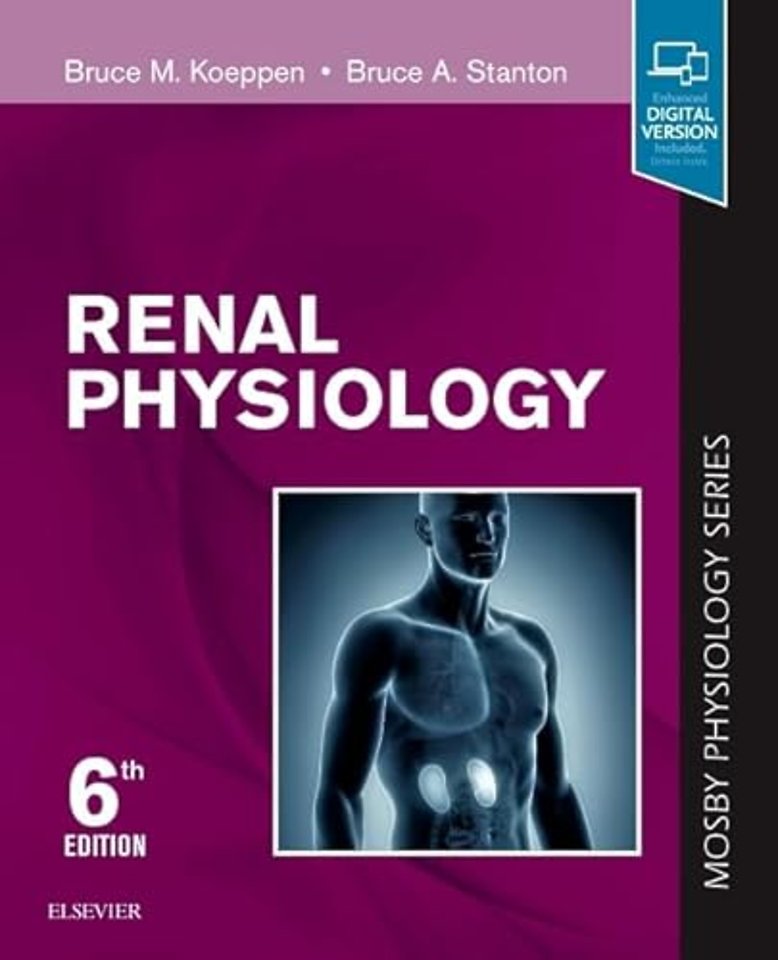
Renal Physiology

Mosby Physiology Series

Specificaties
Paperback, blz. | Engels
Elsevier Health Sciences | e druk, 2018
ISBN13: 9780323595681
Rubricering
Elsevier Health Sciences e druk, 2018 9780323595681
Onderdeel van serie Mosby's Physiology Monograph
€ 53,49
Levertijd ongeveer 8 werkdagen

Samenvatting

Gain a foundational understanding of renal physiology and how the renal system functions in health and disease. Renal Physiology, a volume in the Mosby Physiology Series, explains the fundamentals of this complex subject in a clear and concise manner, while helping you bridge the gap between normal kidney function and disease with pathophysiology content throughout the book. Helps you easily master the material in a systems-based curriculum with learning objectives, "In the Clinic" and "At the Molecular Level" boxes, chapter summaries, clinical cases with review questions and answers, self-study questions, and a comprehensive exam. Includes more than 250 clear, 2-color diagrams that simplify complex concepts. Features clinical commentaries that show you how to apply what you've learned to real-life clinical situations. Enhanced eBook version included with purchase. Your enhanced eBook allows you to access all of the text, figures, and references from the book on a variety of devices.

Complete the Mosby Physiology Series! Systems-based and portable, these titles are ideal for integrated programs.

Blaustein, Kao, & Matteson: Cellular Physiology and Neurophysiology Cloutier: Respiratory Physiology Pappano & Wier: Cardiovascular Physiology Johnson: Gastrointestinal Physiology White, Harrison, & Mehlmann: Endocrine and Reproductive Physiology Hudnall: Hematology: A Pathophysiologic Approach

Specificaties

ISBN13:9780323595681
Taal:Engels
Bindwijze:Paperback

Inhoudsopgave

<p>INTRODUCTION</p> <p>CHAPTER 1</p> <p>PHYSIOLOGY OF BODY FLUIDS</p> <p>Objectives</p> <p>Concept of Steady-State Balance</p> <p>Physicochemical Properties of Electrolyte Solutions</p> <p>Molarity and Equivalence</p> <p>Osmosis and Osmotic Pressure</p> <p>Osmolarity and Osmolality</p> <p>Tonicity</p> <p>Oncotic Pressure</p> <p>Specific Gravity</p> <p>Volumes of Body Fluid Compartments</p> <p>Composition of Body Fluid Compartments</p> <p>Fluid Exchange between Body Fluid Compartments</p> <p>Capillary Fluid Exchange</p> <p>Cellular Fluid Exchange</p> <p>Summary</p> <p>Key Words and Concepts</p> <p>Self-Study Problems</p> <p>CHAPTER 2</p> <p>STRUCTURE AND FUNCTION OF THE KIDNEYS</p> <p>Objectives</p> <p>Structure of the Kidneys</p> <p>Gross Anatomy</p> <p>Ultrastructure of the Nephron</p> <p>Ultrastructure of the Glomerulus</p> <p>Ultrastructure of the Juxtaglomerular Apparatus</p> <p>Innervation of the Kidneys</p> <p>Summary</p> <p>Key Words and Concepts</p> <p>Self-Study Problems</p> <p>CHAPTER 3</p> <p>GLOMERULAR FILTRATION AND RENAL BLOOD FLOW</p> <p>Objectives</p> <p>Renal Clearance</p> <p>Glomerular Filtration Rate</p> <p>Glomerular Filtration</p> <p>Determinants of Ultrafiltrate Composition</p> <p>Dynamics of Ultrafiltration</p> <p>Renal Blood Flow</p> <p>Regulation of Renal Blood Flow and Glomerular Filtration Rate</p> <p>Sympathetic Nerves</p> <p>Angiotensin II</p> <p>Prostaglandins</p> <p>Nitric Oxide</p> <p>Endothelin</p> <p>Bradykinin</p> <p>Adenosine</p> <p>Natriuretic Peptides</p> <p>Adenosine Triphosphate</p> <p>Glucocorticoids</p> <p>Histamine</p> <p>Dopamine</p> <p>Summary</p> <p>Key Words and Concepts</p> <p>Self-Study Problems</p> <p>CHAPTER 4</p> <p>RENAL TRANSPORT MECHANISMS: NaCl AND WATER ABSORPTION ALONG THE NEPHRON</p> <p>Objectives</p> <p>General Principles of Membrane Transport</p> <p>General Principles of Transepithelial Solute and Water Transport</p> <p>NaCl, Solute, and Water Reabsorption Along the Nephron</p> <p>Proximal Tubule</p> <p>Henle’s Loop</p> <p>Distal Tubule and Collecting Duct</p> <p>Regulation of NaCl and Water Reabsorption</p> <p>Summary</p> <p>Key Words and Concepts</p> <p>Self-Study Problems</p> <p>CHAPTER 5</p> <p>REGULATION OF BODY FLUID OSMOLALITY: REGULATION OF WATER BALANCE</p> <p>Objectives</p> <p>Arginine Vasopressin</p> <p>Osmotic Control of Arginine Vasopressin Secretion</p> <p>Hemodynamic Control of Arginine Vasopressin Secretion</p> <p>Arginine Vasopressin Actions on the Kidneys</p> <p>Thirst</p> <p>Renal Mechanisms for Dilution and Concentration of the Urine</p> <p>Medullary Interstitium</p> <p>Vasa Recta Function</p> <p>Assessment of Renal Diluting and Concentrating Ability</p> <p>Summary</p> <p>Key Words and Concepts</p> <p>Self-Study Problems</p> <p>CHAPTER 6</p> <p>REGULATION OF EXTRACELLULAR FLUID VOLUME AND NaCl BALANCE</p> <p>Objectives</p> <p>Whole-Body Na+ Balance</p> <p>Concept of Effective Circulating Volume</p> <p>Volume-Sensing Systems</p> <p>Volume Sensors in the Low-Pressure Cardiopulmonary Circuit</p> <p>Volume Sensors in the High-Pressure Arterial Circuit</p> <p>Volume Sensor Signals</p> <p>Renal Sympathetic Nerves</p> <p>Renin-Angiotensin-Aldosterone System</p> <p>Natriuretic Peptides</p> <p>Arginine Vasopressin</p> <p>Control of Renal NaCl Excretion During Euvolemia</p> <p>Mechanisms for Maintaining Constant Na+ Delivery to the Distal Tubule in Euvolemia</p> <p>Regulation of Distal Tubule and Collecting Duct Na+ Reabsorption in Euvolemia</p> <p>Control of Na+ Excretion with Volume Expansion</p> <p>Control of Na+ Excretion with Volume Contraction</p> <p>Edema</p> <p>Alterations in Starling Forces</p> <p>Capillary Hydrostatic Pressure (Pc)</p> <p>Plasma Oncotic Pressure (πc)</p> <p>Lymphatic Obstruction</p> <p>Capillary Permeability</p> <p>Role of the Kidneys</p> <p>Summary</p> <p>Key Words and Concepts</p> <p>Self-Study Problems</p> <p>CHAPTER 7</p> <p>REGULATION OF POTASSIUM BALANCE</p> <p>Objectives</p> <p>Overview of K<SUP>+</SUP> Homeostasis</p> <p>Regulation of Plasma [K<SUP>+</SUP>]</p> <p>Epinephrine</p> <p>Insulin</p> <p>Aldosterone</p> <p>Alterations of Plasma [K<SUP>+</SUP>]</p> <p>Acid-Base Balance</p> <p>Plasma Osmolality</p> <p>Cell Lysis</p> <p>Exercise</p> <p>K<SUP>+</SUP> Excretion by the Kidneys</p> <p>Cellular Mechanisms of K<SUP>+</SUP> Transport by Principal Cells and Intercalated Cells in the Distal Tubule and Collecting Duct</p> <p>Regulation of K<SUP>+</SUP> Secretion by the Distal Tubule and Collecting Duct</p> <p>Plasma [K<SUP>+</SUP>]</p> <p>Aldosterone</p> <p>Arginine Vasopressin</p> <p>Factors that Perturb K<SUP>+</SUP> Excretion</p> <p>Flow of Tubular Fluid</p> <p>Acid-Base Balance</p> <p>Glucocorticoids</p> <p>Summary</p> <p>Key Words and Concepts</p> <p>Self-Study Problems</p> <p>CHAPTER 8</p> <p>REGULATION OF ACID-BASE BALANCE</p> <p>Objectives</p> <p> Buffer System</p> <p>Overview of Acid-Base Balance</p> <p>Renal Net Acid Excretion</p> <p> Reabsorption Along the Nephron</p> <p>Regulation of H+ Secretion</p> <p>Formation of New </p> <p>Response to Acid-Base Disorders</p> <p>Extracellular and Intracellular Buffers</p> <p>Respiratory Compensation</p> <p>Renal Compensation</p> <p>Simple Acid-Base Disorders</p> <p>Metabolic Acidosis</p> <p>Metabolic Alkalosis</p> <p>Respiratory Acidosis</p> <p>Respiratory Alkalosis</p> <p>Analysis of Acid-Base Disorders</p> <p>Summary</p> <p>Key Words and Concepts</p> <p>Self-Study Problems</p> <p>CHAPTER 9</p> <p>REGULATION OF CALCIUM AND PHOSPHATE HOMEOSTASIS</p> <p>Objectives</p> <p>Calcium</p> <p>Overview of Ca<SUP>++</SUP> Homeostasis</p> <p>Ca<SUP>++</SUP> Transport Along the Nephron</p> <p>Regulation of Urinary Ca<SUP>++</SUP> Excretion</p> <p>Calcium-Sensing Receptor</p> <p>Phosphate</p> <p>Overview of Pi Homeostasis</p> <p>Pi Transport Along the Nephron</p> <p>Regulation of Urinary Pi Excretion</p> <p>Integrative Review of Parathyroid Hormone and Calcitriol on Ca<SUP>++</SUP> and Pi Homeostasis</p> <p>Summary</p> <p>Key Words and Concepts</p> <p>Self-Study Problems</p> <p>CHAPTER 10</p> <p>PHYSIOLOGY OF DIURETIC ACTION</p> <p>Objectives</p> <p>General Principles of Diuretic Action</p> <p>Sites of Action of Diuretics</p> <p>Response of Other Nephron Segments</p> <p>Adequate Delivery of Diuretics to Their Site of Action</p> <p>Volume of the Extracellular Fluid</p> <p>Diuretic Braking Phenomenon</p> <p>Mechanisms of Action of Diuretics</p> <p>Osmotic Diuretics</p> <p>Carbonic Anhydrase Inhibitors</p> <p>Loop Diuretics</p> <p>Thiazide Diuretics</p> <p>K<SUP>+</SUP>-Sparing Diuretics</p> <p>Aquaretics</p> <p>Effect of Diuretics on the Excretion of Water and Other Solutes</p> <p>Solute-Free Water</p> <p>K<SUP>+</SUP> Excretion</p> <p>HCO Excretion</p> <p>Ca<SUP>++</SUP> and Pi Excretion</p> <p>Summary</p> <p>Key Words and Concepts</p> <p>Self-Study Problems </p> <p>ADDITIONAL READING </p> <p>A P P E N D I X A INTEGRATIVE CASE STUDIES </p> <p>A P P E N D I X B NORMAL LABORATORY VALUES</p> <p>A P P E N D I X C NEPHRON FUNCTION</p> <p>A P P E N D I X D ANSWERS TO SELF-STUDY PROBLEMS</p> <p>A P P E N D I X E ANSWERS TO INTEGRATIVE CASE STUDIES </p> <p>A P P E N D I X F REVIEW EXAMINATION </p> <p>APPENDIX G ANSWERS TO REVIEW EXAMINATION</p> <p>INDEX</p>
€ 53,49
Levertijd ongeveer 8 werkdagen

Rubrieken

    Personen

      Trefwoorden

        Renal Physiology