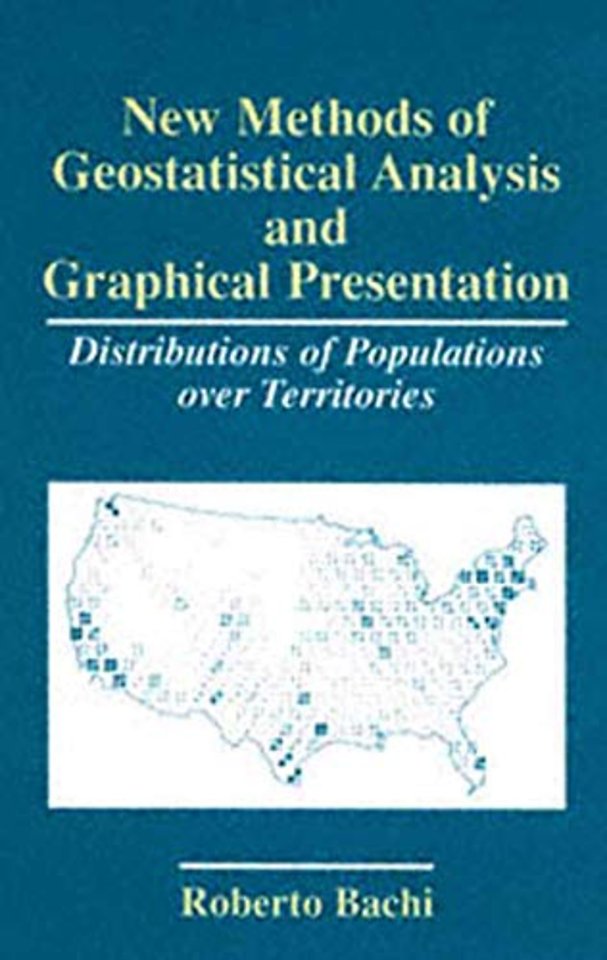
Roberto Bachi
Springer US
1999e druk, 1999
9780306455445
New Methods of Geostatistical Analysis and Graphical Presentation
Distributions of Populations over Territories
Specificaties
Gebonden, 478 blz.
|
Engels
Springer US |
1999e druk, 1999
ISBN13: 9780306455445
Rubricering
Levertijd ongeveer 8 werkdagen
Samenvatting
New Methods of Geostatistical Analysis and Graphical Presentation
Specificaties
ISBN13:9780306455445
Taal:Engels
Bindwijze:gebonden
Aantal pagina's:478
Uitgever:Springer US
Druk:1999
Inhoudsopgave
Preface. Foreword. Part One: Basic Concepts, Aims and Contents of this Book. 1: Introducing Geostatistical Methods through Simple Examples. 2: Applications of Geostatistical Methods Contents and Limits of this Book. 3: Geosets of Populations Distributed over a Pre-Determined Territory. 4: Further Considerations on Geosets of Territories. Part Two: Graphical Presentation of Geographical-Statistical Data. 5: Evolution, State-of-the-Art and Problems of Statistical Mapping. 6: Graphical Rational Patterns: General Considerations - Applications to Simple Statistical Maps. 7: Comparative Maps. Part Three: Parameters Measuring Characteristics of Primary and Derived Geosets. 8: Proportion and Territorial Coverage of Surpluses and Matches, Densities. 9: Centers of Geosets. 10: Parameters of Dispersion and Oblongity of Geosets, Principal Axes.11: Parameters of Form (Shape of Territories and Patterns of Population). 12: Parameters of Position of Geosets - Coincidence, Congruence, and Similarity. Part Four: Summary Comparison of Geosets by Measuring the Minimal Distance from Them. 13: The Minimal Distance between Geosets: Aims, Ways of Calculation, Examples. 14: Properties of Minimal Distance Triangle of Distances, Joint Analysis of Several Minimal Distances, Measuring Inconsistency. 15: Decomposition of ASMD (Average of the Squares of Minimizing Distances). 16: Minimal Distance between a Geoset gG and Geoset gJ Obtained by Transforming the Coordinates of gG. Eliminating Influences of Position and Dimensions from Minimal Distance. Part Five: Epilogue. 17: Some Concluding Remarks. 18: The Computer Program Used in this Book.