,

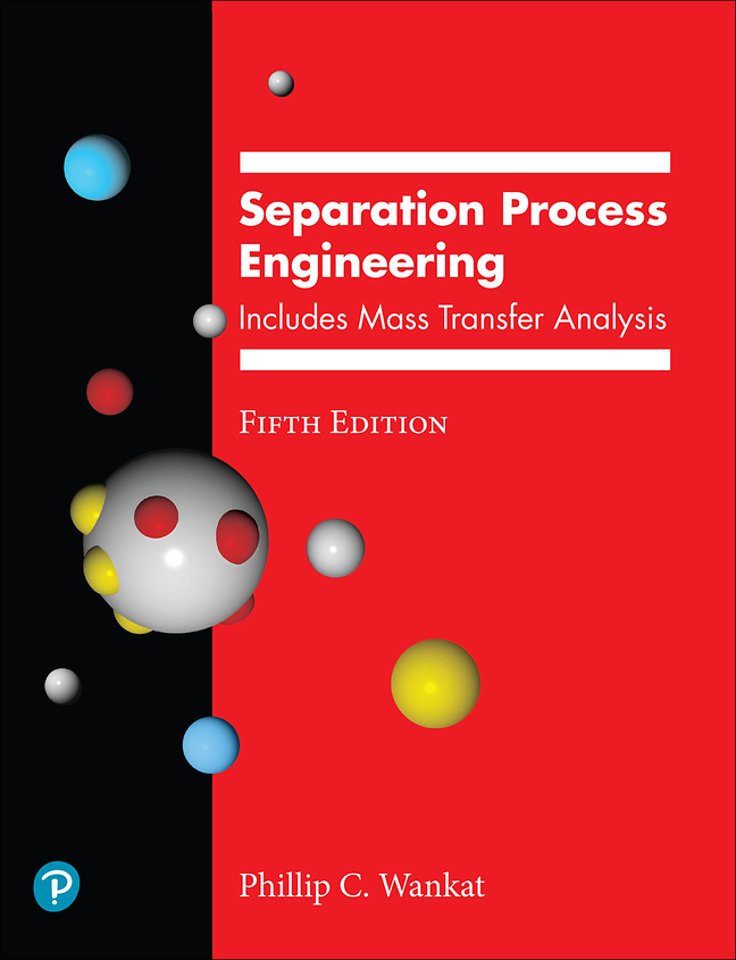
Separation Process Engineering

Includes Mass Transfer Analysis

Specificaties
Paperback, blz. | Engels
Pearson Education | e druk, 2022
ISBN13: 9780137468041
Rubricering
Pearson Education e druk, 2022 9780137468041
€ 184,54
Levertijd ongeveer 8 werkdagen

Samenvatting

The Definitive, Learner-Friendly Guide to Chemical Engineering Separations--Extensively Updated, Including a New Chapter on Melt Crystallization

Efficient separation processes are crucial to addressing many societal problems, from developing new medicines to improving energy efficiency and reducing emissions. Separation Process Engineering, Fifth Edition, is the most comprehensive, accessible guide to modern separation processes and the fundamentals of mass transfer. In this completely updated edition, Phillip C. Wankat teaches each key concept through detailed, realistic examples using actual data--with up-to-date simulation practice, spreadsheet-based exercises, and references.

Wankat thoroughly covers each separation process, including flash, column, and batch distillation; exact calculations and shortcut methods for multicomponent distillation; staged and packed column design; absorption; stripping; and more. His extensive discussions of mass transfer and diffusion enable faculty to teach separations and mass transfer in a single course. And detailed material on liquid-liquid extraction, adsorption, chromatography, and ion exchange prepares students for advanced work.

New and updated content includes melt crystallization, steam distillation, residue curve analysis, batch washing, the Shanks system for percolation leaching, eutectic systems, forward osmosis, microfiltration, and hybrid separations. A full chapter discusses economics and energy conservation, including updated equipment costs. Over 300 new and updated homework problems are presented, all extensively tested in undergraduate courses at Purdue University. New chapter on melt crystallization: solid-liquid phase equilibrium, suspension, static and falling film layer approaches, and 34 questions and problems New binary VLE equations and updated content on simultaneous solutions New coverage of safety and fire hazards New material on steam distillation, simple multi-component batch distillation, and residue curve analysis Expanded discussion of tray efficiencies, packed column design, and energy reduction in distillation New coverage of two hybrid extraction with distillation, and the Kremser equation in fractional extraction Added sections on deicing with eutectic systems, eutectic freeze concentration, and scale-up New sections on forward osmosis and microfiltration Expanded advanced content on adsorption and ion exchange including updated instructions for eight detailed Aspen Chromatography labs Discussion of membrane separations, including gas permeation, reverse osmosis, ultrafiltration, pervaporation, and applications Thirteen up-to-date Aspen Plus process simulation labs, adaptable to any simulator This guide reflects an up-to-date understanding of how modern students learn: designed, organized, and written to be exceptionally clear and easy to use. It presents detailed examples in a clear, standard format, using real data to solve actual engineering problems, preparing students for their future careers.

Specificaties

ISBN13:9780137468041
Taal:Engels
Bindwijze:Paperback

Inhoudsopgave

<p>Preface xxiii</p> <p>Acknowledgments xxv</p> <p>About the Author xxvii</p> <p>Nomenclature xxix</p> <p>&nbsp;</p> <p><strong>Chapter 1. Introduction to Separation Process Engineering</strong> 1</p> <p>1.0 Summary—Objectives 1</p> <p>1.1 Importance of Separations 1</p> <p>1.2 Concept of Equilibrium 3</p> <p>1.3 Mass Transfer Concepts 4</p> <p>1.4 Problem-Solving Methods 5</p> <p>1.5 Units 6</p> <p>1.6 Computers and Computer Simulations 7</p> <p>1.7 Prerequisite Material 7</p> <p>1.8 Other Resources on Separation Process Engineering 9</p> <p>References 10</p> <p>Problems 11</p> <p>&nbsp;</p> <p><strong>Chapter 2. Flash Distillation</strong> 13</p> <p>2.0 Summary—Objectives 13</p> <p>2.1 Basic Method of Flash Distillation 13</p> <p>2.2 Form and Sources of Equilibrium Data 15</p> <p>2.3 Binary VLE 17</p> <p>2.4 Binary Flash Distillation 26</p> <p>2.5 Multicomponent VLE 32</p> <p>2.6 Multicomponent Flash Distillation 36</p> <p>2.7 Simultaneous Multicomponent Convergence 40</p> <p>2.8 Three-Phase Flash Calculations 45</p> <p>2.9 Size Calculation 45</p> <p>2.10 Using Existing Flash Drums 50</p> <p>References 51</p> <p>Problems 52</p> <p>Appendix A. Computer Simulation of Flash Distillation 62</p> <p>&nbsp;&nbsp;&nbsp;&nbsp; Lab 1. Introduction to Aspen Plus 62</p> <p>&nbsp;&nbsp;&nbsp;&nbsp; Lab 2. Flash Distillation 69</p> <p>Appendix B. Spreadsheets for Flash Distillation 72</p> <p>&nbsp;</p> <p><strong>Chapter 3. Introduction to Column Distillation</strong> 75</p> <p>3.0 Summary—Objectives 75</p> <p>3.1 Developing a Distillation Cascade 75</p> <p>3.2 Tray Column Distillation Equipment 82</p> <p>3.3 Safety 85</p> <p>3.4 Specifications 86</p> <p>3.5 External Column Balances 88</p> <p>References 92</p> <p>Problems 92</p> <p>&nbsp;</p> <p><strong>Chapter 4. Binary Column Distillation: Internal Stage-by-Stage Balances</strong> 99</p> <p>4.0 Summary—Objectives 99</p> <p>4.1 Internal Balances 99</p> <p>4.2 Binary Stage-by-Stage Solution Methods 103</p> <p>4.3 Introduction to the McCabe-Thiele Method 109</p> <p>4.4 Feed Line 113</p> <p>4.5 Complete McCabe-Thiele Method 120</p> <p>4.6 Profiles for Binary Distillation 123</p> <p>4.7 Open Steam Heating 125</p> <p>4.8 General McCabe-Thiele Analysis Procedure 129</p> <p>4.9 Other Distillation Column Situations 134</p> <p>4.10 Limiting Operating Conditions 141</p> <p>4.11 Efficiencies 143</p> <p>4.12 Subcooled Reflux and Superheated Boilup 145</p> <p>4.13 Simulation Problems 146</p> <p>4.14 New Uses for Old Columns 148</p> <p>4.15 Comparisons between Analytical and Graphical Methods 149</p> <p>References 150</p> <p>Problems 150</p> <p>Appendix A. Computer Simulation of Binary Distillation 165</p> <p>&nbsp;&nbsp;&nbsp;&nbsp; Lab 3. Binary Distillation 165</p> <p>Appendix B. Spreadsheet for Binary Distillation 169</p> <p>&nbsp;</p> <p><strong>Chapter 5. Introduction to Multicomponent Distillation</strong> 171</p> <p>5.0 Summary—Objectives 171</p> <p>5.1 Calculational Difficulties of Multicomponent Distillation 171</p> <p>5.2 Profiles for Multicomponent Distillation 176</p> <p>5.3 Stage-by-Stage Calculations for CMO 181</p> <p>References 186</p> <p>Problems 187</p> <p>Appendix A. Simplified Spreadsheet for Stage-by-Stage Calculations</p> <p>&nbsp;&nbsp;&nbsp;&nbsp; for Ternary Distillation 192</p> <p>&nbsp;</p> <p><strong>Chapter 6. Exact Calculation Procedures for Multicomponent Distillation</strong> 195</p> <p>6.0 Summary—Objectives 195</p> <p>6.1 Introduction to Matrix Solution for Multicomponent Distillation 195</p> <p>6.2 Component Mass Balances in Matrix Form 196</p> <p>6.3 Initial Guesses for Flow Rates and Temperatures 200</p> <p>6.4 Temperature Convergence 201</p> <p>6.5 Energy Balances in Matrix Form 203</p> <p>6.6 Introduction to Naphtali-Sandholm Simultaneous Convergence Method 206</p> <p>6.7 Discussion 207</p> <p>References 208</p> <p>Problems 208</p> <p>Appendix. Computer Simulations for Multicomponent Column Distillation 214</p> <p>&nbsp;&nbsp;&nbsp;&nbsp; Lab 4. Simulation of Multicomponent Distillation 214</p> <p>&nbsp;&nbsp;&nbsp;&nbsp; Lab 5. Pressure Effects and Tray Efficiencies 216</p> <p>&nbsp;&nbsp;&nbsp;&nbsp; Lab 6. Coupled Columns 220</p> <p>&nbsp;</p> <p><strong>Chapter 7. Approximate Shortcut Methods for Multicomponent Distillation</strong> 223</p> <p>7.0 Summary—Objectives 223</p> <p>7.1 Total Reflux: Fenske Equation 223</p> <p>7.2 Minimum Reflux: Underwood Equations 228</p> <p>7.3 Gilliland Correlation for Number of Stages at Finite Reflux Ratios 231</p> <p>References 234</p> <p>Problems 235</p> <p>&nbsp;</p> <p><strong>Chapter 8. Introduction to Complex Distillation Methods</strong> 241</p> <p>8.0 Summary—Objectives 241</p> <p>8.1 Breaking Azeotropes with Hybrid Separations 241</p> <p>8.2 Binary Heterogeneous Azeotropic Distillation Processes 243</p> <p>8.3 Continuous Steam Distillation 251</p> <p>8.4 Pressure-Swing Distillation Processes 257</p> <p>8.5 Complex Ternary Distillation Systems 259</p> <p>8.6 Extractive Distillation 266</p> <p>8.7 Azeotropic Distillation with Added Solvent 272</p> <p>8.8 Distillation with Chemical Reaction 274</p> <p>References 277</p> <p>Problems 278</p> <p>Appendix A. Simulation of Complex Distillation Systems 292</p> <p>&nbsp;&nbsp;&nbsp;&nbsp; Lab 7. Pressure-Swing Distillation for Separating Azeotropes 292</p> <p>&nbsp;&nbsp;&nbsp;&nbsp; Lab 8. Binary Distillation of Systems with Heterogeneous Azeotropes 295</p> <p>&nbsp;&nbsp;&nbsp;&nbsp; Lab 9. Simulation of Extractive Distillation 298</p> <p>Appendix B. Spreadsheet for Distillation curve Generation for Constant</p> <p>&nbsp;&nbsp;&nbsp;&nbsp; Relative Volatility at Total Reflux 302</p> <p>&nbsp;</p> <p><strong>Chapter 9. Batch Distillation</strong> 303</p> <p>9.0 Summary—Objectives 303</p> <p>9.1 Introduction to Batch Distillation 303</p> <p>9.2 Batch Distillation: Rayleigh Equation 305</p> <p>9.3 Simple Binary Batch Distillation 307</p> <p>9.4 Constant-Mole Batch Distillation 312</p> <p>9.5 Batch Steam Distillation 314</p> <p>9.6 Multistage Binary Batch Distillation 317</p> <p>9.7 Multicomponent Simple Batch Distillation and Residue Curve Calculations 321</p> <p>9.8 Operating Time 324</p> <p>References 326</p> <p>Problems 326</p> <p>Appendix A. Calculations for Simple Multicomponent Batch Distillation and</p> <p>&nbsp;&nbsp;&nbsp;&nbsp; Residue Curve Analysis 334</p> <p>&nbsp;</p> <p><strong>Chapter 10. Staged and Packed Column Design</strong> 337</p> <p>10.0 Summary—Objectives 337</p> <p>10.1 Staged Column Equipment Description 338</p> <p>10.2 Tray Efficiencies 344</p> <p>10.3 Column Diameter Calculations 351</p> <p>10.4 Balancing Calculated Diameters 356</p> <p>10.5 Sieve Tray Layout and Tray Hydraulics 358</p> <p>10.6 Valve Tray Design 364</p> <p>10.7 Introduction to Packed Column Design 366</p> <p>10.8 Packings and Packed Column Internals 366</p> <p>10.9 Packed Column Design: HETP Method 368</p> <p>10.10 Packed Column Flooding and Diameter Calculation 371</p> <p>10.11 Economic Trade-Offs for Packed Columns 378</p> <p>10.12 Choice of Column Type 379</p> <p>10.13 Fire Hazards of Structured Packings 381</p> <p>References 382</p> <p>Problems 385</p> <p>Appendix. Tray and Downcomer Design with Computer Simulator 392</p> <p>&nbsp;&nbsp;&nbsp;&nbsp; Lab 10. Detailed Design 392</p> <p>&nbsp;</p> <p><strong>Chapter 11. Economics and Energy Efficiency in Distillation</strong> 397</p> <p>11.0 Summary—Objectives 397</p> <p>11.1 Equipment Costs 397</p> <p>11.2 Basic Heat Exchanger Design 404</p> <p>11.3 Design and Operating Effects on Costs 406</p> <p>11.4 Changes in Plant Operating Rates 414</p> <p>11.5 Energy Reduction in Binary Distillation Systems 415</p> <p>11.6 Synthesis of Column Sequences for Almost Ideal Multicomponent Distillation 419</p> <p>11.7 Synthesis of Distillation Systems for Nonideal Ternary Systems 425</p> <p>11.8 Next Steps 429</p> <p>References 430</p> <p>Problems 431</p> <p>&nbsp;</p> <p><strong>Chapter 12. Absorption and Stripping</strong> 439</p> <p>12.0 Summary—Objectives 440</p> <p>12.1 Absorption and Stripping Equilibria 441</p> <p>12.2 McCabe-Thiele Solution for Dilute Absorption 444</p> <p>12.3 Stripping Analysis for Dilute Systems 446</p> <p>12.4 Analytical Solution for Dilute Systems: Kremser Equation 447</p> <p>12.5 Efficiencies 452</p> <p>12.6 McCabe-Thiele Analysis for More Concentrated Systems 453</p> <p>12.7 Column Diameter 457</p> <p>12.8 Dilute Multisolute Absorbers and Strippers 458</p> <p>12.9 Matrix Solution for Concentrated Absorbers and Strippers 460</p> <p>12.10 Irreversible Absorption and Cocurrent Cascades 463</p> <p>References 465</p> <p>Problems 466</p> <p>Appendix. Computer Simulations of Absorption and Stripping 474</p> <p>&nbsp;&nbsp;&nbsp;&nbsp; Lab 11. Absorption and Stripping 474</p> <p>&nbsp;</p> <p><strong>Chapter 13. Liquid-Liquid Extraction</strong> 481</p> <p>13.0 Summary—Objectives 481</p> <p>13.1 Introduction to Extraction Processes and Equipment 481</p> <p>13.2 Equilibrium for Dilute Systems and Solvent Selection 486</p> <p>13.3 Dilute, Immiscible, Countercurrent Extraction 489</p> <p>13.4 Immiscible Single-Stage and Crossflow Extraction 499</p> <p>13.5 Concentrated Immiscible Extraction 502</p> <p>13.6 Immiscible Batch Extraction 506</p> <p>13.7 Extraction Equilibrium for Partially Miscible Ternary Systems 508</p> <p>13.8 Mixing Calculations and the Lever-Arm Rule 511</p> <p>13.9 Partially Miscible Single-Stage and Crossflow Systems 513</p> <p>13.10 Partially Miscible Countercurrent Extraction 516</p> <p>13.11 Relationship Between McCabe-Thiele and Triangular Diagrams for Partially</p> <p>&nbsp;&nbsp;&nbsp;&nbsp; Miscible Systems 522</p> <p>13.12 Minimum Solvent Rate for Partially Miscible Systems 523</p> <p>13.13 Extraction Computer Simulations 525</p> <p>13.14 Design of Mixer-Settlers 526</p> <p>References 537</p> <p>Problems 538</p> <p>Appendix. Computer Simulation of Extraction 545</p> <p>&nbsp;&nbsp;&nbsp;&nbsp; Lab 12. Extraction 545</p> <p>&nbsp;</p> <p><strong>Chapter 14. Washing, Leaching, and Supercritical Extraction</strong> 551</p> <p>14.0 Summary—Objectives 551</p> <p>14.1 Generalized McCabe-Thiele and Kremser Procedures 551</p> <p>14.2 Washing 552</p> <p>14.3 Leaching 559</p> <p>14.4 Introduction to Supercritical Fluid Extraction 565</p> <p>References 568</p> <p>Problems 568</p> <p>&nbsp;</p> <p><strong>Chapter 15. Introduction to Diffusion and Mass Transfer</strong> 575</p> <p>15.0 Summary−Objectives 576</p> <p>15.1 Molecular Movement Leads to Mass Transfer 577</p> <p>15.2 Fickian Model of Diffusivity 578</p> <p>15.3 Values and Correlations for Fickian Binary Diffusivities 593</p> <p>15.4 Linear Driving-Force Model of Mass Transfer for Binary Systems 601</p> <p>15.5 Correlations for Mass Transfer Coefficients 615</p> <p>15.6 Difficulties with Fickian Diffusion Model 626</p> <p>15.7 Maxwell-Stefan Model of Diffusion and Mass Transfer 627</p> <p>15.8 Advantages and Disadvantages of Different Diffusion and Mass Transfer Models 641</p> <p>15.9 Useful Approximate Values 642</p> <p>References 642</p> <p>Problems 643</p> <p>Appendix. Spreadsheets for Examples 15-10 and 15-11 650</p> <p>&nbsp;</p> <p><strong>Chapter 16. Mass Transfer Analyses for Distillation, Absorption, Stripping, and Extraction</strong> 653</p> <p>16.0 Summary—Objectives 653</p> <p>16.1 HTU-NTU Analysis of Packed Distillation Columns 653</p> <p>16.2 Relationship of HETP and HTU 661</p> <p>16.3 Correlations for HTU Values for Packings 663</p> <p>16.4 HTU-NTU Analysis of Absorbers and Strippers 670</p> <p>16.5 HTU-NTU Analysis of Cocurrent Absorbers 675</p> <p>16.6 Prediction of Distillation Tray Efficiency 677</p> <p>16.7 Mass Transfer Analysis of Extraction 679</p> <p>16.7.4.3 Conservative Estimation of Mass Transfer Coefficients for Extraction 689</p> <p>16.8 Rate-Based Analysis of Distillation 690</p> <p>References 693</p> <p>Problems 695</p> <p>Appendix. Computer Rate-Based Simulation of Distillation 702</p> <p>&nbsp;&nbsp;&nbsp;&nbsp; Lab 13. Rate-Based Modeling of Distillation 702</p> <p>&nbsp;</p> <p><strong>Chapter 17. Crystallization from Solution</strong> 705</p> <p>17.0 Summary–Objectives 706</p> <p>17.1 Basic Principles of Crystallization from Solution 706</p> <p>17.2 Continuous Cooling Crystallizers 712</p> <p>17.3 Evaporative and Vacuum Crystallizers 722</p> <p>17.4 Experimental Crystal Size Distribution 729</p> <p>17.5 Introduction to Population Balances 734</p> <p>17.6 Crystal Size Distributions for MSMPR Crystallizers 736</p> <p>17.7 Seeding 750</p> <p>17.8 Scaleup 755</p> <p>17.9 Batch and Semibatch Crystallization 756</p> <p>17.10 Precipitation 761</p> <p>References 764</p> <p>Problems 765</p> <p>Appendix. Spreadsheet 772</p> <p>&nbsp;</p> <p><strong>Chapter 18. Melt Crystallization</strong> 773</p> <p>18.0 Summary–Objectives 773</p> <p>18.1 Equilibrium Calculations for Melt Crystallization 774</p> <p>18.2 Suspension Melt Crystallization 780</p> <p>18.3 Introduction to Solid-Layer Crystallization Processes: Progressive Freezing 793</p> <p>18.4 Static Solid-Layer Melt Crystallization Process 808</p> <p>18.5 Dynamic Solid-Layer Melt Crystallization 809</p> <p>18.6 Zone Melting 819</p> <p>18.7 Post-Crystallization Processing 824</p> <p>18.8 Scaleup 827</p> <p>18.9 Hybrid Crystallization–Distillation Processes 828</p> <p>18.10 Predictions 833</p> <p>References 834</p> <p>Problems 836</p> <p>&nbsp;</p> <p><strong>Chapter 19. Introduction to Membrane Separation Processes</strong> 841</p> <p>19.0 Summary—Objectives 844</p> <p>19.1 Membrane Separation Equipment 844</p> <p>19.2 Membrane Concepts 847</p> <p>19.3 Gas Permeation (GP) 850</p> <p>19.4 Osmosis and Reverse Osmosis (RO) 865</p> <p>19.5 Ultrafiltration (UF)` 881</p> <p>19.6 Pervaporation 891</p> <p>19.7 Bulk Flow Pattern Effects 902</p> <p>References 905</p> <p>Problems 907</p> <p>Appendix A. Spreadsheet for Crossflow GP 918</p> <p>&nbsp;</p> <p><strong>Chapter 20. Introduction to Adsorption, Chromatography, and Ion Exchange</strong> 923</p> <p>20.0 Summary—Objectives 924</p> <p>20.1 Adsorbents and Adsorption Equilibrium 924</p> <p>20.2 Solute Movement Analysis for Linear Systems: Basics and</p> <p>&nbsp;&nbsp;&nbsp;&nbsp; Applications to Chromatography 935</p> <p>20.3 Solute Movement Analysis for Linear Systems: Temperature and</p> <p>&nbsp;&nbsp;&nbsp;&nbsp; Pressure Swing Adsorption and Simulated Moving Beds 942</p> <p>20.4 Nonlinear Solute Movement Analysis 963</p> <p>20.5 Ion Exchange 970</p> <p>References 978</p> <p>Problems 980</p> <p>&nbsp;</p> <p><strong>Chapter 21. Mass Transfer Analysis of Adsorption, Chromatography, and Ion Exchange</strong> 991</p> <p>21.0 Summary—Objectives 991</p> <p>21.1 Mass and Energy Transfer in Packed Beds 991</p> <p>21.2 Mass Transfer Solutions for Linear Systems 1000</p> <p>21.3 Nonlinear Systems 1008</p> <p>21.4 Checklist for Practical Design and Operation 1019</p> <p>References 1021</p> <p>Problems 1022</p> <p>Appendix. Aspen Chromatography Simulator 1030</p> <p>&nbsp;&nbsp;&nbsp;&nbsp; Lab AC1. Introduction to Aspen Chromatography 1031</p> <p>&nbsp;&nbsp;&nbsp;&nbsp; Lab AC2. Convergence for Linear Isotherms 1035</p> <p>&nbsp;&nbsp;&nbsp;&nbsp; Lab AC3. Convergence for Nonlinear Isotherms 1036</p> <p>&nbsp;&nbsp;&nbsp;&nbsp; Lab AC4. Cycle Organizer 1038</p> <p>&nbsp;&nbsp;&nbsp;&nbsp; Lab AC5. Flow Reversal 1041</p> <p>&nbsp;&nbsp;&nbsp;&nbsp; Lab AC6. Ion Exchange 1045</p> <p>&nbsp;&nbsp;&nbsp;&nbsp; Lab AC7. SMB and TMB 1048</p> <p>&nbsp;&nbsp;&nbsp;&nbsp; Lab AC8. Thermal Systems 1051</p> <p>&nbsp;</p> <p><strong>Answers to Selected Problems</strong> 1057</p> <p>&nbsp;</p> <p><strong>Appendix A</strong>. Aspen Plus Troubleshooting Guide for Separations 1063</p> <p><strong>Appendix B</strong>. Instructions for Fitting VLE and LLE Data with Aspen Plus 1067</p> <p><strong>Appendix C</strong>. Unit Conversions and Physical Constants 1071</p> <p><strong>Appendix D</strong>. Data Locations 1073</p> <p>&nbsp;</p> <p>Index</p>
€ 184,54
Levertijd ongeveer 8 werkdagen

Rubrieken

    Personen

      Trefwoorden

        Separation Process Engineering