Diana Garza,
Kathleen, EdD, MLS (ASCP) CM Becan-McBride,
Kathleen Becan-McBride EdD, MLS (ASCP) CM
Pearson Education
e druk, 2018
9780134709321
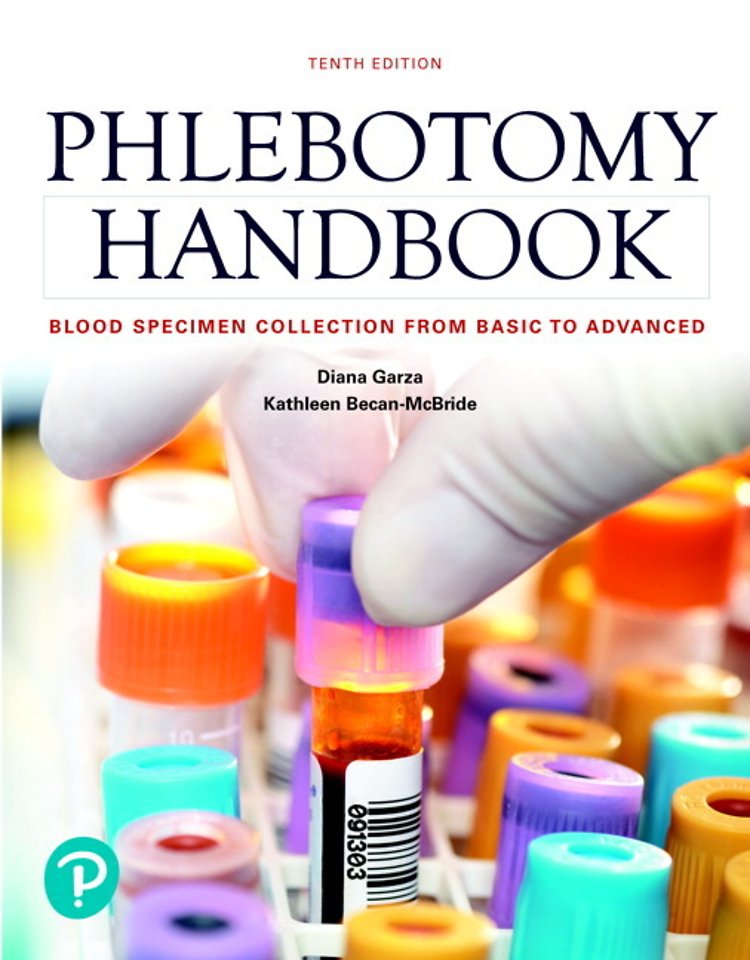
Phlebotomy Handbook
Blood Specimen Collection from Basic to Advanced
Specificaties
Paperback, blz.
|
Engels
Pearson Education |
e druk, 2018
ISBN13: 9780134709321
Rubricering
Levertijd ongeveer 8 werkdagen
Samenvatting
For courses in phlebotomy.
Most comprehensive phlebotomy guide available
Phlebotomy Handbook: Blood Specimen Collection from Basic to Advanced links students and health care professionals to the latest information on safe, effective blood collection. Progressing from simple concepts to complex competencies, the text covers all of the communication, clinical, technical, and safety skills that any health care worker will use in the practice of phlebotomy and other specimen-collection procedures. The 10th edition aligns the text with entry-level competencies of the NAACLS. A DVD video library demonstrating procedures described in this text is available in Pearson’s Instructor Resource Center.
Specificaties
Inhoudsopgave
<p><strong>PART 1: OVERVIEW, SAFETY PROCEDURES, AND MEDICAL COMMUNICATION<br></strong>1. Phlebotomy Practice and Quality Assessment<br>2. Communication, Computer Essentials, and Documentation<br>3. Professional Ethics, Legal, and Regulatory Issues<br>4. Infection Control<br>5. Safety and First Aid<br><br><strong>PART 2: ANATOMY AND PHYSIOLOGY OF THE HUMAN BODY<br></strong>6. Medical Terminology, Anatomy, and Physiology of Organ Systems<br>7. The Cardiovascular and Lymphatic Systems<br><br><strong>PART 3: PHLEBOTOMY EQUIPMENT AND PROCEDURES<br></strong>8. Blood Collection Equipment for Venipuncture and Capillary Specimens<br>9. Preexamination/Preanalytical Complications Causing Medical Errors in Blood Collection<br>10. Venipuncture Procedures<br>11. Capillary or Dermal Blood Specimens<br>12. Specimen Handling, Transportation, and Processing<br><br><strong>PART 4: POINT-OF-CARE TESTING AND SPECIAL PROCEDURES<br></strong>13. Pediatric and Geriatric Procedures<br>14. Point-of-Care Collections<br>15. Blood Cultures, Arterial, Intravenous (IV), and Special Collection Procedures<br>16. Urinalysis, Body Fluids, and Other Specimens<br>17. Drug Use, Forensic Toxicology, Workplace Testing, Sports Medicine, and Related Areas<br><br><strong>Appendices:<br></strong>1. NAACLS Entry-Level Phlebotomist Competencies<br>2. Competency Assessment Tracking Checklist<br>3. Finding a Job<br>4. International Organizations<br>5. The Basics of Vital Signs<br> Procedure A5-1 Taking Oral Temperature<br> Procedure A5-2 Taking Aural Temperature<br> Procedure A5-3 Taking Axillary Temperature<br> Procedure A5-4 Assessing Peripheral Pulse Rate<br> Procedure A5-5 Taking Blood Pressure<br> Procedure A5-6 Assessing Respiration Rate<br>6. Hand Hygiene in Health Care Settings: Stay Up-to-Date with the Centers for Disease Control and Prevention (CDC) and the Federal Drug Administration (FDA)<br>7. Common Laboratory Assays, Reference Intervals, and Critical Limits<br>8. Blood Collection and Allowable Volumes from Pediatric and Neonatal Patients<br>9. Cautious Use of Abbreviations, Acronyms, and Symbols<br>10. Formulas, Calculations, and Metric Conversion<br>11. Military Time (24-Hour Clock)<br>12. Basic Spanish for Specimen Collection Procedures<br>13. Answers to Study Questions, Case Studies, and Competency Checklists</p>