,

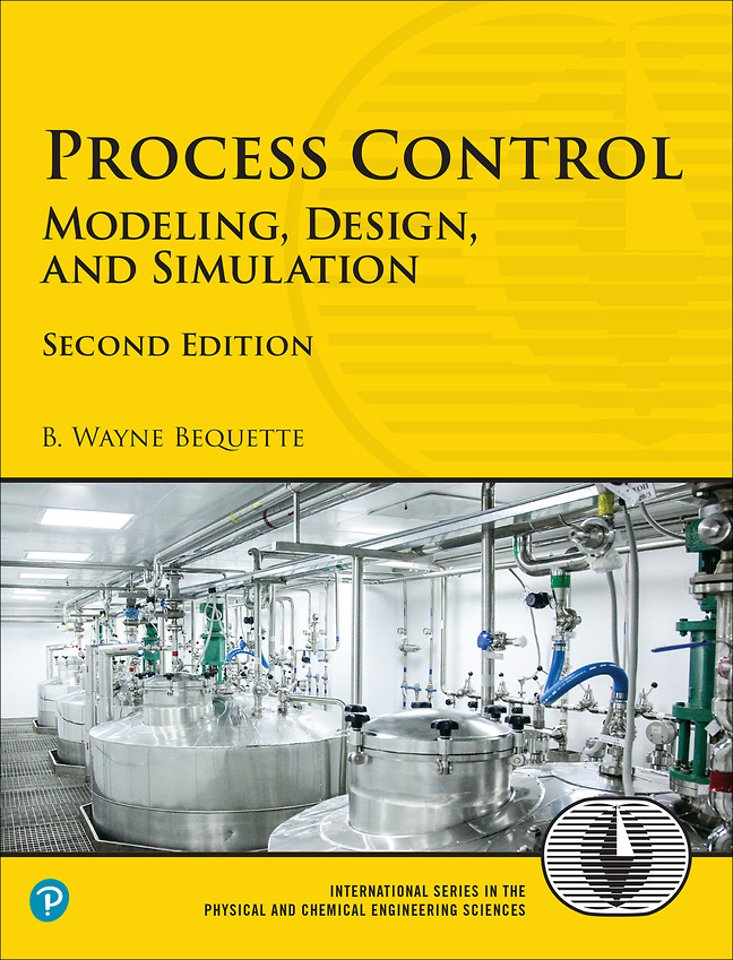
Process Control

Modeling, Design, and Simulation

Specificaties
Paperback, blz. | Engels
Pearson Education | e druk, 2024
ISBN13: 9780134033754
Rubricering
Pearson Education e druk, 2024 9780134033754
€ 184,54
Levertijd ongeveer 8 werkdagen

Samenvatting

Now updated throughout, Process Control: Modeling, Design, and Simulation, 2nd Edition remains the only process control textbook that integrates MATLAB-based numerical solutions, fundamental content, and detailed illustrative examples throughout. Its up-to-date example modules offer deeper treatment of specific example processes and systems, and it thoroughly integrates the use of MATLAB code and Simulink block diagrams to solve problems. 

B. Wayne Bequette systematically introduces undergraduate chemical and biological engineering students to the essentials of process modeling, dynamics and control, offers extensive background material for graduate process control courses, and shares valuable insights for practitioners who want to understand modern model-based control techniques. Coverage in this edition includes:
Motivating biomedical examples (closed-loop artificial pancreas) More examples of the importance of process control in satisfying safety Additional material on digital implementation of PID and IMC More content on model predictive control

Specificaties

ISBN13:9780134033754
Taal:Engels
Bindwijze:Paperback

Inhoudsopgave

<p>Preface to the Second Edition xxvii<br>About the Author xxxiii</p> <p><strong>Chapter 1: Introduction 1</strong><br>1.1 Introduction 2<br>1.2 Instrumentation 14<br>1.3 Process Models and Dynamic Behavior 15<br>1.4 Redundancy and Operability 18<br>1.5 Industrial IoT and Smart Manufacturing 19<br>1.6 Control Textbooks 21<br>1.7 A Look Ahead 22<br>1.8 Summary 22<br>References 23<br>Student Exercises 24</p> <p><strong>Chapter 2: Fundamental Models 31</strong><br>2.1 Background 32<br>2.2 Balance Equations 33<br>2.3 Material Balances 36<br>2.4 Constitutive Relationships 41<br>2.5 Material and Energy Balances 44<br>2.6 Form of Dynamic Models 48<br>2.7 Linear Models and Deviation Variables 50<br>2.8 Summary 55<br>Suggested Reading 57<br>Student Exercises 57</p> <p><strong>Chapter 3: Dynamic Behavior 69</strong><br>3.1 Background 70<br>3.2 Linear State-Space Models 70<br>3.3 Laplace Transforms 75<br>3.4 Transfer Functions 87<br>3.5 First-Order Behavior 88<br>3.6 Integrating Behavior 94<br>3.7 Second-Order Behavior 100<br>3.8 Summary 107<br>References 107<br>Student Exercises 107</p> <p><strong>Chapter 4: Dynamic Behavior: Complex Systems 115</strong><br>4.1 Introduction 116<br>4.2 Poles and Zeros 116<br>4.3 Lead-Lag Behavior 119<br>4.4 Processes with Deadtime 120<br>4.5 Padé Approximation for Deadtime 123<br>4.6 Converting State-Space Models to Transfer Functions 124<br>4.7 Converting Transfer Functions to State-Space Models 127<br>4.8 MATLAB and SIMULINK 128<br>4.9 Summary 130<br>Student Exercises 130</p> <p><strong>Chapter 5: Empirical and Discrete-Time Models 139</strong><br>5.1 Introduction 140<br>5.2 First-Order + Deadtime 141<br>5.3 Integrator + Deadtime 144<br>5.4 Other Continuous Models 147<br>5.5 Discrete-Time Autoregressive Models 148<br>5.6 Parameter Estimation 152<br>5.7 Discrete Step and Impulse Response Models 156<br>5.8 Converting Continuous Models to Discrete 158<br>5.9 Digital Filtering 160<br>5.10 Summary 163<br>References 163<br>Student Exercises 164<br>Appendix 5.1: Discretization 170</p> <p><strong>Chapter 6: Introduction to Feedback Control 171</strong><br>6.1 Motivation 172<br>6.2 Control Block Diagrams 176<br>6.3 Closed-Loop Analysis 179<br>6.4 PID Controller Algorithms 185<br>6.5 Routh Stability Criterion 192<br>6.6 Effect of Tuning Parameters 196<br>6.7 Open-Loop Unstable Systems 197<br>6.8 SIMULINK Block Diagrams 199<br>6.9 ODEs to Solve PID Problems 200<br>6.10 Summary 202<br>References 205<br>Student Exercises 205</p> <p><strong>Chapter 7: Model-Based Control 215</strong><br>7.1 Introduction 216<br>7.2 Direct Synthesis 216<br>7.3 Internal Model Control 218<br>7.4 IMC-Based PID 223<br>7.5 IMC-Based PID for Time-Delay Processes 231<br>7.6 IMC-Based PID for Unstable Processes 237<br>7.7 Summary 240<br>References 242<br>Student Exercises 242<br>Appendix 7.1: SIMC-Based PID Design 252</p> <p><strong>Chapter 8: PID Controller Tuning 255</strong><br>8.1 Introduction 256<br>8.2 Closed-Loop Oscillation-Based Tuning 257<br>8.3 Tuning Rules for First-Order + Deadtime Processes 261<br>8.4 Digital Control 263<br>8.5 Stability of Digital Control Systems 265<br>8.6 Performance of Digital Control Systems 267<br>8.7 Summary 268<br>References 268<br>Student Exercises 269</p> <p><strong>Chapter 9: Frequency-Response Analysis 275</strong><br>9.1 Motivation 276<br>9.2 Bode and Nyquist Plots 279<br>9.3 Effect of Process Parameters on Bode and Nyquist Plots 284<br>9.4 Closed-Loop Stability 288<br>9.5 Bode and Nyquist Stability 290<br>9.6 Robustness 294<br>9.7 MATLAB Control Toolbox: Bode and Nyquist Functions 295<br>9.8 Summary 297<br>Reference 298<br>Student Exercises 298</p> <p><strong>Chapter 10: Cascade and Feedforward Control 305</strong><br>10.1 Background 306<br>10.2 Introduction to Cascade Control 306<br>10.3 Cascade-Control Analysis 310<br>10.4 Cascade-Control Design 312<br>10.5 Feedforward Control 313<br>10.6 Feedforward Controller Design 315<br>10.7 Summary of Feedforward Control 320<br>10.8 Combined Feedforward and Cascade 321<br>10.9 Summary 321<br>References 321<br>Student Exercises 322</p> <p><strong>Chapter 11: PID Enhancements 333</strong><br>11.1 Background 333<br>11.2 Antireset Windup 334<br>11.3 Autotuning Techniques 342<br>11.4 Nonlinear PID Control 347<br>11.5 Controller Parameter (Gain) Scheduling 348<br>11.6 Measurement/Actuator Selection 350<br>11.7 Implementing PID Enhancements in Simulink 351<br>11.8 Summary 353<br>References 354<br>Student Exercises 354</p> <p><strong>Chapter 12: Ratio, Selective, and Split-Range Control 357</strong><br>12.1 Motivation 357<br>12.2 Ratio Control 358<br>12.3 Selective and Override Control 359<br>12.4 Split-Range Control 360<br>12.5 SIMULINK Functions 363<br>12.6 Summary 364<br>References 364<br>Student Exercises 365</p> <p><strong>Chapter 13: Control-Loop Interaction 371</strong><br>13.1 Introduction 372<br>13.2 Motivation 372<br>13.3 The General Pairing Problem 375<br>13.4 The Relative Gain Array 382<br>13.5 Properties and Application of the RGA 385<br>13.6 Return to the Motivating Example 387<br>13.7 RGA and Sensitivity 389<br>13.8 Using the RGA to Determine Variable Pairings 392<br>13.9 MATLAB RGA Function File 396<br>13.10 Summary 397<br>References 398<br>Student Exercises 398<br>Appendix 13.1: Derivation of the Relative Gain for an n-Input-n-Output System 404<br>Appendix 13.2: m-File to Calculate the RGA 406</p> <p><strong>Chapter 14: Multivariable Control 407</strong><br>14.1 Background 408<br>14.2 Zeros and Performance Limitations 408<br>14.3 Scaling Considerations 412<br>14.4 Directional Sensitivity and Operability 416<br>14.5 Block-Diagram Analysis 422<br>14.6 Decoupling 423<br>14.7 MATLAB tzero, svd 427<br>14.8 Summary 430<br>References 431<br>Student Exercises 431<br>Appendix 14.1 433</p> <p><strong>Chapter 15: Plantwide Control 435</strong><br>15.1 Background 436<br>15.2 Steady-State and Dynamic Effects of Recycle 437<br>15.3 Unit Operations Not Previously Covered 444<br>15.4 The Control and Optimization Hierarchy 448<br>15.5 Further Plantwide Control Examples 451<br>15.6 Simulations 456<br>15.7 Startup, Safety, and the Human-in-the-Loop 458<br>15.8 Summary 459<br>References 460<br>Student Exercises 461<br>Appendix 15.1 463</p> <p><strong>Chapter 16: Model Predictive Control 467</strong><br>16.1 Motivation 468<br>16.2 Optimization Problem 468<br>16.3 Dynamic Matrix Control 471<br>16.4 Constraints and Multivariable Systems 482<br>16.5 Other MPC Methods 485<br>16.6 MATLAB 487<br>16.7 Summary 487<br>References and Relevant Literature 488<br>Student Exercises 489<br>Appendix 16.1: Derivation of the Step Response Formulation 491<br>Appendix 16.2: Derivation of the Least-Squares Solution for Control Moves 492<br>Appendix 16.3: State Space Formulation for MPC 493</p> <p><strong>Chapter 17: Summary 497</strong><br>17.1 Overview of Topics Covered in This Textbook 497<br>17.2 Process Engineering in Practice 502<br>17.3 Suggested Further Reading 504<br>Student Exercises 505</p> <p><strong>Module 1: Introduction to MATLAB 507</strong><br>M1.1 Background 508<br>M1.2 Matrix Operations 509<br>M1.3 The MATLAB Workspace 513<br>M1.4 Complex Variables 514<br>M1.5 Plotting 514<br>M1.6 More Matrix Stuff 517<br>M1.7 for Loops 519<br>M1.8 m-Files 520<br>M1.9 Summary of Commonly Used Commands 523<br>M1.10 Frequently Used MATLAB Functions 524<br>Additional Exercises 524</p> <p><strong>Module 2: Introduction to SIMULINK 527</strong><br>M2.1 Background 528<br>M2.2 Open-Loop Simulations 529<br>M2.3 Feedback-Control Simulations 530<br>M2.4 Summary 534<br>Additional Exercises 534</p> <p><strong>Module 3: Ordinary Differential Equations 537</strong><br>M3.1 MATLAB ode--Basic 538<br>M3.2 MATLAB ode--Options 541<br>M3.3 SIMULINK sfun 541<br>M3.4 Summary 545<br>Additional Exercises 545</p> <p><strong>Module 4: MATLAB LTI Models 547</strong><br>M4.1 Forming Continuous-Time Models 548<br>M4.2 Forming Discrete-Time Models 555<br>M4.3 Converting Continuous Models to Discrete 557<br>M4.4 Converting Discrete Models to Continuous 558<br>M4.5 Step and Impulse Responses 558<br>M4.6 Summary 560<br>Additional Exercises 561</p> <p><strong>Module 5: Isothermal Chemical Reactor 563</strong><br>M5.1 Background 564<br>M5.2 Model 564<br>M5.3 Steady-State and Dynamic Behavior 565<br>M5.4 Closed-Loop Control 569<br>Reference 571<br>Additional Exercises 571</p> <p><strong>Module 6: Biochemical Reactors 573</strong><br>M6.1 Background 573<br>M6.2 Steady-State and Dynamic Behavior 575<br>M6.3 Stable Steady-State Operating Point 577<br>M6.4 Unstable Steady-State Operating Point 578<br>M6.5 SIMULINK Model File 580<br>Reference 581<br>Additional Exercises 582</p> <p><strong>Module 7: CSTR 585</strong><br>M7.1 Background 586<br>M7.2 Simplified Modeling Equations 586<br>M7.3 Example Chemical Process--Propylene Glycol Production 590<br>M7.4 Effect of Reactor Scale 591<br>M7.5 For Further Study: Detailed Model 594<br>M7.6 Other Considerations 598<br>M7.7 Summary 599<br>References 600<br>Additional Exercises 601<br>Appendix M7.1 602</p> <p><strong>Module 8: Steam Drum Level 605</strong><br>M8.1 Background 605<br>M8.2 Process Model 606<br>M8.3 Feedback Controller Design 607<br>M8.4 Feedforward Controller Design 609<br>M8.5 Three-Mode Level Control 609<br>Appendix M8.1: SIMULINK Diagram for Feedforward/Feedback Control of Steam Drum Level 611<br>Appendix M8.2: SIMULINK Diagram for Three-Mode Control of Steam Drum Level 612</p> <p><strong>Module 9: Surge Vessel Level Control 613</strong><br>M9.1 Background 613<br>M9.2 Process Model 614<br>M9.3 Controller Design 614<br>M9.4 Numerical Example 616<br>M9.5 Summary 619<br>Reference 620<br>Additional Exercises 620<br>Appendix M9.1: The SIMULINK Block Diagram 621</p> <p><strong>Module 10: Batch Reactor 623</strong><br>M10.1 Background 624<br>M10.2 Batch Model 1: Jacket Temperature Manipulated 625<br>M10.3 Batch Model 2: Jacket Inlet Temperature Manipulated 629<br>M10.4 Batch Model 3: Cascade Control 632<br>M10.5 Summary 633<br>Reference 634<br>Additional Exercises 634</p> <p><strong>Module 11: Biomedical Systems 635</strong><br>M11.1 Overview 635<br>M11.2 Pharmacokinetic Models 636<br>M11.3 Intravenous Delivery of Anesthetic Drugs 637<br>M11.4 Blood Glucose Control in ICU Patients 638<br>M11.5 Critical Care Patients 640<br>M11.6 Summary 641<br>References 641<br>Additional Exercises 642</p> <p><strong>Module 12: Automated Insulin Delivery 643</strong><br>M12.1 Background: Physiology of Blood Glucose Regulation 644<br>M12.2 Type 1 Diabetes 644<br>M12.3 Closed-Loop Components and Diagram 646<br>M12.4 Simulation Model 648<br>M12.5 Open-Loop Responses to Meal and Insulin 649<br>M12.6 Closed-Loop Responses 652<br>M12.7 Summary 654<br>References 655<br>Suggested Further Study 655<br>Additional Exercises 656</p> <p><strong>Module 13: Distillation Control 657</strong><br>M13.1 Description of Distillation Control 658<br>M13.2 Open-Loop Behavior 659<br>M13.3 SISO Control 661<br>M13.4 RGA Analysis 662<br>M13.5 Multiple SISO Controllers 663<br>M13.6 Singular Value Analysis 664<br>M13.7 Nonlinear Effects 667<br>M13.8 Other Issues in Distillation Column Control 667<br>M13.9 Summary 668<br>References 668<br>Additional Exercises 668</p> <p><strong>Module 14: Case Study Problems 671</strong><br>M14.1 Background 671<br>M14.2 Reactive Ion Etcher 673<br>M14.3 Rotary Lime Kiln Temperature Control 674<br>M14.4 Fluidized Catalytic Cracking Unit 674<br>M14.5 Anaerobic Sludge Digester 675<br>M14.6 Suggested Case Study Schedule 676<br>M14.7 Summary 678<br>Additional Exercises 679</p> <p><strong>Module 15: Process Monitoring 681</strong><br>M15.1 Concise Review of Probability 682<br>M15.2 Statistical Process Control 685<br>M15.3 Characteristic Process Noise 689<br>M15.4 Filtering and Smoothing 690<br>M15.5 Data Reconciliation 690<br>M15.6 Gross Error Detection 694<br>M15.7 Summary 696<br>References 696<br>Additional Exercises 696<br>Appendix M15.1 702</p> <p><strong>Module 16: Safety 705</strong><br>M16.1 Overview 706<br>M16.2 Chemical Process Disasters 707<br>M16.3 Aircraft Disasters 708<br>M16.4 Fault Detection Algorithms and Safety Science 710<br>M16.5 Summary 710<br>References 711<br>Additional Exercises 713</p> <p>Index 715</p>
€ 184,54
Levertijd ongeveer 8 werkdagen

Rubrieken

    Personen

      Trefwoorden

        Process Control