, , , e.a.

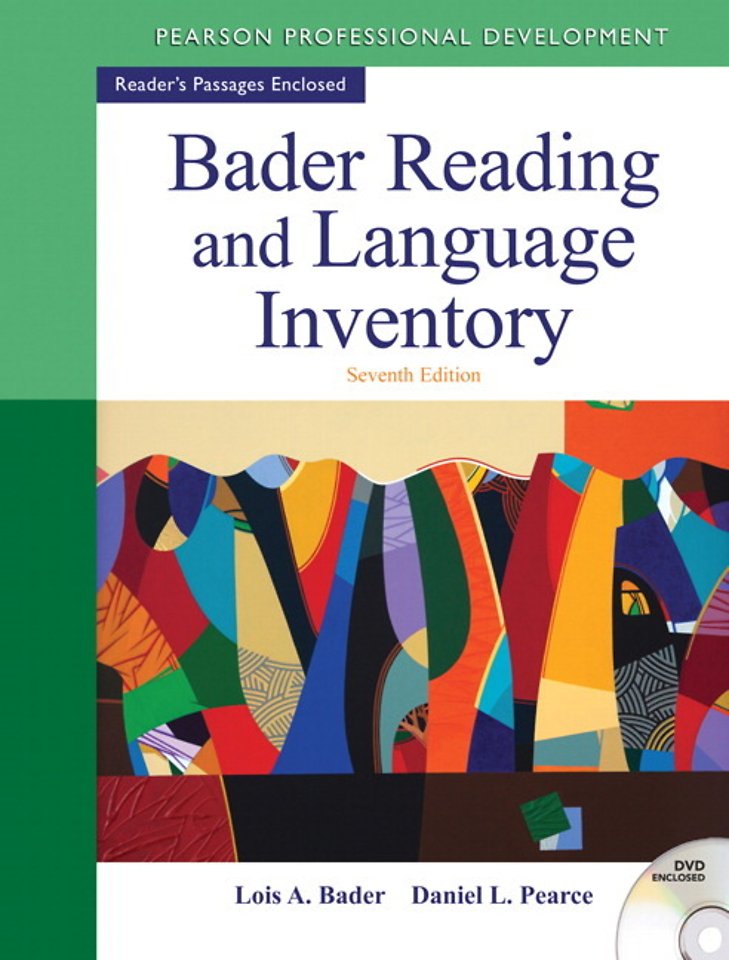
Bader Reading & Language Inventory

Specificaties
Paperback, blz. | Engels
Pearson Education | e druk, 2013
ISBN13: 9780132943680
Rubricering
Pearson Education e druk, 2013 9780132943680
€ 114,94
Levertijd ongeveer 8 werkdagen

Samenvatting

Bader Reading & Language Inventory, 7/e

Lois A. Bader and Daniel L. Pearce


The Bader Reading and Language Inventory presents a much-needed, highly-authoritative model for ensuring K-12 readers’ growth, assessing the effectiveness of specific reading approaches, and diagnosing a wide range of literacy needs. In it, teachers, teachers of adult students, reading specialists, and clinicians get a flexible approach to carrying out every aspect of effective reading and learning assessment–from a quick screening through a comprehensive reading assessment. Included are personal interviews and student reflection, observations, informal and formal tests, and diagnostic teaching, plus valuable research-based tools and guides that complement the assessment model and provide a balance of assessment practice that doesn’t over-test students.


The Basic Reading Inventory is an easy-to-use, individually administrated informal reading assessment which identifies students' strengths and weaknesses in reading. It is an all-in one package which includes all of the tools needed for students to assess, interpret, and develop responsive reading instruction for administering, scoring, and interpreting the BRI.


Although Assessment drives reading instruction, my students need to learn how to teach reading before they can assess and evaluate. Kudos to Bader & Pearce for putting together an impressive collection of informal assessments for teachers! Inventory provides a step by step process on how to evaluate various reading/language components for students.


 - Joyce R. Jeewek, Professor, Benedictine University, College of Education, Lisle, IL


Lois A. Bader, Michigan State University Professor Emeritus, continues her extensive consultation and research in literacy. As Executive Director of the Capital Area Literacy Coalition (CALC) in Lansing, Michigan, she involves university students and community volunteers to extend clinical and remedial services to a wide range of clients. CALC’s ELL, GED, workplace, K-12, and adult programs are ongoing. Dr. Bader’s awards include CASE Professor of the Year, ALER Research and Scholarship Award, and Michigan Women’s Hall of Fame.


Daniel L. Pearce is Professor of Literacy Education at Texas A&M University—Corpus Christi. He is Chair of the Department of Curriculum and Instruction and Director of the PhD programs in literacy and general education. He has won awards for teaching, service, and scholarship. His interests lie in reading diagnosis, working with problem readers, reading comprehension, and school improvement projects.

Specificaties

ISBN13:9780132943680
Taal:Engels
Bindwijze:paperback

Inhoudsopgave

<p><strong>Part ONE USING THE BADER READING AND LANGUAGE</strong></p> <p><strong>INVENTORY </strong> 1</p> <p><strong>BADER READING AND LANGUAGE INVENTORY</strong> 3</p> <p> Introduction</p> <p> Assessment Model</p> <p> Content of the Inventory</p> <p>Administering the Inventory</p> <p> Preparation for Using the Inventory 5</p> <p> Testing Sequences: Flowcharts</p> <p> Getting Optimum Results from Testing</p> <p>Summarizing the Assessment Data</p> <p><strong>Part TWO TEST BATTERY</strong> 9</p> <p><strong>STUDENT PRIORITIES AND INTERESTS</strong></p> <p><strong>ENGLISH LANGUAGE LEARNING</strong></p> <p><strong>GRADED WORD RECOGNITION LISTS</strong></p> <p> Purpose</p> <p> Administration</p> <p><strong>USING EXPERIMENTAL WORD LISTS</strong> 25</p> <p> Adult Thematic Lists</p> <p><strong>USING GRADED READER’S PASSAGES</strong></p> <p> Graded Reader’s Passages</p> <p> Reading and Listening Levels</p> <p> Determining a Starting Point</p> <p> Oral Reading</p> <p> Qualitative Analysis</p> <p> Qualitative Analysis and Instruction 34</p> <p> Silent Reading and Listening Comprehension</p> <p> Interpreting and Summarizing the Results of the Graded Passages</p> <p> Example of Testing for Instructional Level</p> <p> Differences in Word List and Passages Performance</p> <p> Determining Instructional Levels</p> <p> Graded Reader Passages Reader Record Sheets</p> <p> Oral Reading: Prepared</p> <p> Oral Reading: Unprepared</p> <p> Oral Reading Miscues</p> <p> Silent Reading/Comprehension</p> <p><strong>PHONEMIC AWARENESS</strong> 78</p> <p> Rhyme Recognition 78</p> <p> Initial Phoneme Recognition 78</p> <p> Ending Phoneme Recognition 78</p> <p> Phonemic Manipulation 79</p> <p> Blending 79</p> <p> Segmenting 79</p> <p> Letter Knowledge 81</p> <p> Hearing Letter Names in Words 84</p> <p><strong>PHONICS AND STRUCTURAL ANALYSIS TESTS</strong> 86</p> <p> Phonics 86</p> <p> Structural Analysis 96</p> <p><strong>SPELLING TESTS </strong> 103</p> <p> Administration 103</p> <p> Interpretation 103</p> <p> Summarizing Student Spelling Performance 104</p> <p> Cognitive Development as a Basis for Selecting a Remedial Reading Approach 104</p> <p> References 106</p> <p> Diagnostic Spelling Tests 107</p> <p><strong>VISUAL AND AUDITORY DISCRIMINATION</strong> 111</p> <p> Visual Discrimination Tests 111</p> <p> Auditory Discrimination Tests 114</p> <p><strong>PRELITERACY AND EMERGINNG LITERACY ASSESSMENT</strong> 116</p> <p> Literacy Awareness: Assessment of Beginning Concepts about Print 116</p> <p><strong>CLOZE TEST</strong> 121</p> <p><strong>ORAL LANGUAGE ASSESSMENT</strong></p> <p> Evaluation of Expression</p> <p> Evaluation of Oral Language Reception</p> <p><strong>WRITING EVALUATION</strong> 134</p> <p> Handwriting: Writing Letters 134</p> <p> Handwriting: Writing Words in Sentences 134</p> <p> Near- and Far-Point Copying 134</p> <p> Writing from Dictation 134</p> <p> Expressing Ideas in Writing 134</p> <p><strong>ARITHETIC TEST </strong> 137</p> <p> Purpose 137</p> <p> Administration 137</p> <p> Scoring and Interpretation</p> <p><strong>CURRICULUM BASED ASSESSMENT</strong></p> <p> Description 140</p> <p> Purposes 140</p> <p> Construction 140</p> <p> Administration 143</p> <p> Scoring 143</p> <p> Analysis 144</p> <p><strong>PART THREE RECORDING, SUMMARIZING, INTERPRETING </strong></p> <p><strong>145</strong></p> <p><strong>INSTRUCTOR’S RECORDS: K-12 153</strong></p> <p><strong>CASE STUDY: JACKIE 156</strong></p> <p> Getting Started 156</p> <p> Home and Family Resources 156</p> <p> Ruling Out Problems and Developing a Diagnostic Plan 156</p> <p> Analyzing Reading Abilities 157</p> <p> Finding Specific Needs 157</p> <p> Summarizing the Findings; Making Recommendations 158</p> <p> Case Analysis 158</p> <p> Referrals: Case Excerpts 159</p> <p><strong>Part FOUR DEVELOPMENT OF THE INVENTORY: VALIDITY AND REALIBILITY</strong></p> <p><strong>DEVELOPING AND VALIDATING THE INVENTORY</strong></p> <p> The Graded Word Lists</p> <p> Validity of the Graded Word Lists</p> <p> The Graded Reader’s passages</p> <p> Recall and Question Construction</p> <p> Assessing Text Structure</p> <p> Reliability</p> <p> Validity</p> <p> Fluency and Rate</p> <p> Instructional Level</p> <p> Other Inventory Subtests and Checklists</p> <p> Emergent Literacy</p> <p> Phonemic Awareness and Manipulation</p> <p> Curriculum Based Assessment</p> <p> English Language Assessment</p> <p> References and Suggested Readings</p> <p><strong>Part Five DIRECTIONS FOR THE DVD</strong></p> <p> Getting Started</p> <p> Using the DVD</p> <p> Scored Examiners Sheets from the DVD</p> <p> Examiner Forms for the 7<sup>th</sup> edition</p> <p><strong>Part Six READER’S PASSAGES</strong></p>
€ 114,94
Levertijd ongeveer 8 werkdagen

Rubrieken

    Personen

      Trefwoorden

        Bader Reading & Language Inventory