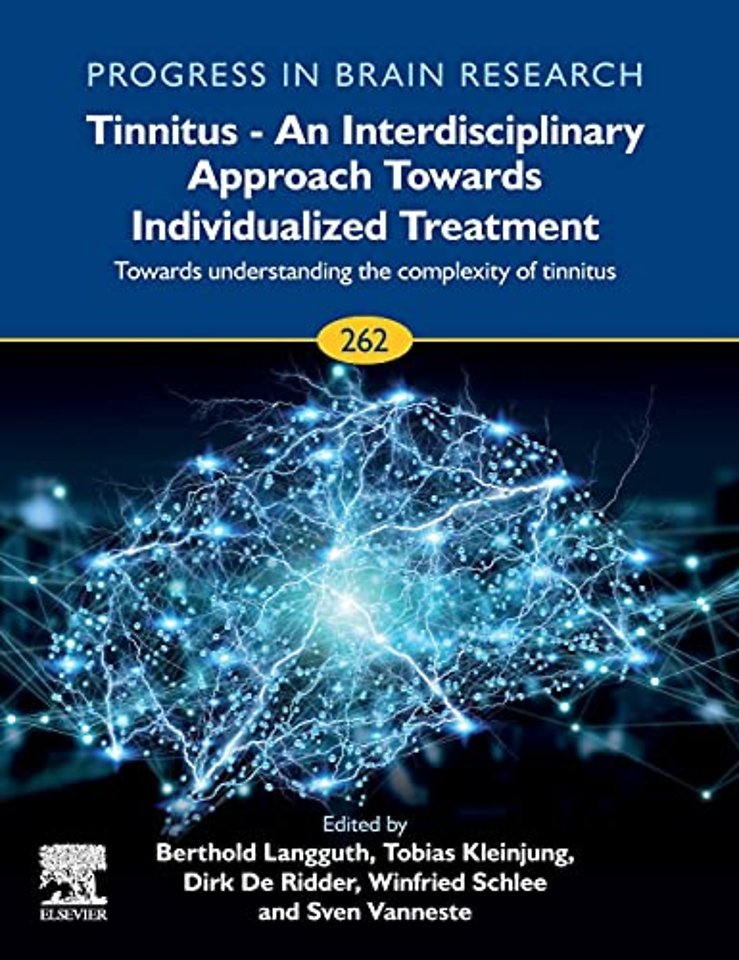
<p>1. Cochlear implantation for patients with tinnitus – a systematic review<br>Kelly Assouly<br>2. Event Related Potentials to Assess the Tinnitus complaint during drug treatment<br>Andréia Aparecida Azevedo Sr.<br>3. The difference in post-stimulus suppression between residual inhibition and forward masking<br>Pierre Hadrien Bourez<br>4. Sleep, sleep apnea and tinnitus<br>Lien-Chen Liu<br>5. A Bayesian brain in imbalance: medial, lateral and descending pathways in tinnitus and pain<br>Dirk De Ridder<br>6. Separate auditory pathways for the induction and maintenance of tinnitus and hyperacusis?<br>Jos J. Eggermont<br>7. Tinnitus features according to caffeine consumption<br>Ricardo Rodrigues Figueiredo<br>8. Modulation of sound and tinnitus loudness in tinnitus patients with and without hearing loss following three weeks of acoustic stimulation<br>Sylvie Hébert<br>9. Evidence for biological markers of tinnitus: A systematic review<br>Haúla Haider<br>10. Metabolic changes in the brain and blood of rats following acoustic trauma, tinnitus and hyperacusis <br>Yiwen Zheng and Dirk De Ridder<br>11. Low inter-rater consistency in semantic profiles of tinnitus-like sounds rated by tinnitus patients<br>Petteri Hyvärinen<br>12. Comparing pure tone and narrow band noise to measure tonal tinnitus pitch-match frequency<br>Daniela Korth and Orlando Guntinas-Lichius<br>13. The Stochastic Resonance model of auditory perception: a unified explanation of tinnitus development, Zwicker tone illusion, and residual inhibition.<br>Patrick Krauss<br>14. Altered brain responses to emotional facial expressions in tinnitus patients<br>Katharina Rosengarth<br>15. The effects of noise exposure and aging on spontaneous neuronal activity in the auditory midbrain<br>Roland Schaette<br>16. A comprehensive literature search to identify existing measures assessing "concentration" as a core outcome domain for sound-based interventions for chronic subjective tinnitus in adults.<br>Maryam Shabbir<br>17. Tinnitus and its associations with general health, mental health and hearing loss in a population study<br>Inge Stegeman<br>18. Impact of tDCS and HD-tDCS on tinnitus perception: a scoping review<br>Giriraj Shekhawat<br>19. Auditory synaptopathy in mice lacking the glutamate transporter GLAST and its impact on brain activity<br>Christopher R. Cederroth<br>20. Using gap-induced inhibition of the post-auricular muscle response as an objective measure of tinnitus in humans<br>Mark Nelson Wallace<br>21. Vagus nerve stimulation for tinnitus: a review and perspective<br>Berthold Langguth, Dirk De Ridder and Sven Vanneste<br>22. What kind of sorcery is this? Unintended prolonged tinnitus suppression after short-term acoustic stimulation: Case reports<br>Patrick K.A. Neff<br>23. On the relationship between tinnitus distress, cognitive performance and aging<br>Patrick K.A. Neff<br>24. What is tinnitus? Issues and justifications for a definition<br>Arnaud Noreña and Philippe Fournier<br>25. The More the Merrier? Influence of Treatment Duration and Stimulation Frequency on Multisite Repetitive Transcranial Magnetic Stimulation in Chronic Tinnitus<br>Peter M. Kreuzer<br>26. Structural correlates of the audiological and emotional components of chronic tinnitus<br>Dirk De Ridder<br>27. Bottom-up deafferentation or deficient top-down noise-cancelling underpin the log-dynamics in phantom sounds <br>Sven Vanneste</p>