Rajkumar Rajendram,
Victor R Preedy,
Victor R. Preedy,
Vinood B. Patel,
Vinood Patel,
Colin R Martin,
Colin R. Martin,
Colin R. R Martin
e.a.
Elsevier Science
e druk, 2022
9780128205891
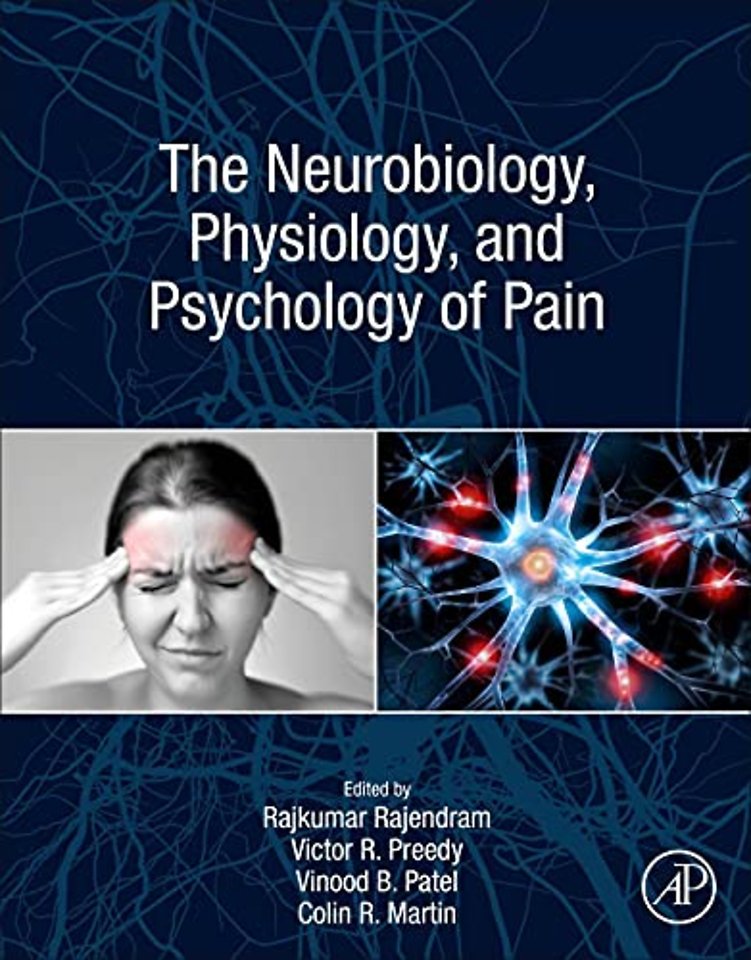
The Neurobiology, Physiology, and Psychology of Pain
Specificaties
Paperback, blz.
|
Engels
Elsevier Science |
e druk, 2022
ISBN13: 9780128205891
Rubricering
Levertijd ongeveer 8 werkdagen
Samenvatting
The Neurobiology, Physiology and Psychology of Pain focuses on bettering readers’ understanding of acute and chronic pain. Featuring chapters on neurotransmitters, pharmacology, and brain imaging, this volume discusses, in detail, the mechanisms of pain and experimental studies undertaken to better understand the pathways involved. The translational work in this area has applicability for neurologists, anesthesiologists, pharmacologists, and anyone working in the intersection of these areas. This volume is integral for anyone interested in the molecular underpinnings of pain at every level.
Specificaties
Inhoudsopgave
<p>I. Molecular and cellular aspects<br>1. Gene expression, KCNQ/Kv7 channels and neuropathic pain <br>2. The NTRK1 gene and congenital insensitivity to pain<br>3. Prdm12, a key transcriptional regulator of the nociceptive lineage<br>4. Linking the genetics of fibromyalgia and painFernando <br>5. Fentanyl: Polymorphisms, and adverse events<br>6. Propofol anesthesia and molecular changes in the brain<br>7. Protein Kinase G is a Molecular Switch for Pain<br>8. Adrenergic agonists and the mu opioid receptor <br>9. Inflammatory and neuropathic pain impact on the opioid function in the mesocorticolimbic systemL<br>10. Clinacanthus nutans, analgesia and the l-arginine/nitric oxide-mediated/cyclic-guanosine monophosphate-independent pathway<br>11. alpha2/3-selective GABAA receptor PAMs as pain medications <br>12. alpha5GABAA receptors and their role in pain perception <br>13. ATP sensitive potassium channels in pain and analgesia <br>14. Astrocyte-neuron lactate shuttle and pain<br>15. Nociception and sweet solutions: applications to inflammatory pain <br>16. Interlinking Interleukin-33 (IL-33), neuroinflammation and neuropathic pain <br>17. Neurons of the parabrachial nucleus, nociceptive input and pain pathways <br>18. Anterior cingulate cortex, pain perception and pathological neuronal plasticity during chronic pain<br>19. Sleep deprivation headaches and Fos immunohistochemistry<br>20. Antinociceptive glucagon-like peptides<br>21. Pain transmission and peripheral group III metabotropic glutamate receptors (mGluRs)<br>22. TRPM -8 receptor and menthol in pain management</p> <p>II. Physiology, imaging and physical recordings <br>23. Anesthetic and proconvulsant effects of ketamine on EEG <br>24. Electroencephalography and anesthetic doses of ketamine<br>25. Linking heart function and analgesia<br>26. Computed Tomography-guided procedures for epidural injections <br>27. Chronic pain: Linking deep brain stimulation and sensory functional MRI<br>28. Neurocognition and placebo analgesia: linking in functional magnetic resonance imaging <br>29. Linking the cortex, functional spectroscopy and pain: features and applications<br>30. Muscle origins of myofascial pain syndrome</p> <p>III. Psychology and Behaviour<br>31. Behavioral markers of pain<br>32. Adverse life events, sensitization of spinal nociception, and chronic pain risk<br>33. Cognitive-affective modulation of pain: The Placebo and nocebo phenomena and their impact on pain treatment<br>34. Nociception-related behavioral phenotypes in adult zebrafish<br>35. Pain, implantable pain devices and psychosocial aspects as a narrative<br>36. Influence of psychological factors in myofascial pain</p> <p>IV. Resources<br>37. Resources</p>