R. D. Tyagi,
Balasubramanian Sellamuthu,
Bhagyashree Tiwari,
Song Yan,
Patrick Drogui,
Xiaolei Zhang,
Ashok Pandey
e.a.
Elsevier Science
e druk, 2020
9780128197226
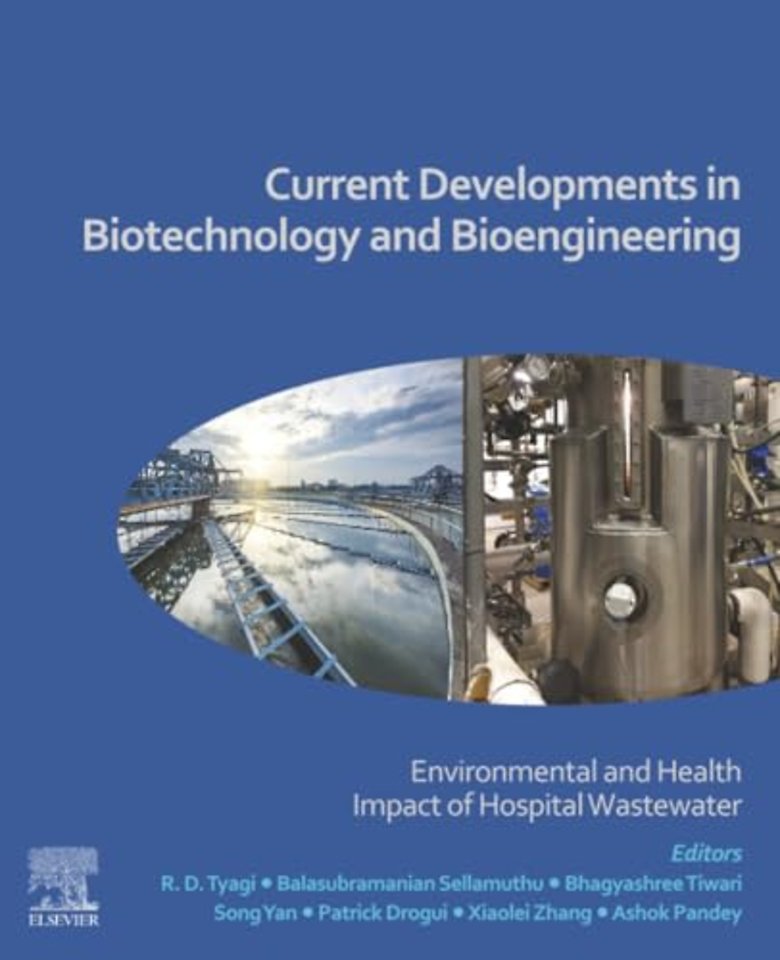
Current Developments in Biotechnology and Bioengineering
Environmental and Health Impact of Hospital Wastewater
Specificaties
Paperback, blz.
|
Engels
Elsevier Science |
e druk, 2020
ISBN13: 9780128197226
Rubricering
Levertijd ongeveer 8 werkdagen
Samenvatting
Current Developments in Biotechnology and Bioengineering: Environmental and Health Impact of Hospital Wastewater narrates the origin (history) of pharmaceuticals discoveries, hospital wastewater and its environmental and health impacts. It covers microbiology of hospital wastewater (pathogens, multi-drug resistance development, microbial evolution and impacts on humans, animals, fish), advanced treatment options (including biological, physical and chemical methods), and highlights aspects required during hospital wastewater treatment processes. This book provides an amalgamation of all recent scientific information on hospital wastewater which is not available in the current literature.
Specificaties
Inhoudsopgave
<p>1. Introduction to wastewater microbiology: special emphasis on hospital wastewater </p> <p>1.1 Introduction</p> <p>1.2 History of wastewater origin and treatment </p> <p>1.3 History of microbiology and pathogens discovery </p> <p>1.4 Antibiotic discovery</p> <p>1.5 Pharmaceuticals in hospital wastewater </p> <p>1.6 Presence of pharmacological substances in aquatic environment </p> <p>1.7 Conclusion and future perspectives </p> <p>Abbreviations </p> <p>References </p> <p>2. Pharmaceutical metabolites and their by-products in hospital wastewater </p> <p>2.1 Introduction </p> <p>2.2 Pharmaceutical metabolites and their classification </p> <p>2.3 Route of entry and fate of pharmaceutical compounds </p> <p>2.4 Metabolism and transformation mechanism of pharmaceutical compounds </p> <p>2.5 Ecotoxicity of pharmaceutical compounds </p> <p>2.6 Detection of pharmaceutical compounds </p> <p>2.7 Conclusions and perspectives </p> <p>Abbreviations </p> <p>References </p> <p>3. Physical, chemical, and biological impact (hazard) of hospital wastewater on environment: presence of pharmaceuticals, pathogens, and antibiotic-resistance genes </p> <p>3.1 Introduction </p> <p>3.2 Pharmaceuticals and pathogens in hospital wastewater </p> <p>3.3 The development of antibiotic resistance genes </p> <p>3.4 The transportation of pharmaceuticals and pathogens in the environment </p> <p>3.5 The prevention of pharmaceuticals and pathogens into environment </p> <p>3.6 Conclusions and perspectives </p> <p>References </p> <p>4. Microbiology of hospital wastewater </p> <p>4.1 Introduction </p> <p>4.2 Microorganisms and pathogens originating from hospital wastewater </p> <p>4.3 Antibiotic-resistance genes prevalence in environment </p> <p>4.4 Tools used to identify antibiotic-resistance genes </p> <p>4.5 Metagenomics of hospital wastewater </p> <p>4.6 Horizontal gene transfer </p> <p>4.7 Emerging infectious particles </p> <p>4.8 Conclusions and perspectives </p> <p>Abbreviations </p> <p>5. Fate of pathogens and viruses in hospital wastewater and their treatment methods </p> <p>5.1 Introduction </p> <p>5.2 Pathogen surveillance and detection in hospital wastewater </p> <p>5.3 Types of pathogens present in hospital wastewater </p> <p>5.4 Treatment methods available for pathogens present in hospital wastewater </p> <p>5.5 Treated water monitoring and analysis </p> <p>5.6 Summary </p> <p>5.7 Conclusions and perspectives </p> <p>Abbreviations </p> <p>References </p> <p>6. Multidrug-resistant genes and pathogenic bacteria in hospital wastewater </p> <p>6.1 Introduction </p> <p>6.2 Origin and mechanism of drug resistance </p> <p>6.3 Antifungal drug resistance </p> <p>6.4 Antibiotic-resistance bacteria </p> <p>6.5 Antibiotic-resistance genes </p> <p>6.6 Conclusions and perspectives </p> <p>Abbreviations </p> <p>References </p> <p>7. Cancer treatment drugs and endocrine-disrupting chemicals release and fate in hospital wastewater </p> <p>7.1 Introduction </p> <p>7.2 List of chemicals released in the hospital wastewater</p> <p>7.3 Endocrine-disrupting chemicals </p> <p>7.4 Challenges in hospital wastewater treatment </p> <p>7.5 Conclusions and perspectives </p> <p>Abbreviations </p> <p>References </p> <p>8. Pharmaceuticals roles in microbial evolution </p> <p>8.1 Introduction </p> <p>8.2 Microbial evolution and adaptation </p> <p>8.3 Aquatic environment microbiology </p> <p>8.4 Soil microbiology </p> <p>8.5 Effect on plants, animals, and humans in long run </p> <p>8.6 Conclusions and perspectives </p> <p>Abbreviations </p> <p>References </p> <p>9. Present scenario of antibiotic use in veterinary practice: importance of wastewater microbiology </p> <p>9.1 Introduction </p> <p>9.2 Antibiotic released in veterinary applications </p> <p>9.3 Microbial association with animals </p> <p>9.4 Dissemination of animal pathogens to environment </p> <p>9.5 Animal viruses in wastewater </p> <p>9.6 Recent studies on wastewater associated with animals </p> <p>9.7 Molecular detection of veterinary pathogens </p> <p>9.8 Policy interventions in animal health </p> <p>9.9 Conclusions and perspectives </p> <p>Abbreviations </p> <p>References </p> <p>10. Bacteriophages isolated from hospital wastewater and its role in controlling drug-resistant pathogens </p> <p>10.1 Introduction </p> <p>10.2 Background of bacteriophages (Φ) </p> <p>10.3 Classification of bacteriophages </p> <p>10.4 Phages commonly found in hospital wastewater </p> <p>10.5 Role of phages in drug-resistance gene transfer </p> <p>10.6 General (vast) applications of bacteriophages in different fields </p> <p>10.7 Limitations of phage use in real world applications </p> <p>10.8 Removal of phages from wastewater treatment plant </p> <p>10.9 Conclusions and perspectives </p> <p>Abbreviations </p> <p>References </p> <p>11. Development of molecular methods to detect and control emerging drug-resistance pathogens </p> <p>11.1 Introduction </p> <p>11.2 Antibiotic-resistance gene-carrying plasmidome in the cultivable microbial community </p> <p>11.3 Molecular tools/biosensors development for detection</p> <p>of drug-resistance bacteria and genes </p> <p>11.4 Recent approaches to control drug resistance development </p> <p>11.5 Conclusions and perspectives </p> <p>Abbreviations </p> <p>References </p> <p>12. Riboswitches and aptamers: potential future targets</p> <p>to control drug-resistant bacteria </p> <p>12.1 Introduction </p> <p>12.2 History of riboswitches and aptamers </p> <p>12.3 Role of riboswitches </p> <p>12.4 Applications of aptamers </p> <p>12.5 Engineering bacteria using riboswitches and aptamers </p> <p>12.6 Conclusions and perspectives </p> <p>Abbreviations </p> <p>References </p> <p>13. Treatment of wastewater containing pharmaceuticals: biological treatment </p> <p>13.1 Introduction </p> <p>13.2 Activated sludge process </p> <p>13.3 Sequential batch reactor </p> <p>13.4 Membrane bioreactor </p> <p>13.5 Fluidized bed biofilm reactor and moving bed biofilm</p> <p>reactor </p> <p>13.6 The impact of property of pharmaceuticals on the removal </p> <p>13.7 Novel methods and advanced treatment options </p> <p>13.8 Engineering aspects to improve pharmaceuticals removal with biological process of wastewater treatment </p> <p>13.9 Technical and economical evaluation of biological processes </p> <p>13.10 Treatment systems for small flows </p> <p>13.11 Effect of climate change on the microbiology of the biological treatment process in removing the pharmaceuticals</p> <p>13.12 Conclusions and perspectives </p> <p>Abbreviations </p> <p>References </p> <p>Further reading </p> <p>14. Role of chemical treatments in pharmaceuticals degradation and its consequences and environmental risks </p> <p>14.1 Introduction </p> <p>14.2 Photocatalysis </p> <p>14.3 Fenton-type processes </p> <p>14.4 The electrochemical advance oxidation process </p> <p>14.5 Treatment of pharmaceutical pollutants by combined wastewater treatment processes </p> <p>14.6 By-products identification </p> <p>14.7 Technoeconomic comparison for various hospital wastewater treatment processes </p> <p>14.8 Challenges in the treatment process </p> <p>14.9 Conclusion and perspectives </p> <p>References </p> <p>Further reading </p> <p>15. Hospital wastewater treatment scenario around the globe </p> <p>15.1 Introduction </p> <p>15.2 Global scenario of hospital wastewater treatment </p> <p>15.3 Status of hospital wastewater management in developed countries</p> <p>15.4 Status of hospital wastewater management in developing countries </p> <p>15.5 Other countries </p> <p>15.6 Conclusions and perspectives </p> <p>Abbreviations </p> <p>References </p> <p>16. Guidelines for hospital wastewater discharge </p> <p>16.1 Introduction </p> <p>16.2 Guideline of hospital wastewater discharge to municipal sewer </p> <p>16.3 On-site treatment of hospital wastewater </p> <p>16.4 Worker’s health and safety principles </p> <p>16.5 Conclusions and perspectives </p> <p>Abbreviations </p> <p>References </p> <p>17. Future impacts and trends in treatment of hospital wastewater </p> <p>17.1 Introduction </p> <p>17.2 Emerging infectious diseases </p> <p>17.3 Threats </p> <p>17.4 Required research action and proposed remedies </p> <p>17.5 Effect of global warming on pathogens survival </p> <p>17.6 Conclusions and perspectives </p> <p>Abbreviations </p> <p>References</p>