,

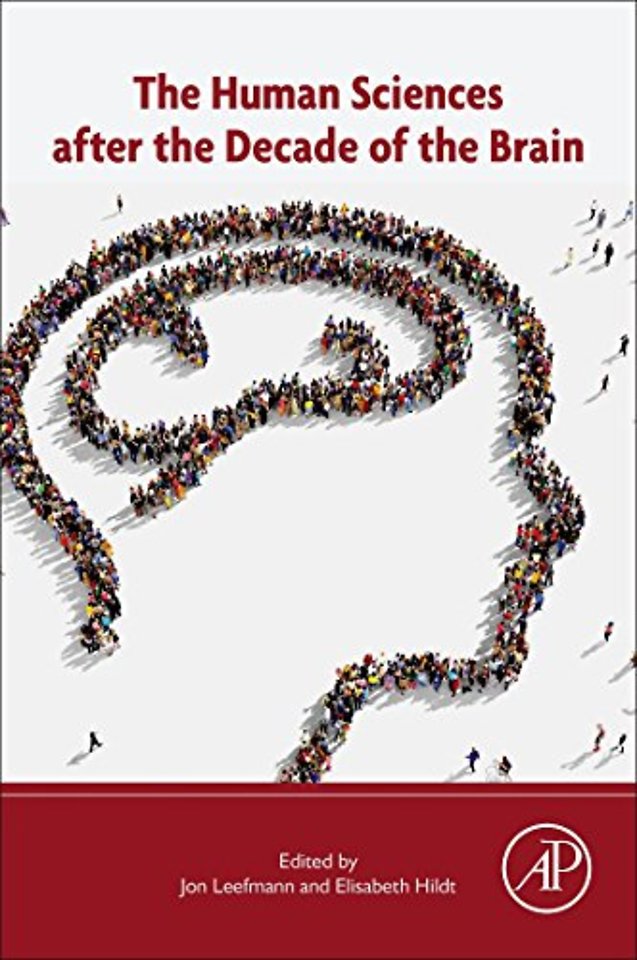
The Human Sciences after the Decade of the Brain

Specificaties
Paperback, blz. | Engels
Elsevier Science | e druk, 2017
ISBN13: 9780128042052
Rubricering
Elsevier Science e druk, 2017 9780128042052
€ 74,14
Levertijd ongeveer 8 werkdagen

Samenvatting

The Human Sciences after the Decade of the Brain brings together exciting new works that address today’s key challenges for a mutual interaction between cognitive neuroscience and the social sciences and humanities. Taking up the methodological and conceptual problems of choosing a neuroscience approach to disciplines such as philosophy, history, ethics and education, the book deepens discussions on a range of epistemological, historical, and sociological questions about the "neuro-turn" in the new millennium. The book’s three sections focus on (i) epistemological questions posed by neurobiologically informed approaches to philosophy and history, (ii) neuroscience’s influence on explanations for social and moral behavior, and (iii) the consequences of the neuro-turn in diverse sectors of social life such as science, education, film, and human self-understanding.

This book is an important resource both for students and scholars of cognitive neuroscience and biological psychology interested in the philosophical, ethical, and societal influences of—and on—their work as well as for students and scholars from the social sciences and humanities interested in neuroscience.

Specificaties

ISBN13:9780128042052
Taal:Engels
Bindwijze:Paperback

Inhoudsopgave

<p>Part I: Prospects and Limitations of Neuroscience Research in the Humanities and Social Sciences<br>1. Neurophilosophy or Philosophy of Neuroscience? What Neuroscience and Philosophy Can and Cannot Do for Each Other<br>2. Philosophical Puzzles Evade Empirical Evidence: Some Thoughts and Clarifications Regarding the Relation Between Brain Sciences and Philosophy of Mind<br>3. “Who’s Afraid of the Big Bad Neuroscience?” Neuroscience’s Impact on Our Notions of Self and Free Will<br>4. Free Will—Between Philosophy and Neuroscience<br>5. Histories of the Brain: Toward a Critical Interaction of the Humanities and Neurosciences</p> <p>Part II: The Neurosciences of Social Sciences and Ethics<br>6. The Theory of Brain-Sign: A New Model of Brain Operation<br>7. On the Redundancies of “Social Agency”<br>8. Two Kinds of Reverse Inference in Cognitive Neuroscience<br>9. The Neuroscience of Ethics Beyond the Is-Ought Orthodoxy: The Example of the Dual Process Theory of Moral Judgment</p> <p>Part III: The Neurosciences in Society. Social, Cultural, and Ethical Implications of the Neuro-Turn<br>10. Effects of the Neuro-Turn: The Neural Network as a Paradigm for Human Self-Understanding<br>11. Brain, Art, Salvation. On the Traditional Character of the Neuro-Hype<br>12. “A Mind Plague on Both Your Houses”: Imagining the Impact of the Neuro-Turn on the Neurosciences<br>13. Being a Good External Frontal Lobe: Parenting Teenage Brains<br>14. Toward Neuroscience Literacy?—Theoretical and Practical Considerations<br>15. “Strangers” in Neuroscientific Research<br>16. At the Push of a Button, Narrative Strategies and the Image of Deep Brain Stimulation</p>
€ 74,14
Levertijd ongeveer 8 werkdagen

Rubrieken

    Personen

      Trefwoorden

        The Human Sciences after the Decade of the Brain