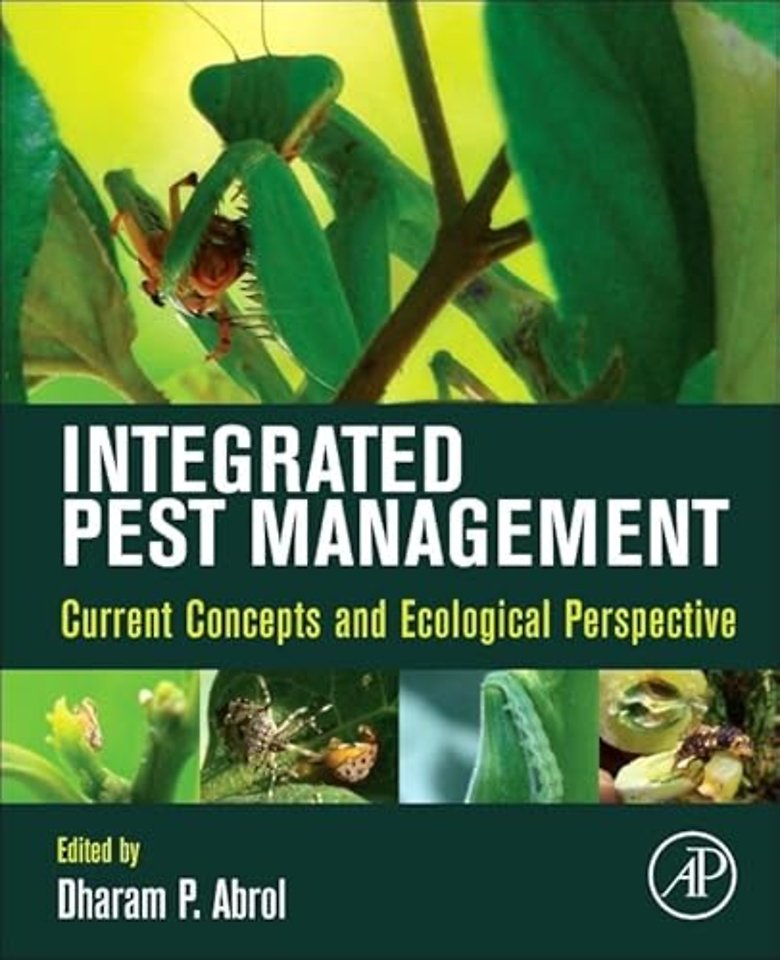
,

Integrated Pest Management

Current Concepts and Ecological Perspective

Specificaties
Gebonden, blz. | Engels
Elsevier Science | e druk, 2013
ISBN13: 9780123985293
Rubricering
Elsevier Science e druk, 2013 9780123985293
€ 131,80
Levertijd ongeveer 8 werkdagen

Samenvatting

Integrated Pest Management: Current Concepts and Ecological Perspective presents an overview of alternative measures to traditional pest management practices using biological control and biotechnology. The removal of some highly effective broad-spectrum chemicals, caused by concerns over environmental health and public safety, has resulted in the development of alternative, reduced risk crop protection products. These products, less toxic to the environment and easily integrated into biological control systems, target specific life stages or pest species. Predation — recognized as a suitable, long-term strategy — effectively suppresses pests in biotechnological control systems.

Integrated Pest Management covers these topics and more. It explores the current ecological approaches in alternative solutions, such as biological control agents, parasites and predators, pathogenic microorganisms, pheromones and natural products as well as ecological approaches for managing invasive pests, rats, suppression of weeds, safety of pollinators, role of taxonomy and remote sensing in IPM and future projections of IPM. This book is a useful resource to entomologists, agronomists, horticulturists, and environmental scientists.

Specificaties

ISBN13:9780123985293
Taal:Engels
Bindwijze:Gebonden

Inhoudsopgave

<p>SECTION 1: ECOLOGY OF PEST MANAGEMENT<br>1. Ecology of Pest Management<br>2. Host plant resistance in pest management<br>3. Impact of climate change on pests and pest management: Implications for crop production and food security<br>4. Application of remote sensing in integrated pest management<br>5. Weather-based pest forecasting for efficient crop protection<br>6. Forecasting of Colorado potato beetle development by means of computer aided system SIMLEP Decision Support System<br> SECTION 2: CHEMICAL CONTROL OF CROP PESTS<br>7. Role of semiochemicals in integrated pest management<br>8. Pesticides appled for the control of invasive species in the United States<br>9. Potential and utilization of natural products in pest control<br> SECTION 3: BIOLOGICAL CONTROL OF CROP PESTS<br>10. Biological control of insect pests in crops<br>11. Use of pheromones in insect pest management<br>12. Role of entomopathogenic fungi in IPM<br>13. Entomopathogenic nematodes for insect pest control<br>14. Entomopathogenic viruses and bacteria for insect pest control<br>15. Biological Control of Weeds by Plant Pathogens Using the Bioherbicide Approach<br>16. Biological control of invasive insect pests<br>17. Use of spiders as natural enemies to control insect pests<br>18. Cultural practices and physical methods for the management of insect pests<br> SECTION 4: BIOTECHNOLOGICAL APPROACH TO MANAGEMENT OF CROP PESTS<br>19. Biotechnological approaches for insect pest management<br>20. Biotechnological approaches for non-insect pest management<br>21. Genetically modified crops in IPM: agricultural, ecological, and evolutionary implications<br>22. Breeding of crops for resistance against insect pests and diseases<br> SECTION 5: MISCELLANEOUS ISSUES RELATED TO CROP PEST MANAGEMENT<br>23. Integrated management of rodent pests <br>24. Ecofriendly management of phytophagous mites<br>25. Risk to biodiversity by exotic species introduced for biological control<br>26. The critical role of taxonomy in IPM—Challenges and opportunities<br>27. IPM Extension: A Global Overview<br>28. Future of integrated pest management in the 21st century, whither or wither—A critical analysis<br>
€ 131,80
Levertijd ongeveer 8 werkdagen

Rubrieken

    Personen

      Trefwoorden

        Integrated Pest Management