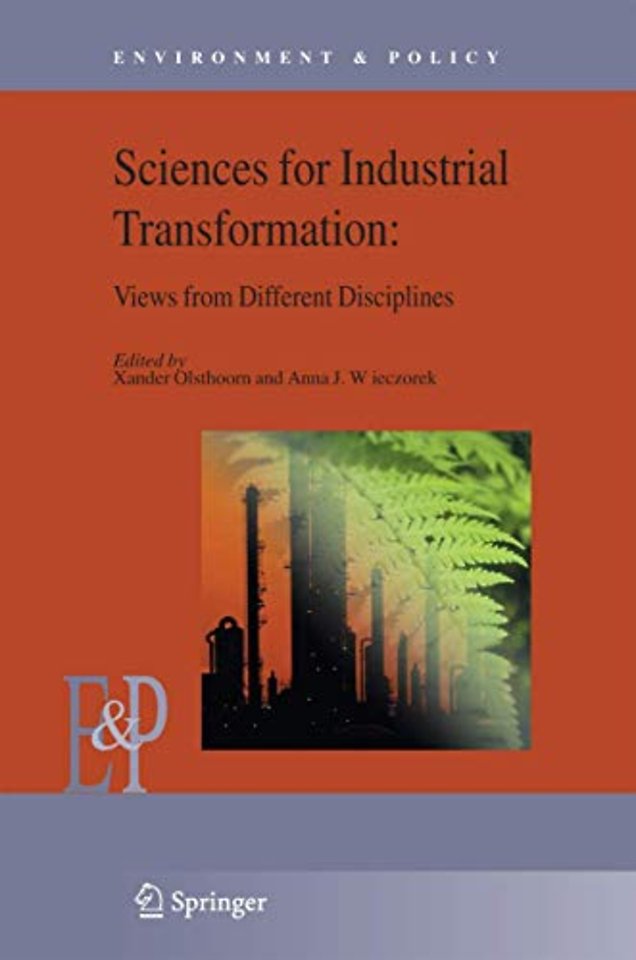
Xander Olsthoorn,
Anna J. Wieczorek
Springer Netherlands
0e druk, 2010
9789048169542
Understanding Industrial Transformation
Views from Different Disciplines
Specificaties
Paperback, 226 blz.
|
Engels
Springer Netherlands |
0e druk, 2010
ISBN13: 9789048169542
Rubricering
Onderdeel van serie
Environment & Policy
Levertijd ongeveer 8 werkdagen
Samenvatting
When facing momentous societal change, such as the transformation to a sustainable world, the sciences must impress their importance upon the public and convince scientific and policy institutions in order to obtain the means to carry out their mission. This book represents the first attempt to integrate disciplinary views on the topic of transformation towards sustainability.
Specificaties
ISBN13:9789048169542
Taal:Engels
Bindwijze:paperback
Aantal pagina's:226
Uitgever:Springer Netherlands
Druk:0
Hoofdrubriek:Economie
Serie:Environment & Policy
Inhoudsopgave
About the Authors. Preface.
1. INTRODUCTION, Xander Olsthoorn & Anna J. Wieczorek. 1.1.What is industrial transformation? 1.2. About this book. Acknowledgements. References.
2. A PSYCHOLOGICAL VIEW ON INDUSTRIAL TRANSFORMATION AND BEHAVIOUR, Joop de Boer. 2.1. Introduction. 2.2. On the causes of behaviour. 2.3. The role of values. 2.4. The impacts of awareness. 2.5. Final remarks. Acknowledgements. References.
3. SOCIOLOGICAL PERSPECTIVES FOR INDUSTRIAL TRANSFORMATION, Arthur P.J. Mol & Gert Spaargaren. 3.1. Introduction. 3.2. General and theoretical sociology. 3.3. Environmental sociology. 3.4. Environmental sociology and industrial production. 3.5. Sociology and sustainable consumption. 3.6. Epilogue. References.
4. INDUSTRIAL TRANSFORMATION AND INTERNATIONAL LAW, Joyeeta Gupta. 4.1. Introduction. 4.2. The incremental model. 4.3. Structural model of law making. 4.4. Regulatory competition and law: international economic law. 4.5. Conclusions. Acknowledgements. References.
5. CONTRIBUTIONS TO TRANSFORMATION RESEARCH FROM POLITICAL SCIENCE, Klaus Jacob, Frank Biermann, Marleen van de Kerkhof & Anna J. Wieczorek. 5.1. Introduction. 5.2. The international dimension of industrial transformation. 5.3. New actors: stakeholder involvement in transformation processes. 5.4. New instruments and strategies for environmental policies. 5.5. Conclusions: strategies for industrial transformation. Acknowledgements. References.
6. ECOLOGICAL ECONOMICS AND INDUSTRIAL TRANSFORMATION, Xander Olsthoorn & Onno Kuik. 6.1. Introduction. 6.2. The analysis by ecological economics. 6.3. Indicators. 6.4. Ecological economics as a criticism of ‘mainstream’ economics. 6.5. Conclusions. References.
7. AN EVOLUTIONARY ECONOMICS PERSPECTIVE ONINDUSTRIAL TRANSFORMATION, Jeroen C.J.M. van den Bergh, Marjan W. Hofkes & Frans H. Oosterhuis. 7.1. Introduction. 7.2. Concepts in evolutionary thinking. 7.3. Essential contributions to evolutionary Economics. 7.4. Environmental applications of evolutionary economics. 7.5. An application to the energy system. 7.6. Evolutionary policies for industrial transformation. Acknowledgements. References.
8. A NEO-CLASSICAL ECONOMICS VIEW ON TECHNOLOGICAL TRANSITIONS, Frank A.G. den Butter & Marjan W. Hofkes. 8.1. Introduction. 8.2. Neo-classical economics and the environment. 8.3. Technological change. 8.4. Technological lock-ins. 8.5. Transitions and government intervention. 8.6. Transition to wind energy: an example. 8.7. Conclusion. References.
9. MULTI-LEVEL PERSPECTIVE ON SYSTEM INNOVATION: RELEVANCE FOR INDUSTRIAL TRANSFORMATION, Frank W. Geels. 9.1. Introduction. 9.2. Some disciplinary building blocks. 9.3. A multi-level perspective on system innovations. 9.4. Policy suggestions. 9.5. Topics for further research. Acknowledgements. References.
10. MANAGING TRANSITIONS FOR SUSTAINABLE DEVELOPMENT, Derk Loorbach & Jan Rotmans. 10.1. Introduction. 10.2. Scientific perspective. 10.3. The water transition 10.4. Possibilities for managing transitions. 10.5. Conclusions. References.
11. DISCUSSION & CONCLUSIONS, Xander Olsthoorn, Adrian Smith & Anna J. Wieczorek. 11.1. Introduction. 11.2. Analysis and Conclusions. 11.3. The management of change: Some challenges ahead.
References. Epilogue.
1. INTRODUCTION, Xander Olsthoorn & Anna J. Wieczorek. 1.1.What is industrial transformation? 1.2. About this book. Acknowledgements. References.
2. A PSYCHOLOGICAL VIEW ON INDUSTRIAL TRANSFORMATION AND BEHAVIOUR, Joop de Boer. 2.1. Introduction. 2.2. On the causes of behaviour. 2.3. The role of values. 2.4. The impacts of awareness. 2.5. Final remarks. Acknowledgements. References.
3. SOCIOLOGICAL PERSPECTIVES FOR INDUSTRIAL TRANSFORMATION, Arthur P.J. Mol & Gert Spaargaren. 3.1. Introduction. 3.2. General and theoretical sociology. 3.3. Environmental sociology. 3.4. Environmental sociology and industrial production. 3.5. Sociology and sustainable consumption. 3.6. Epilogue. References.
4. INDUSTRIAL TRANSFORMATION AND INTERNATIONAL LAW, Joyeeta Gupta. 4.1. Introduction. 4.2. The incremental model. 4.3. Structural model of law making. 4.4. Regulatory competition and law: international economic law. 4.5. Conclusions. Acknowledgements. References.
5. CONTRIBUTIONS TO TRANSFORMATION RESEARCH FROM POLITICAL SCIENCE, Klaus Jacob, Frank Biermann, Marleen van de Kerkhof & Anna J. Wieczorek. 5.1. Introduction. 5.2. The international dimension of industrial transformation. 5.3. New actors: stakeholder involvement in transformation processes. 5.4. New instruments and strategies for environmental policies. 5.5. Conclusions: strategies for industrial transformation. Acknowledgements. References.
6. ECOLOGICAL ECONOMICS AND INDUSTRIAL TRANSFORMATION, Xander Olsthoorn & Onno Kuik. 6.1. Introduction. 6.2. The analysis by ecological economics. 6.3. Indicators. 6.4. Ecological economics as a criticism of ‘mainstream’ economics. 6.5. Conclusions. References.
7. AN EVOLUTIONARY ECONOMICS PERSPECTIVE ONINDUSTRIAL TRANSFORMATION, Jeroen C.J.M. van den Bergh, Marjan W. Hofkes & Frans H. Oosterhuis. 7.1. Introduction. 7.2. Concepts in evolutionary thinking. 7.3. Essential contributions to evolutionary Economics. 7.4. Environmental applications of evolutionary economics. 7.5. An application to the energy system. 7.6. Evolutionary policies for industrial transformation. Acknowledgements. References.
8. A NEO-CLASSICAL ECONOMICS VIEW ON TECHNOLOGICAL TRANSITIONS, Frank A.G. den Butter & Marjan W. Hofkes. 8.1. Introduction. 8.2. Neo-classical economics and the environment. 8.3. Technological change. 8.4. Technological lock-ins. 8.5. Transitions and government intervention. 8.6. Transition to wind energy: an example. 8.7. Conclusion. References.
9. MULTI-LEVEL PERSPECTIVE ON SYSTEM INNOVATION: RELEVANCE FOR INDUSTRIAL TRANSFORMATION, Frank W. Geels. 9.1. Introduction. 9.2. Some disciplinary building blocks. 9.3. A multi-level perspective on system innovations. 9.4. Policy suggestions. 9.5. Topics for further research. Acknowledgements. References.
10. MANAGING TRANSITIONS FOR SUSTAINABLE DEVELOPMENT, Derk Loorbach & Jan Rotmans. 10.1. Introduction. 10.2. Scientific perspective. 10.3. The water transition 10.4. Possibilities for managing transitions. 10.5. Conclusions. References.
11. DISCUSSION & CONCLUSIONS, Xander Olsthoorn, Adrian Smith & Anna J. Wieczorek. 11.1. Introduction. 11.2. Analysis and Conclusions. 11.3. The management of change: Some challenges ahead.
References. Epilogue.