, , , e.a.

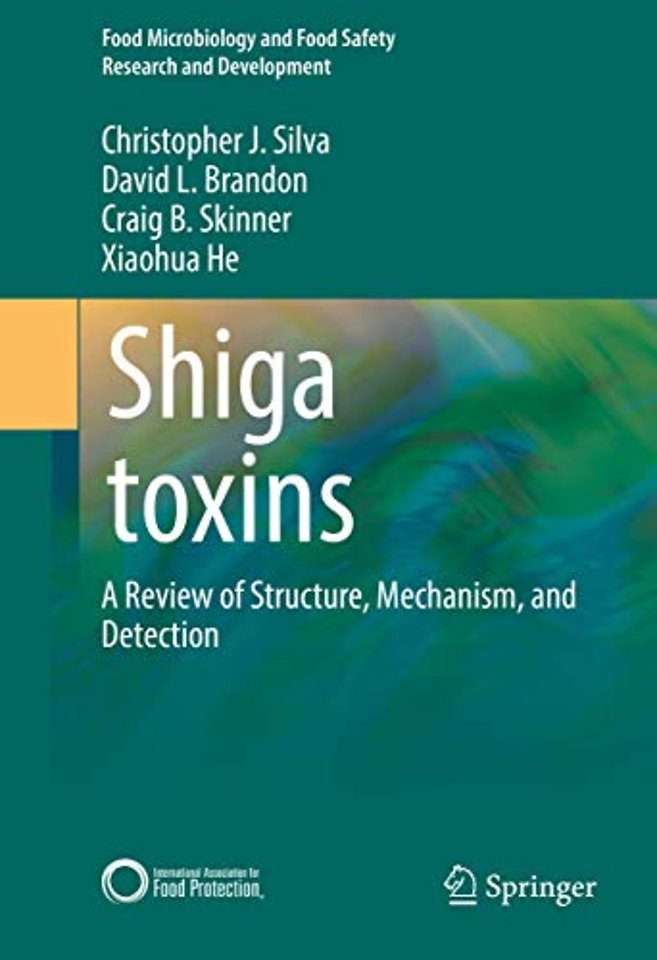
Shiga toxins

A Review of Structure, Mechanism, and Detection

Specificaties
Gebonden, blz. | Engels
Springer International Publishing | e druk, 2017
ISBN13: 9783319505794
Rubricering
Springer International Publishing e druk, 2017 9783319505794
Onderdeel van serie Food Microbiology and Food Safety
€ 120,99
Levertijd ongeveer 8 werkdagen

Samenvatting

This book presents an overview of Shiga toxin-producing E. coli (STEC), with in-depth coverage of key areas such as recent Shiga toxin-related poisonings in Europe and the US, the structure, production, and mechanism of action of Shiga toxin, and current methods of detection.
The globalization of food production has introduced new risk factors and intensified existing hazards, complicating the assurance of food safety. Foodborne illness outbreaks, such as those related to STEC, are becoming more common and more dangerous. The threat that these bacterial toxins pose to the food supply is magnified by the frequent occurrence and severity of Shiga toxin-caused disease.   As a result, STEC and their toxins remain a primary concern in food safety.
This review serves as a key resource for scientists in the field and public health and regulatory officials charged with maintaining food safety. This book also looks to the future of treatment of Shiga toxin-associated disease, specifically the translation of lab bench science into clinical therapeutic strategies.

Specificaties

ISBN13:9783319505794
Taal:Engels
Bindwijze:gebonden
Uitgever:Springer International Publishing

Inhoudsopgave

<div>1. Outbreaks of Shiga toxin-related poisoning</div><div><div>An overview of the numerous major outbreaks of Shiga toxin related poisonings that have occurred in the United States and Europe, including</div><div>- the early outbreaks at McDonalds in 1982, the infamous Jack in the Box outbreak in 1993&nbsp;</div><div>- the European outbreak associated with fresh sprouts in 2013</div><div>- 9 outbreaks associated with spinach or lettuce from the Salinas Valley of California’s central coast.</div></div><div><br></div>2. Structure of Shiga toxins<div><div>-- a complex structure and mechanism of action</div><div>-- six subunits, five identical binding units and one catalytic unit that is responsible for the toxicity</div><div>-- relationship between Shiga toxins and other AB5 toxins</div><div>-- subtypes of Shiga toxins and new variants that have recently emerged.</div></div><div><br></div><div>3. Mechanism of action</div><div>-- the phage biology that controls the production of the toxins</div><div>-- translocation of toxin to sites of action</div><div>-- toxin action at the cellular and molecular level.&nbsp;</div><div><br></div><div>&nbsp;</div><div>4. Significant threats to human health</div><div><div>-- impact of antibiotics and antibiotic resistance on STEC disease</div><div>-- intoxication with more than one toxin</div><div>-- sequellae of STEC-provoked disease.</div></div><div><br></div>5. Methods for detection of Shiga toxins-- classical animal bioassay</div><div>-- immunoassay, including ELISA and solid and bead array systems</div><div>-- cell-based methods</div><div>-- indirect PCR-based methods</div><div>-- instrumental methods, including mass spectrometry, for directly detecting these toxins.</div><div><br></div><div>6. Conclusions and a glimpse into the future</div><div>-- a significant and growing threat to human health and food biosecurity</div><div>-- translation of lab bench science into clinical treatments for STEC disease.</div>
€ 120,99
Levertijd ongeveer 8 werkdagen

Rubrieken

    Personen

      Trefwoorden

        Shiga toxins