Odile Ferly,
Tegan Zimmerman
Springer International Publishing
e druk, 2023
9783031321108
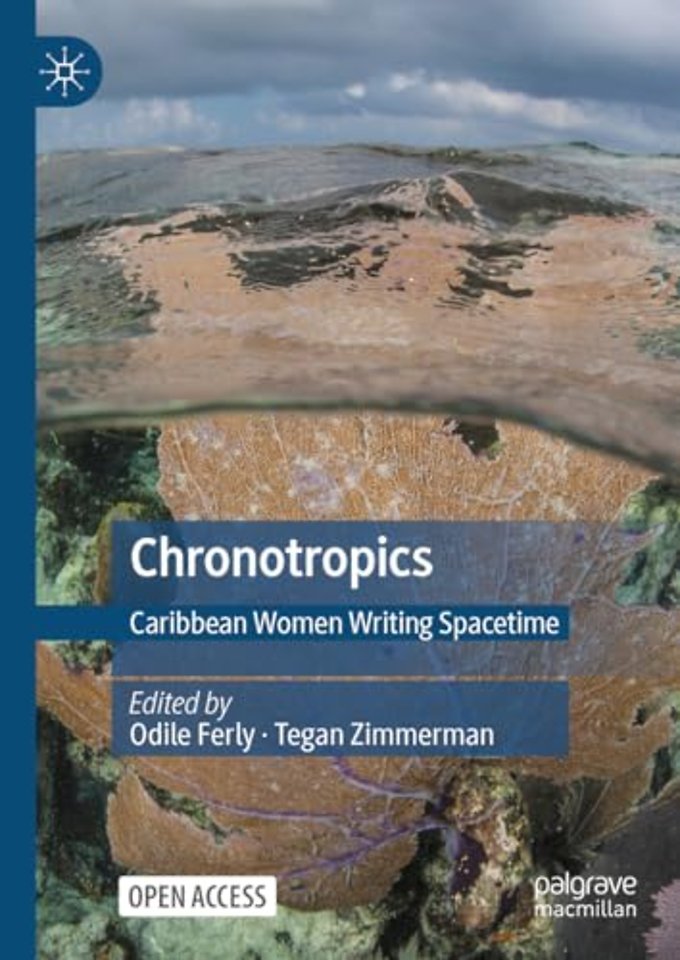
Chronotropics
Caribbean Women Writing Spacetime
Specificaties
Gebonden, blz.
|
Engels
Springer International Publishing |
e druk, 2023
ISBN13: 9783031321108
Rubricering
Levertijd ongeveer 8 werkdagen
Samenvatting
This book deconstructs androcentric approaches to spacetime inherited from western modernity through its theoretical frame of the chronotropics. It sheds light on the literary acts of archival disruption, radical remapping, and epistemic marronnage by twenty-first-century Caribbean women writers to restore a connection to spacetime, expanding it within and beyond the region. Arguing that the chronotropics points to a vocation for social justice and collective healing, this pan-Caribbean volume returns to autochthonous ontologies and epistemologies to propose a poetics and politics of the chronotropics that is anticolonial, gender inclusive, pluralistic, and non-anthropocentric.
This is an open access book.
Specificaties
ISBN13:9783031321108
Taal:Engels
Bindwijze:gebonden
Uitgever:Springer International Publishing
Inhoudsopgave
1: Introduction: Chronotropics.- Part I: Defiances/Divergences/Digressions.- 2: Of Slave Ships as Chronotopes: Fabienne Kanor’s Humus and Yolanda Arroyo Pizarro’s Las Negras.- 3: Wreckognition: Archival Ruins in Dionne Brand’s The Blue Clerk.- 4: Past Histories and Present Realities: Reading Desire and Difference in Mayra Santos Febres’ Fe en disfraz.- 5: Haunting Genealogies: Indo-Caribbean Feminist Literary Reimaginings of the Monstrous Past.- Part II: Traumas/Restructures/Retracings.- 6: Connecting Diasporas: Reading Erna Brodber’s Work through African Fractal Theory.- 7: When the Tout-Monde is not one: Maryse Condé’s Problematic ‘World-in-Motion’ in Les belles ténébreuses (2008) and Le fabuleux et triste destin d’Ivan et Ivana (2017).- 8: Writing “In Transit”: Literary Constructions of Sovereignty in Julia Alvarez’s Afterlife.- Part III: Destruction/Desires/Disruptions.- 9: Beyond the Crossroad: Caribbean Environments, Gender and Race in Pauline Melville’s The Ventriloquist’s Taleand Elizabeth Nunez’s Prospero’s Daughter.- 10: Creolized Ecology in Mayra Montero’s Palm of Darkness.- 11: Canadian Re-mapping of Caribbean Desire in Nalo Hopkinson’s Sister Mine and Shani Mootoo’s He Drown She in the Sea.- Part IV: Bilocation/Inhabitations/(G)hostings.- 12: Spiritual Crossings: Olokún and Caribbean Futures Past in La mucama de Omicunlé by Rita Indiana Hernández.- 13: A Site of Memory: Revisiting (in) Gisèle Pineau’s Mes quatre femmes.- 14: At the Crossroads of History: The Cohabitation of Past and Present in Kettly Mars’s L’Ange du patriarche.- 15: Fiction as a Spider’s Web? Ananse, Tricksters, and Storytellers in Karen Lord’s Redemption in Indigo.