Seongcheol Kim,
Samuel Greef,
Wolfgang Schroeder
Springer International Publishing
e druk, 2022
9783031040016
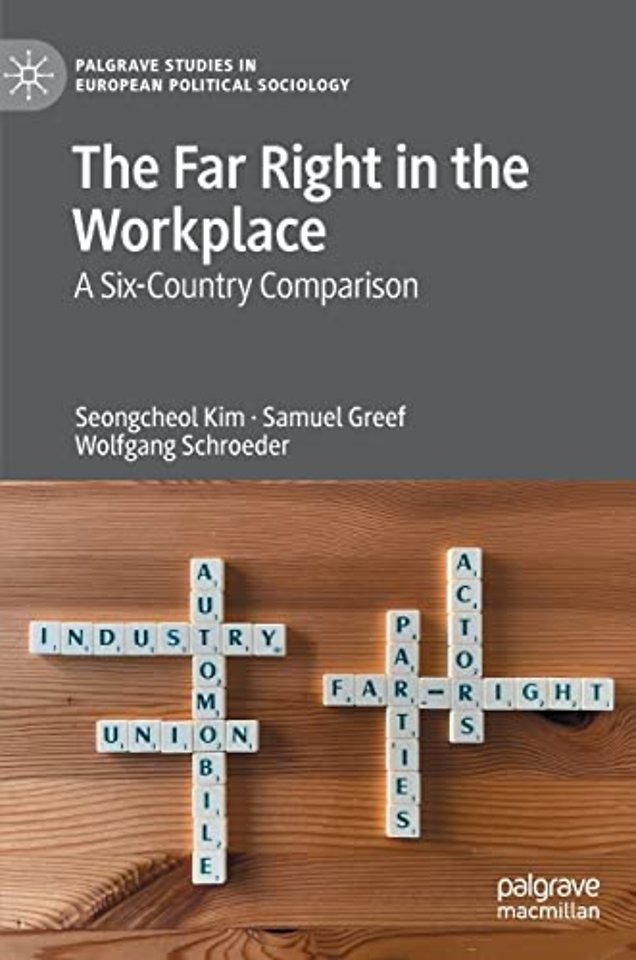
The Far Right in the Workplace
A Six-Country Comparison
Specificaties
Gebonden, blz.
|
Engels
Springer International Publishing |
e druk, 2022
ISBN13: 9783031040016
Rubricering
Onderdeel van serie
Palgrave Studies in European Political Sociology
Levertijd ongeveer 8 werkdagen
Samenvatting
This book offers the first comparative study of far-right messaging and organizing efforts at the workplace level as well as responses by established trade unions, encompassing six European countries (Belgium, France, Germany, Hungary, Italy, Poland). Drawing on semi-structured interviews with workers and trade union actors with a focus on the automobile industry, the volume develops a classification of far-right strategies and trade union counter-strategies in comparative perspective. Based on a research project in cooperation with trade unions, the book is situated at the interface of comparative politics, industrial sociology, political economy, and political sociology.
Specificaties
ISBN13:9783031040016
Taal:Engels
Bindwijze:gebonden
Uitgever:Springer International Publishing
Inhoudsopgave
<p>Endorsements</p>
<p>Acknowledgments</p>
<p>List of Figures and Tables</p>
<p>List of Abbreviations</p>
<p> </p>
<p>Chapter 1. Introduction</p>
<p>1.1 Taking Stock: The Far Right in the 2010s</p>
<p>1.2 Research Questions and Methodology</p>
<p>1.3 Structure of the Book</p>
<p>References</p>
<p> </p>
<p>Chapter 2. The Far Right and the Workers: An Overview</p>
<p>2.1 Conceptual Framework: Workers, Far Right, Radical and Extreme Right, Right-Wing Populism</p>
<p>2.2 Literature Review: The Far Right and the Workers</p>
<p>2.3 Methodology: Interviews, Triangulation, and Theory-Practice Dialogue</p>
<p>2.4 A Comparison of Background Conditions: Far-Right Parties and Trade Unions</p>
<p>References</p>
<p> </p>
<p>Chapter 3. Belgium</p>
<p>3.1 Introduction</p>
<p>3.2 Trade Unions and Workplace Representation in Belgium: An Overview</p>
<p>3.3 The Vlaams Belang and the Workers</p>
<p>3.4 Trade Unions and Far-Right Politics: An Overview</p>
<p>3.5 Case Study and Findings from the Field</p>
<p>3.5.1 Insights into the Workplace Context: DAF Trucks Westerlo</p>
<p>3.5.2 The Response Strategy of the ACV and ACV-Metea: Political Education outside the Workplace</p>
<p>3.6 Conclusion</p>
<p>List of Interviews</p>
<p>References</p>
<p> </p>
<p>Chapter 4. France</p>
<p>4.1 Introduction</p>
<p>4.2 Trade Unions and Workplace Representation in France: An Overview</p>
<p>4.3 The Front National und the Workers</p>
<p>4.4 Right-Wing Trade Union Actors: A (Historical) Overview</p>
<p>4.4.1 CGSI, CFT, CSL: The Lineage of “Independent” Trade Unions</p>
<p>4.4.2 The FN Trade Union Experiment (1995-98) </p>
<p>4.5 Case Study and Findings from the Field</p>
<p>4.5.1 The Regional Constellation: the FN at the Factory Gates and in Town Halls</p>
<p>4.5.2 Insights into the Workplace Context: PSA Trémery</p>
<p>4.5.3 The Response Strategy of the CGT: Political Education outside the Workplace</p>
<p>4.6 Conclusion</p>
<p>List of Interviews</p>
<p>References</p>
<p> </p>
<p>Chapter 5. Germany</p>
<p>5.1 Introduction</p>
<p>5.2 Trade Unions and Workplace Representation in Germany: An Overview</p>
<p>5.3 The AfD and the Workers</p>
<p>5.4 Zentrum Automobil and Right-Wing Politics: An Overview</p>
<p>5.5 Case Study and Findings from the Field</p>
<p>5.5.1 Insights into the Workplace Context: Daimler Stuttgart-Untertürkheim</p>
<p>5.5.2 The Response Strategy of the IG Metall: Publicity Work in the Workplace</p>
<p>5.6 Conclusion</p>
<p>List of Interviews</p>
<p>References</p>
<p> </p>
<p>Chapter 6. Hungary</p>
<p>6.1 Introduction</p>
<p>6.2 Trade Unions and Workplace Representation in Hungary: An Overview</p>
<p>6.3 Fidesz, Jobbik and the Workers: Between Rapprochement and Threat</p>
<p>6.3.1 Fidesz</p>
<p>6.3.2 Jobbik</p>
<p>6.4 Trade Unions and Right-Wing Politics: An Overview</p>
<p>6.5.1 The Local Constellation: From MSZP to Fidesz – and then Jobbik? </p>
<p>6.5.2 Insights into the Workplace Context: ZF Eger</p>
<p>6.5.3 The Response Strategy of MASZSZ/Vasas: Economic Unionism</p>
<p>6.6 Conclusion</p>
<p>List of Interviews</p>
<p>References</p>
<p> </p>
<p>Chapter 7. Italy</p>
<p>7.1 Introduction</p>
<p>7.2 Trade Unions and Workplace Representation in Italy: An Overview</p>
<p>7.3 The Lega and the Workers</p>
<p>7.4 The UGL as a Right-Wing Union Actor</p>
<p>7.4.1 From CISNAL to UGL</p>
<p>7.4.2 The UGL Today: Between Party Union, Yellow Union, and Protest Union</p>
<p>7.5 Case Study and Findings from the Field</p>
<p>7.5.1 The Local Constellation in Sant’Agata Bolognese: From Left-Wing Continuity to Right-Wing Dominance</p>
<p>7.5.2 The Response Strategy of the FIOM Lamborghini: Political Education in the Workplace</p>
<p>7.5.3 A Look beyond Lamborghini: Schnellecke and Berco</p>
<p>7.6 Conclusion</p>
<p>List of Interviews</p>
<p>References</p>
<p> </p>
<p>Chapter 8. Poland</p>
<p>8.1 Introduction</p>
<p>8.2 Trade Unions and Workplace Representation in Poland: An Overview</p>
<p>8.3 PiS and the Workers</p>
<p>8.4 Solidarność and Right-Wing Politics: An Overview</p>
<p>8.5 Case Study and Findings from the Field</p>
<p>8.5.1 Insights into the Workplace Context: FCA Bielsko-Biała and Tychy</p>
<p>8.5.2 The Response Strategy of OPZZ/Metalowcy: Economic Unionism</p>
<p>8.6 Conclusion</p>
<p>List of Interviews</p>
<p>References</p>
<p> </p>
<p>Chapter 9. Conclusions: The Far Right and the Workers in Comparative Perspective</p>
<p>9.1 Messaging Strategies of Far-Right Parties on Labor Issues</p>
<p>9.2 Organizing Strategies of Far-Right Actors in the Workplace</p>
<p>9.3 Response Strategies of Established Trade Unions</p>
<p>9.4 Conclusion and Outlook</p>
<p>References</p>
<p> </p>
<p>Index</p>
<p> </p>
<p> </p><div><p></p></div>
<p>Acknowledgments</p>
<p>List of Figures and Tables</p>
<p>List of Abbreviations</p>
<p> </p>
<p>Chapter 1. Introduction</p>
<p>1.1 Taking Stock: The Far Right in the 2010s</p>
<p>1.2 Research Questions and Methodology</p>
<p>1.3 Structure of the Book</p>
<p>References</p>
<p> </p>
<p>Chapter 2. The Far Right and the Workers: An Overview</p>
<p>2.1 Conceptual Framework: Workers, Far Right, Radical and Extreme Right, Right-Wing Populism</p>
<p>2.2 Literature Review: The Far Right and the Workers</p>
<p>2.3 Methodology: Interviews, Triangulation, and Theory-Practice Dialogue</p>
<p>2.4 A Comparison of Background Conditions: Far-Right Parties and Trade Unions</p>
<p>References</p>
<p> </p>
<p>Chapter 3. Belgium</p>
<p>3.1 Introduction</p>
<p>3.2 Trade Unions and Workplace Representation in Belgium: An Overview</p>
<p>3.3 The Vlaams Belang and the Workers</p>
<p>3.4 Trade Unions and Far-Right Politics: An Overview</p>
<p>3.5 Case Study and Findings from the Field</p>
<p>3.5.1 Insights into the Workplace Context: DAF Trucks Westerlo</p>
<p>3.5.2 The Response Strategy of the ACV and ACV-Metea: Political Education outside the Workplace</p>
<p>3.6 Conclusion</p>
<p>List of Interviews</p>
<p>References</p>
<p> </p>
<p>Chapter 4. France</p>
<p>4.1 Introduction</p>
<p>4.2 Trade Unions and Workplace Representation in France: An Overview</p>
<p>4.3 The Front National und the Workers</p>
<p>4.4 Right-Wing Trade Union Actors: A (Historical) Overview</p>
<p>4.4.1 CGSI, CFT, CSL: The Lineage of “Independent” Trade Unions</p>
<p>4.4.2 The FN Trade Union Experiment (1995-98) </p>
<p>4.5 Case Study and Findings from the Field</p>
<p>4.5.1 The Regional Constellation: the FN at the Factory Gates and in Town Halls</p>
<p>4.5.2 Insights into the Workplace Context: PSA Trémery</p>
<p>4.5.3 The Response Strategy of the CGT: Political Education outside the Workplace</p>
<p>4.6 Conclusion</p>
<p>List of Interviews</p>
<p>References</p>
<p> </p>
<p>Chapter 5. Germany</p>
<p>5.1 Introduction</p>
<p>5.2 Trade Unions and Workplace Representation in Germany: An Overview</p>
<p>5.3 The AfD and the Workers</p>
<p>5.4 Zentrum Automobil and Right-Wing Politics: An Overview</p>
<p>5.5 Case Study and Findings from the Field</p>
<p>5.5.1 Insights into the Workplace Context: Daimler Stuttgart-Untertürkheim</p>
<p>5.5.2 The Response Strategy of the IG Metall: Publicity Work in the Workplace</p>
<p>5.6 Conclusion</p>
<p>List of Interviews</p>
<p>References</p>
<p> </p>
<p>Chapter 6. Hungary</p>
<p>6.1 Introduction</p>
<p>6.2 Trade Unions and Workplace Representation in Hungary: An Overview</p>
<p>6.3 Fidesz, Jobbik and the Workers: Between Rapprochement and Threat</p>
<p>6.3.1 Fidesz</p>
<p>6.3.2 Jobbik</p>
<p>6.4 Trade Unions and Right-Wing Politics: An Overview</p>
<p>6.5.1 The Local Constellation: From MSZP to Fidesz – and then Jobbik? </p>
<p>6.5.2 Insights into the Workplace Context: ZF Eger</p>
<p>6.5.3 The Response Strategy of MASZSZ/Vasas: Economic Unionism</p>
<p>6.6 Conclusion</p>
<p>List of Interviews</p>
<p>References</p>
<p> </p>
<p>Chapter 7. Italy</p>
<p>7.1 Introduction</p>
<p>7.2 Trade Unions and Workplace Representation in Italy: An Overview</p>
<p>7.3 The Lega and the Workers</p>
<p>7.4 The UGL as a Right-Wing Union Actor</p>
<p>7.4.1 From CISNAL to UGL</p>
<p>7.4.2 The UGL Today: Between Party Union, Yellow Union, and Protest Union</p>
<p>7.5 Case Study and Findings from the Field</p>
<p>7.5.1 The Local Constellation in Sant’Agata Bolognese: From Left-Wing Continuity to Right-Wing Dominance</p>
<p>7.5.2 The Response Strategy of the FIOM Lamborghini: Political Education in the Workplace</p>
<p>7.5.3 A Look beyond Lamborghini: Schnellecke and Berco</p>
<p>7.6 Conclusion</p>
<p>List of Interviews</p>
<p>References</p>
<p> </p>
<p>Chapter 8. Poland</p>
<p>8.1 Introduction</p>
<p>8.2 Trade Unions and Workplace Representation in Poland: An Overview</p>
<p>8.3 PiS and the Workers</p>
<p>8.4 Solidarność and Right-Wing Politics: An Overview</p>
<p>8.5 Case Study and Findings from the Field</p>
<p>8.5.1 Insights into the Workplace Context: FCA Bielsko-Biała and Tychy</p>
<p>8.5.2 The Response Strategy of OPZZ/Metalowcy: Economic Unionism</p>
<p>8.6 Conclusion</p>
<p>List of Interviews</p>
<p>References</p>
<p> </p>
<p>Chapter 9. Conclusions: The Far Right and the Workers in Comparative Perspective</p>
<p>9.1 Messaging Strategies of Far-Right Parties on Labor Issues</p>
<p>9.2 Organizing Strategies of Far-Right Actors in the Workplace</p>
<p>9.3 Response Strategies of Established Trade Unions</p>
<p>9.4 Conclusion and Outlook</p>
<p>References</p>
<p> </p>
<p>Index</p>
<p> </p>
<p> </p><div><p></p></div>