, ,

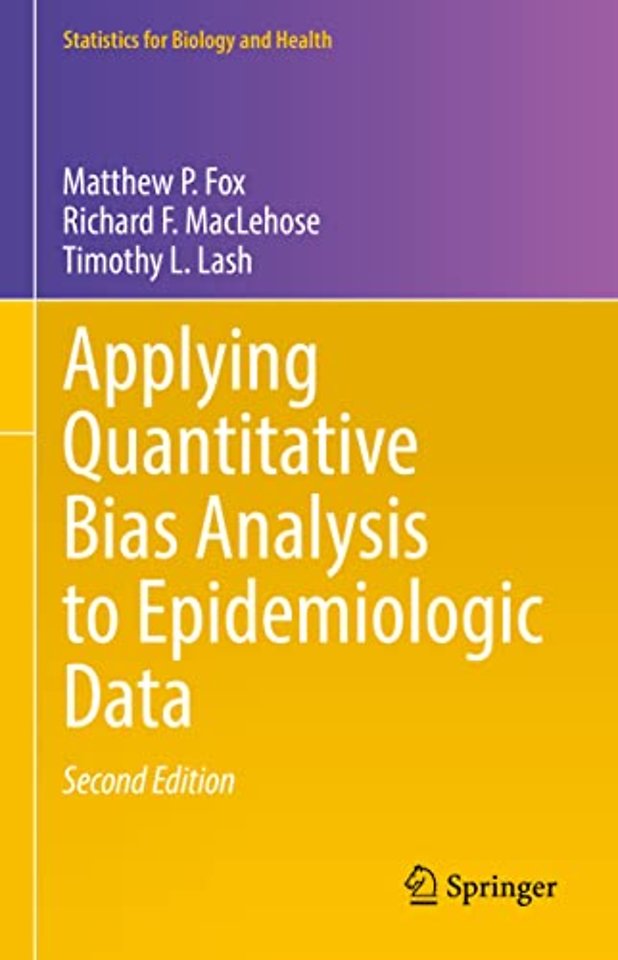
Applying Quantitative Bias Analysis to Epidemiologic Data

Specificaties
Gebonden, blz. | Engels
Springer International Publishing | 2e druk, 2022
ISBN13: 9783030826727
Rubricering
Springer International Publishing 2e druk, 2022 9783030826727
Onderdeel van serie Statistics for Biology and Health
€ 78,99
Levertijd ongeveer 8 werkdagen

Samenvatting

This textbook and guide focuses on methodologies for bias analysis in epidemiology and public health, not only providing updates to the first edition but also further developing methods and adding new advanced methods.

As computational power available to analysts has improved and epidemiologic problems have become more advanced, missing data, Bayes, and empirical methods have become more commonly used. This new edition features updated examples throughout and adds coverage addressing:

Measurement error pertaining to continuous and polytomous variables Methods surrounding person-time (rate) data Bias analysis using missing data, empirical (likelihood), and Bayes methods

A unique feature of this revision is its section on best practices for implementing, presenting, and interpreting bias analyses. Pedagogically, the text guides students and professionals through the planning stages of bias analysis, including the design of validation studies and the collection of validity data from other sources. Three chapters present methods for corrections to address selection bias, uncontrolled confounding, and measurement errors, and subsequent sections extend these methods to probabilistic bias analysis, missing data methods, likelihood-based approaches, Bayesian methods, and best practices.

Specificaties

ISBN13:9783030826727
Taal:Engels
Bindwijze:gebonden
Uitgever:Springer International Publishing
Druk:2

Inhoudsopgave

<div>Part I: Introduction<br></div><div>1 Introduction and Objectives</div><div>1&nbsp;Introduction&nbsp;</div><div>1.2 Nonrandomized Epidemiologic Research&nbsp;</div><div>1.3 The Treatment of Uncertainty in Nonrandomized Research&nbsp;</div><div>1.4 Objective&nbsp;</div><div>1.5 Conclusion&nbsp;</div><div>2 A Guide to Implementing Quantitative Bias Analysis&nbsp;</div><div>2.1 Introduction&nbsp;</div><div>2.2 Reducing Error&nbsp;</div><div>2.3 Reducing Error by Design&nbsp;</div><div>2.4 Reducing Error in the Analysis&nbsp;</div><div>2.5 Quantifying Error&nbsp;</div><div>2.6 Evaluating the Potential Value of Quantitative Bias Analysis</div><div>2.7 Planning for Bias Analysis&nbsp;</div><div>2.8 Creating a Data Collection Plan for Bias Analysis&nbsp;</div><div>2.9 Creating an Analytic Plan for a Bias Analysis&nbsp;</div><div>2.10 Bias Analysis Techniques&nbsp;</div><div>2.11 Introduction to Inference&nbsp;</div><div>2.12 Conclusion&nbsp;</div><div>3 Data Sources for Bias Analysis&nbsp;</div><div>3.1 Bias Parameters&nbsp;</div><div>3.2 Internal Data Sources&nbsp;</div><div>3.3 Selection Bias&nbsp;</div><div>3.4 Uncontrolled Confounder&nbsp;</div><div>3.5 Information Bias&nbsp;</div><div>3.6 Limitations of Internal Validation Studies&nbsp;</div><div>3.7 External Data Sources&nbsp;</div><div>3.8 Selection Bias&nbsp;</div><div>3.9 Uncontrolled Confounder&nbsp;</div><div>3.10 Information Bias&nbsp;</div><div>3.11 Summary</div><div><br></div><div>Part II: Preliminary Methods to Adjust for Systematic Errors&nbsp;</div><div>4 Selection Bias&nbsp;</div><div>4.1 Introduction&nbsp;</div><div>4.2 Definitions and Terms</div><div>4.3 Motivation for Bias Analysis&nbsp;</div><div>4.4 Sources of Data&nbsp;</div><div>4.5 Simple Correction for Differential Initial Participation&nbsp;</div><div>4.6 Simple Correction for Differential Loss-to-Follow-up</div><div>4.7 Sensitivity Analysis of the Bias Analysis&nbsp;</div><div>4.7 Signed Directed Acyclic Graphs to Estimate the Direction of Bias&nbsp;</div><div>5 Uncontrolled Confounders&nbsp;</div><div>5.1 Introduction&nbsp;</div><div>5.2 Definitions and Terms</div><div>5.3 Motivation for Bias Analysis&nbsp;</div><div>5.4 Sources of Data</div><div>5.5 Introduction to Simple Bias Analysis&nbsp;</div><div>5.6 Implementation of Simple Bias Analysis</div><div>5.7 Sensitivity Analysis of the Bias Analysis&nbsp;</div><div>5.8 Uncontrolled Confounder in the Presence of Effect Modification&nbsp;</div><div>5.9 Polytomous Confounders&nbsp;</div><div>5.10 Bounding the Bias Limits of Uncontrolled Confounding</div><div>5.10 Signed Directed Acyclic Graphs to Estimate the Direction of Bias</div><div>5.11 Uncontrolled Confounding with Continuous Outcome, Exposure, or Confounder&nbsp;</div><div>6 Misclassification&nbsp;</div><div>6.1 Introduction&nbsp;</div><div>6.2 Definitions and Terms</div><div>6.3 Motivation for Bias Analysis</div><div>6.4 Sources of Data</div><div>6.5 Calculating Classification Bias Parameters from Validation Data<div>6.6 Exposure Misclassification for Dichotomous Exposures</div><div>6.7 Exposure Misclassification for Polytomous Exposures</div><div>6.8 Disease Misclassification&nbsp;</div><div>6.9 Covariate Misclassification&nbsp;</div><div>6.10 Dependent Misclassification</div><div>6.11 Sensitivity Analysis of the Bias Analysis</div><div>6.12 Adjusting Standard Errors for Corrections&nbsp;</div><div>7 Measurement Error for Continuous Variables</div><div>7.1 Introduction</div><div>7.2 Definition and Terms</div><div>7.3 Motivation for Bias Analysis</div><div>7.4 Exposure Measurement error</div><div>7.5 Outcome Measurement error</div><div>7.6 Covariate Measurement Error</div><div>7.7 Correlated errors&nbsp;</div><div>8 Multiple Bias Modeling&nbsp;</div><div>8.1 Introduction&nbsp;</div><div>8.2 Order of Bias Analyses</div><div>8.3 Multiple Bias Analysis, Simple Methods</div><div><br></div><div>Part III: Methods to Incorporate Systematic and Random Errors&nbsp;</div><div>9 Bias Analysis by Simulation for Summary Level Data</div><div>9.1 Introduction&nbsp;</div><div>9.2 Probability Distributions&nbsp;</div><div>9.3 Correlated Distributions&nbsp;</div><div>9.4 Analytic Approach&nbsp;</div><div>9.5 Exposure Misclassification Implementation</div><div>9.6 Exposure Measurement Error Implementation&nbsp;</div><div>9.7 Uncontrolled Confounding Implementation&nbsp;</div><div>9.8 Selection Bias Implementation&nbsp;</div><div>10 Bias Analysis by Simulation for Record Level Data</div><div>10.1 Introduction&nbsp;</div><div>10.2 Analytic Approach&nbsp;</div><div>10.3 Exposure Misclassification Implementation</div><div>10.4 Exposure Measurement Error Implementation&nbsp;</div><div>10.5 Uncontrolled Confounding Implementation&nbsp;</div><div>10.6 Selection Bias Implementation&nbsp;</div><div>11 Combining Systematic and Random Error</div><div>11.1 Analytic approximation</div><div>11.2 Resampling approximation</div><div>11.3 Bootstrapping&nbsp;</div><div>12 Bias Analysis by Missing Data Methods</div><div>12.1 Introduction&nbsp;</div><div>12.2 Analytic Approach&nbsp;</div><div>12.3 Exposure Misclassification Implementation</div><div>12.4 Exposure Measurement Error Implementation&nbsp;</div><div>12.5 Uncontrolled Confounding Implementation&nbsp;</div><div>12.6 Selection Bias Implementation&nbsp;</div><div>12.7 Combining Systematic and Random Error&nbsp;</div><div>13 Bias Analysis by Empirical Methods</div><div>13.1 Introduction&nbsp;</div><div>13.2 Analytic Approach&nbsp;</div><div>13.3 Exposure Misclassification Implementation&nbsp;</div><div>13.4 Exposure Measurement Error Implementation</div><div>13.5 Uncontrolled Confounding Implementation&nbsp;</div><div>13.6 Selection Bias Implementation&nbsp;</div><div>13.7 Combining Systematic and Random Error&nbsp;</div><div>14 Bias Analysis by Bayesian Methods</div><div>14.1 Introduction&nbsp;</div><div>14.2 Analytic Approach&nbsp;</div><div>14.3 Exposure Misclassification Implementation&nbsp;</div><div>14.4 Exposure Measurement Error Implementation&nbsp;</div><div>14.5 Uncontrolled Confounding Implementation&nbsp;</div><div>14.6 Selection Bias Implementation&nbsp;</div><div>14.7 Combining Systematic and Random Error&nbsp;</div><div>15 Multiple Bias Modeling</div><div>15.1 Multiple Bias Analysis, Probabilistic Methods</div><div>15.2 Multiple Bias Analysis, Missing Data Methods</div><div>15.3 Multiple Bias Analysis, Empirical Methods</div><div>15.4 Multiple Bias Analysis, Bayesian Methods&nbsp;</div><div><br></div><div>Part IV: Good Practices</div><div>16 Good Practices for Quantitative Bias Analysis</div><div>16.1 Selection of bias sources</div><div>16.2 Selection of analytic strategies</div><div>16.3 Selection of values to assign to bias parameters</div><div>17 Presentation and Inference&nbsp;</div><div>17.1 Presentation of simple and multidimensional bias analyses</div><div>17.2 Presentation of advanced bias analyses&nbsp;</div><div>17.3 Inference&nbsp;</div><div>17.4 Caveats and Cautions&nbsp;</div><div>18 References&nbsp;</div><div>19 Index</div><div><br></div></div>
€ 78,99
Levertijd ongeveer 8 werkdagen

Rubrieken

    Personen

      Trefwoorden

        Applying Quantitative Bias Analysis to Epidemiologic Data