, ,

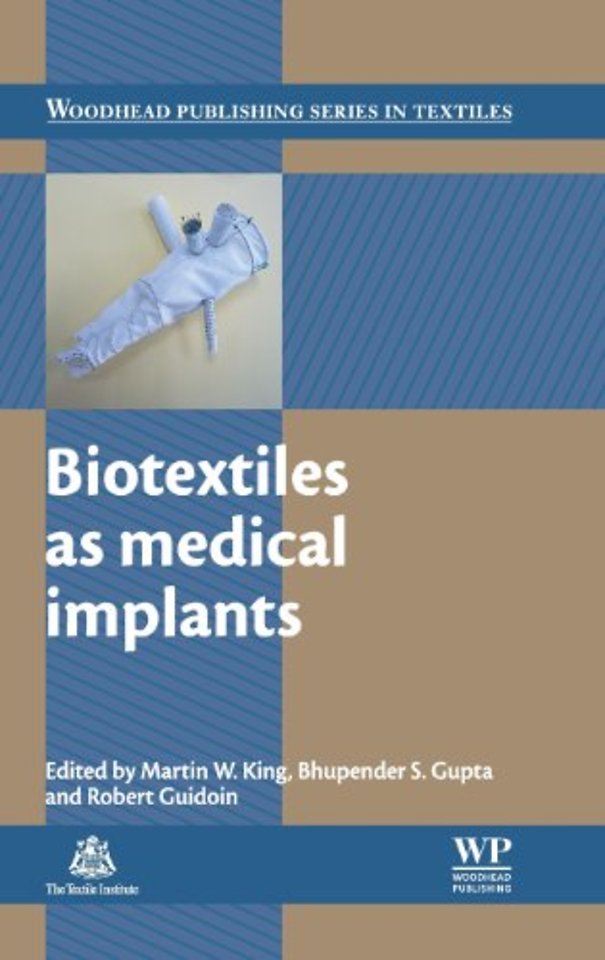
Biotextiles as Medical Implants

Specificaties
Gebonden, blz. | Engels
Elsevier Science | e druk, 2013
ISBN13: 9781845694395
Rubricering
Elsevier Science e druk, 2013 9781845694395
€ 301,00
Levertijd ongeveer 8 werkdagen

Samenvatting

Textiles play a vital role in the manufacture of various medical devices, including the replacement of diseased, injured or non-functioning organs within the body. Biotextiles as medical implants provides an invaluable single source of information on the main types of textile materials and products used for medical implants. The first part of the book focuses on polymers, fibers and textile technologies, and these chapters discuss the manufacture, sterilization, properties and types of biotextiles used for medical applications, including nanofibers, resorbable polymers and shaped biotextiles. The chapters in part two provide a comprehensive discussion of a range of different clinical applications of biotextiles, including surgical sutures, arterial prostheses, stent grafts, percutaneous heart valves and drug delivery systems.This book provides a concise review of the technologies, properties and types of biotextiles used as medical devices. In addition, it addresses the biological dimension of how to design devices for different clinical applications, providing an invaluable reference for biomedical engineers of medical textiles, quality control and risk assessment specialists, as well as managers of regulatory affairs. The subject matter will also be of interest to professionals within the healthcare system including surgeons, nurses, therapists, sourcing and purchasing agents, researchers and students in different disciplines.

Specificaties

ISBN13:9781845694395
Taal:Engels
Bindwijze:Gebonden

Inhoudsopgave

<p>Contributor contact details</p> <p>Woodhead Publishing Series in Textiles</p> <p>Preface</p> <p>Introduction</p> <p>Part I: Technologies</p> <p>Chapter 1: Manufacture, types and properties of biotextiles for medical applications</p> <p>Abstract:</p> <p>1.1 Introduction</p> <p>1.2 Fiber structure</p> <p>1.3 Formation of synthetic fibers</p> <p>1.4 Processing of short (staple) and continuous (filament) fibers</p> <p>1.5 Understanding structure in fibers</p> <p>1.6 Fibrous materials used in medicine</p> <p>1.7 Key fiber properties</p> <p>1.8 Textile assemblies and their characteristics</p> <p>1.9 Conclusion</p> <p>1.10 Sources of further information and advice</p> <p>1.11 Acknowledgments</p> <p>Chapter 2: Nanofiber structures for medical biotextiles</p> <p>Abstract:</p> <p>2.1 Introduction</p> <p>2.2 Techniques for producing nanofibers</p> <p>2.3 The electrospinning process</p> <p>2.4 Using electrospun poly(s-caprolactone) (PCL) fibers as scaffolds for tissue engineering</p> <p>2.5 Co-axial bicomponent nanofibers and their production</p> <p>2.6 Case study: collagen/PCL bicomponent nanofiber scaffolds for engineering bone tissues</p> <p>2.7 In vivo case study: engineering of blood vessels</p> <p>2.8 Miscellaneous applications of co-axial nanofiber structures</p> <p>2.9 Conclusion</p> <p>Chapter 3: Resorbable polymers for medical applications</p> <p>Abstract:</p> <p>3.1 Introduction</p> <p>3.2 Polymer degradation</p> <p>3.3 Mechanical properties of existing resorbable polymers</p> <p>3.4 Mechano-active tissue engineering</p> <p>3.5 Elastomeric properties of fiber-forming copolymers</p> <p>3.6 Elastomeric resorbable polymers for vascular tissue engineering</p> <p>3.7 Conclusion and future trends</p> <p>Chapter 4: Shaped biotextiles for medical implants</p> <p>Abstract:</p> <p>4.1 Introduction</p> <p>4.2 Vascular grafts: key developments</p> <p>4.3 Weaving, knitting and ePTFE technologies for producing tubular structures</p> <p>4.4 Improving surface properties: velour construction</p> <p>4.5 Multilimbed grafts</p> <p>4.6 Heat setting for a more resilient crimped circular configuration</p> <p>4.7 Grafts with taper and varying diameter</p> <p>4.8 Tubular structures for other devices: ligaments, hernia and prolapsed repair meshes</p> <p>4.9 Three-dimensional textile structures</p> <p>4.10 Performance requirements of implants in the body</p> <p>4.11 Conclusion</p> <p>4.12 Acknowledgements</p> <p>Chapter 5: Surface modification of biotextiles for medical applications</p> <p>Abstract:</p> <p>5.1 Introduction</p> <p>5.2 Nano-coatings</p> <p>5.3 Preparation of textile surfaces</p> <p>5.4 Plasma technologies for surface treatment</p> <p>5.5 Measuring surface properties of textiles: SEM and XPS</p> <p>5.6 Testing antimicrobial coatings</p> <p>5.7 Applications of surface treatments in medical textiles</p> <p>5.8 Future trends</p> <p>5.9 Sources of further information and advice</p> <p>Chapter 6: Sterilization techniques for biotextiles for medical applications</p> <p>Abstract:</p> <p>6.1 Introduction</p> <p>6.2 Bioburden and principles of sterilization</p> <p>6.3 Traditional sterilization: advantages and disadvantages</p> <p>6.4 Emerging and less traditional sterilization methods</p> <p>6.5 Radiochemical sterilization (RCS)</p> <p>6.6 Application of RCS technology</p> <p>6.7 Conclusion and future trends</p> <p>Chapter 7: Regulation of biotextiles for medical use</p> <p>Abstract:</p> <p>7.1 Introduction</p> <p>7.2 US regulation of biotextiles</p> <p>7.3 European Union regulation of biotextiles</p> <p>7.4 Quality standards for biotextiles</p> <p>7.5 The role of quality standards in the development of biotextiles</p> <p>7.6 Safety issues with ‘me-too’ products with new intended uses</p> <p>7.7 Dealing with cutting-edge technology</p> <p>7.8 Conclusion</p> <p>Chapter 8: Retrieval studies for medical biotextiles</p> <p>Abstract:</p> <p>8.1 Introduction</p> <p>8.2 Standards and animal models for implant retrieval studies</p> <p>8.3 Testing retrieved biotextile implants: harvesting, test planning, sample preparation and cleaning</p> <p>8.4 Testing retrieved biotextile implants: analytical techniques</p> <p>8.5 Specialized tests for specific retrieval studies</p> <p>8.6 Precautions for retrieval studies</p> <p>8.7 Limitations of retrieval studies</p> <p>8.8 Conclusion and future trends</p> <p>Part II: Applications</p> <p>Chapter 9: Drug delivery systems using biotextiles</p> <p>Abstract:</p> <p>9.1 Introduction</p> <p>9.2 Types of drugs</p> <p>9.3 Types of polymers</p> <p>9.4 Technologies and fiber structures</p> <p>9.5 Types of drug delivery systems (DDS)</p> <p>9.6 Future trends</p> <p>9.7 Acknowledgements</p> <p>Chapter 10: Types and properties of surgical sutures</p> <p>Abstract:</p> <p>10.1 Introduction</p> <p>10.2 Classification of suture materials</p> <p>10.3 Essential properties of suture materials</p> <p>10.4 Dyes and coatings to improve suture identification and properties</p> <p>10.6 Appendix: further information on sutures</p> <p>Chapter 11: Materials for absorbable and nonabsorbable surgical sutures</p> <p>Abstract:</p> <p>11.1 Introduction</p> <p>11.2 Natural materials for absorbable sutures</p> <p>11.3 Synthetic materials for absorbable sutures</p> <p>11.4 Materials for nonabsorbable sutures</p> <p>11.5 Future trends</p> <p>11.8 Appendix: further information on sutures</p> <p>Chapter 12: Surgical knot performance in sutures</p> <p>Abstract:</p> <p>12.1 Introduction</p> <p>12.2 Tensile properties of knotted sutures</p> <p>12.3 Knot strength</p> <p>12.4 Performance in dynamic tests</p> <p>12.5 Knot security</p> <p>12.6 Friction in sutures and friction-based hypothesis of knot security</p> <p>12.7 The use of lasers to improve knot security</p> <p>12.8 The use of tissue adhesive to improve knot security</p> <p>12.9 Conclusion</p> <p>12.10 Acknowledgements</p> <p>Chapter 13: Barbed suture technology</p> <p>Abstract:</p> <p>13.1 Introduction</p> <p>13.2 The development of barbed sutures</p> <p>13.3 Materials for barbed sutures</p> <p>13.4 Barbed suture design and manufacture</p> <p>13.5 Testing and characterization</p> <p>13.6 Properties of barbed sutures</p> <p>13.7 Surgical techniques using barbed sutures</p> <p>13.8 Applications of barbed sutures</p> <p>13.10 Acknowledgement</p> <p>Chapter 14: Small-diameter arterial grafts using biotextiles</p> <p>Abstract:</p> <p>14.1 Introduction</p> <p>14.2 Understanding compliance</p> <p>14.3 Tests for compliance</p> <p>14.4 Testing compliance in practice: a case study</p> <p>14.5 Engineering small-diameter vascular grafts by weaving</p> <p>14.6 Using elastomeric threads to construct small-diameter vascular grafts</p> <p>14.7 Summary</p> <p>14.8 Acknowledgements</p> <p>Chapter 15: Vascular prostheses for open surgery</p> <p>Abstract:</p> <p>15.1 Introduction</p> <p>15.2 Arterial pathologies</p> <p>15.3 The development of modern vascular surgery</p> <p>15.4 Vascular grafts of biological origin</p> <p>15.5 Vascular prostheses from synthetic polymers and biopolymers</p> <p>15.6 Improving current vascular prostheses</p> <p>15.7 Conclusion</p> <p>Chapter 16: Biotextiles as percutaneous heart valves</p> <p>Abstract:</p> <p>16.1 Introduction</p> <p>16.2 Heart valve replacement: critical issues</p> <p>16.3 Textile valves: manufacturing requirements</p> <p>16.4 Textile valves: in vitro performance</p> <p>16.5 Textile valves: long-term performance</p> <p>16.6 Textile valves: in vivo performance</p> <p>16.7 Conclusions and future trends</p> <p>Chapter 17: Biotextiles as vena cava filters</p> <p>Abstract:</p> <p>17.1 Introduction</p> <p>17.2 Current filters for embolic protection in the IVC</p> <p>17.3 An ´ideal´ IVC filter design</p> <p>Chapter 18: Biotextiles for atrial septal defect repair</p> <p>Abstract:</p> <p>18.1 Introduction</p> <p>18.2 Anatomy and physiology of a normal functioning heart</p> <p>18.3 Epidemiology, pathology, incidence and patient population of ASDs</p> <p>18.4 Historical methods of ASD repair</p> <p>18.5 Current noninvasive treatments, therapies and devices used to repair ASDs</p> <p>18.6 Advantages and disadvantages of the current technology</p> <p>18.7 Future trends</p> <p>18.8 Conclusion</p> <p>Chapter 19: Hemostatic wound dressings</p> <p>Abstract:</p> <p>19.1 Introduction</p> <p>19.2 The importance of hemostatic textiles</p> <p>19.3 Understanding the clotting of blood</p> <p>19.4 Influence of foreign surfaces on blood clotting</p> <p>19.5 Existing hemostatic materials</p> <p>19.6 Future trends</p> <p>Chapter 20: Anterior cruciate ligament prostheses using biotextiles</p> <p>Abstract:</p> <p>20.1 Introduction</p> <p>20.2 Anatomy and structure of the anterior cruciate ligament (ACL)</p> <p>20.3 Biomechanics of the ACL</p> <p>20.4 Clinical problems associated with the ACL</p> <p>20.5 Diagnosis and treatment of ACL ruptures</p> <p>20.6 Autograft for ACL reconstruction</p> <p>20.7 Allograft for ACL reconstruction</p> <p>20.8 Graft healing in ACL reconstructive surgery</p> <p>20.9 The use of synthetic materials and prostheses in ACL reconstructive surgery</p> <p>20.10 Complications with synthetic ligaments</p> <p>20.11 Augmentation devices</p> <p>20.12 Tissue engineering and scaffolds</p> <p>20.13 Xenografts</p> <p>20.14 Conclusion</p> <p>Chapter 21: Endovascular prostheses for aortic aneurysms: a new era for vascular surgery</p> <p>Abstract:</p> <p>21.1 Introduction</p> <p>21.2 History and advantages of stent grafts</p> <p>21.3 Stent graft design and performance</p> <p>21.4 Prefenestrated devices for juxtarenal aneurysms</p> <p>21.5 Novel approaches to the treatment of juxtarenal and suprarenal aneurysms</p> <p>21.6 Conclusion</p> <p>Index</p>
€ 301,00
Levertijd ongeveer 8 werkdagen

Rubrieken

    Personen

      Trefwoorden

        Biotextiles as Medical Implants