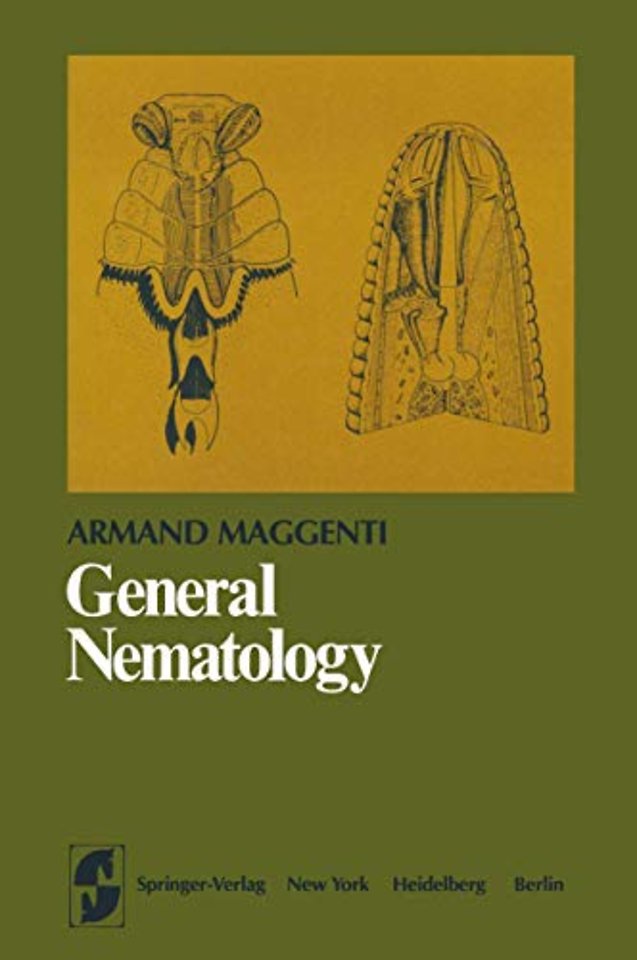
General Nematology

Specificaties
Paperback, 372 blz. | Engels
Springer New York | 0e druk, 2011
ISBN13: 9781461259404
Rubricering
Springer New York 0e druk, 2011 9781461259404
Onderdeel van serie Springer Series in Microbiology
€ 244,99
Levertijd ongeveer 8 werkdagen

Samenvatting

This text is an overall view of nematology because I believe the science should be treated as a unified discipline. The differences in the biological habits of nematodes do not justify the separation of plant nematologists and animal nematologists, since the separation is not a reflection of any difIerences inherent to nematodes. Therefore, the book is arranged with a format that in the beginning chapters illustrates the similarities and se­ quence of development of morphological characters among nematodes regardless of their biological habits. The later chapters illustrate the in­ tegration of the evolutionary development of the parasitie habit from related free-living forms. Nematology is probably the last major discipline to establish its inde­ pendence from the parent science of zoology. This natural evolvement of nematology has occurred because of the overwhelming accumulation of sophisticated information and research that reflects the unique relation­ ships of nematodes to other forms of plant and animal life as weH as their relationships in other facets of the environment. N ematodes are inverte­ brate animals that, like insects, are unusual in their great numbers and varieties, their smaH size (generally microscopic), their high degree of internal organization, and their virtually ubiquitous distribution. They oc­ cupy almost every ecological niehe, often causing disease of humans, other animals, and plants. These activities often result in debility, death, or in the impairment and loss of food supply with consequent loss to producers and consumers.

Specificaties

ISBN13:9781461259404
Taal:Engels
Bindwijze:paperback
Aantal pagina's:372
Uitgever:Springer New York
Druk:0

Inhoudsopgave

1 History of the Science.- I. Introduction.- II. Ancient Times to the Eighteenth Century.- III. History and Development in Nineteenth and Twentieth Century Europe.- IV. History and Development in America.- 2 Nematodes and Their Allies.- I. Phylum Rotifera.- II. Phylum Gastrotricha.- III. Phylum Kinorhyncha.- IV. Phylum Nematomorpha.- V. Phylum Nemata.- 3 Nematode Integument.- I. External Cuticle.- II. Internal Body Cuticle.- III. Cuticular Structures.- IV. Hypodermis.- V. Excretory System.- VI. Molting.- 4 Internal Morphology.- I. Somatic Musculature.- II. Alimentary Canal.- III. Nervous System.- 5 Reproductive System.- I. Introduction.- II. Female Reproductive System.- III. Male Reproductive System.- IV. Spermatogenesis.- V. Oogenesis.- VI. Embryology.- VII. Postembryonic Changes.- 6 Plant Parasitism.- I. Adenophorean Plant Parasitism.- II. Secernentean Plant Parasitism.- 7 Invertebrate Parasitism and Other Associations.- I. Introduction.- II. Facultative Parasitism.- III. Obligate Body Cavity and Tissue Parasites.- IV. Essential Nonparasitic Associations Including Vectors of Insect Diseases.- V. Obligate Associations of the Alimentary Tract of Invertebrates.- 8 Vertebrate Parasitism.- I. Introduction.- II. Adenophorean Parasites of Vertebrates.- III. Secernentean Parasites of Vertebrates.- 9 Classification of Nemata.- I. Classification of Nemata.- Selected References.
€ 244,99
Levertijd ongeveer 8 werkdagen

Rubrieken

    Personen

      Trefwoorden

        General Nematology