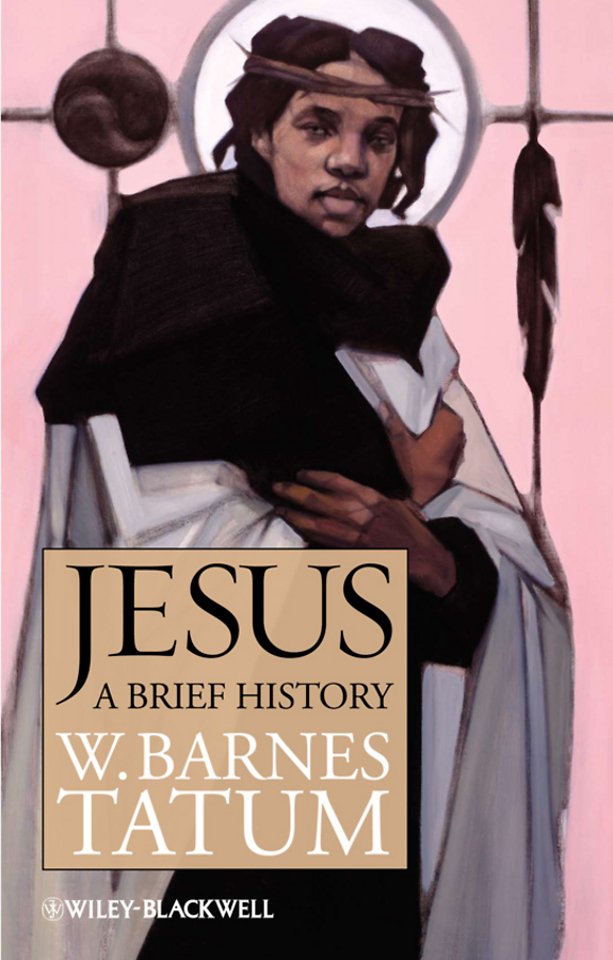

Jesus – A Brief History
A Brief History
Samenvatting
Drawing on examples from literature, art, and popular culture, as well as theology, this engaging book reveals the importance of the question, "whose was he?" in fully understanding the life and legacy of Jesus.
A concise, accessible and engaging exploration of Jesus′s life and enduring influence
Charts the changing global status and influence of Jesus, a Galilean Jew born when the ancient Roman Empire ruled the Mediterranean world, and how he has come to be honored as the Christ and recognized by billions of people around the world
Traces the reception history of Jesus and his story over the past two millennia, through art, literature, and culture, as well as theology
Draws on a fascinating range of materials – from ancient texts, creeds, and theological treatises, to the visual and dramatic arts, including books like The DaVinci Code and films such as The Passion of the Christ
Specificaties
Inhoudsopgave
<p>Preface and Acknowledgments</p>
<p>Prologue: Jesus, a Jew from Galilee</p>
<p>1. Jesus and Christian Beginnings (First to Fourth Centuries)</p>
<p>A Strange Case: Paul and his Letters</p>
<p>Anonymous Narratives: Three Gospels and One Sequel</p>
<p>An Author Called John: A Fourth Gospel, More Letters, and an Apocalypse</p>
<p>Christianity s Earliest Writings: Literary Diversity, Theological Unity</p>
<p>Christianity s Transformation: From a Jewish Sect to a Gentile Religion</p>
<p>Emerging Christianity: A Catholic Church</p>
<p> Gnosticism : The Nag Hammadi Library</p>
<p>Living as Christians in the Roman Empire: The Threat of Persecution</p>
<p>Christianizing the Roman Empire: Constantine the Great</p>
<p>Material Culture: Manuscripts, Architecture, and the Visual Arts</p>
<p>2. Jesus and the Triumph of Christian Orthodoxy (Fourth and Fifth Centuries)</p>
<p>The Council of Nicaea I (325): The Relation of the Son to God the Father</p>
<p>The Council of Constantinople I (381): God as Trinity, One Substance, Three Persons</p>
<p>Transition: From the Trinity to the Incarnation</p>
<p>The Council of Ephesus (431): The Incarnate Son, One Person, Not Divided</p>
<p>The Council of Chalcedon I (451): The Incarnate Son, One Person, Two Natures</p>
<p>Early Monasticism: From Martyr to Monk</p>
<p>Material Culture: Manuscripts, Architecture, and the Visual Arts</p>
<p>3. Jesus and Medieval Christian Orthodoxy (Fifth to Fifteenth Centuries)</p>
<p>Rome, the Papacy, and the Eastern Church: A Church Dividing</p>
<p>The Iconoclastic Controversy: Can Images of Jesus be Created and Venerated?</p>
<p>The Filioque Controversy: Does the Holy Spirit also Proceed from the Son?</p>
<p>Jesus as the Christ of Eastern Orthodoxy: Creed, Liturgy, and Spirituality</p>
<p>The Crusades: Warriors for Christ</p>
<p>Beyond Monasticism: Monks, Mendicants, and Mystics</p>
<p>Scholastic Theology: The Trinity, the Incarnation, and the At–one–ment</p>
<p>Jesus as the Christ of Roman Catholicism: Creed, Liturgy and Spirituality</p>
<p> Rome and the Papacy: Exile, Schism, and Dissent</p>
<p>Material Culture: Architecture and the Visual Arts</p>
<p>4. Jesus and Challenges to Christian Orthodoxy (Since the Fifteenth Century)</p>
<p>The Renaissance:: Back to the Classics</p>
<p>The Reformation: Back to the Bible</p>
<p>The Enlightenment: Not Revelation, but Reason</p>
<p>Material Culture: Architecture, Visual Arts, and Printed Books</p>
<p>5. Jesus and the Historical Quest (Since the Eighteenth Century)</p>
<p>Pre–Quest Period: Christ = Jesus (before 1778)</p>
<p>Old Quest Period: Christ // Jesus (1778 1906)</p>
<p>No Quest Period: Christ // Jesus (1906 1953)</p>
<p>New Quest Period: Christ > Jesus (1953 1985)\</p>
<p>Third Quest Period: [Christ] Jesus (since 1985)</p>
<p>Dramatic Arts: From Passion Plays to Jesus Films</p>
<p>6. Jesus and Christological Diversity (Since the Eighteenth Century)</p>
<p>Modern Protestant Theology: Liberalism (Nineteenth Century)</p>
<p>Modern Protestant Theology: Neo–Orthodoxy (Twentieth Century)</p>
<p>Modern Catholic Theology: Two Vatican Councils (Nineteenth and Twentieth Centuries)</p>
<p>Beyond Liberalism and Neo–Orthodoxy: Process Theology (into the Twenty–First Century)</p>
<p>Liberation Theology: Latin America (into the Twenty–First Century)</p>
<p>Black Theology: The United States and Beyond (into the Twenty–First Century)</p>
<p>Feminist Theology: The United States and Beyond (into the Twenty–First Century)</p>
<p>Womanist Theology: The United States and Beyond (into the Twenty–First Century)</p>
<p>Theology in the Third World: Latin America, Africa, Asia (into the Twenty–First Century)</p>
<p>Dramatic Arts: Christ–Figure Films and Literary Imagination</p>
<p>7. Jesus and World Religions (Since the First Century)</p>
<p>Judaism: Jesus, a Jew, but No Messiah</p>
<p>Islam: Jesus, a Prophet, but No Son of God</p>
<p>Religions of South and East Asia: Jesus, the Outsider</p>
<p>Material Culture: From Stone to Celluloid</p>
<p>Epilogue: Jesus, a Global Christ</p>
<p>Select Bibliography and Further Reading</p>
<p>Index</p>