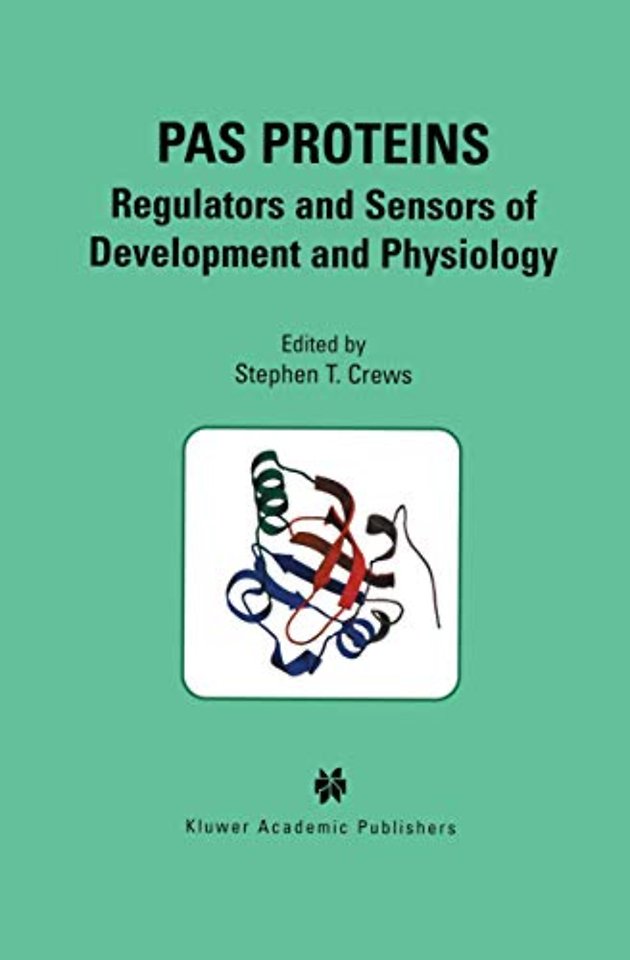
PAS Proteins: Regulators and Sensors of Development and Physiology

Specificaties
Gebonden, 263 blz. | Engels
Springer US | 2003e druk, 2003
ISBN13: 9781402075865
Rubricering
Springer US 2003e druk, 2003 9781402075865
€ 120,99
Levertijd ongeveer 8 werkdagen

Samenvatting

PAS proteins control numerous physiological and developmental events, and span phylogeny from bacteria to man. Bacterial and plant PAS proteins act as sensors of environmental stimuli, including light, oxygen, and energy status.

Not surprising, given these roles, there is intense investigation of the roles of bHLH-PAS proteins in issues of human health including: (1) cancer induction, (2) cancer growth and vascularity, (3) birth defects, including Down syndrome, (4) appetite control and obesity, (5) sleep rhythm disorders, and (6) mental health disorders such as social interactions and learning.

PAS proteins encompass many fields of biology, and scientists who work in these fields (circadian rhythms, oxygen regulation, toxin metabolism, bacterial sensors, and development) are an audience, particularly those who actively work on PAS proteins and researchers interested in transcriptional control, signal transduction, and evolution.

Specificaties

ISBN13:9781402075865
Taal:Engels
Bindwijze:gebonden
Aantal pagina's:263
Uitgever:Springer US
Druk:2003

Inhoudsopgave

Structure of the PAS Fold and Signal Transduction Mechanisms.- Signal Transduction in Prokaryotic PAS Domains.- bHLH-PAS Proteins in C. elegans.- Drosophila bHLH-PAS Developmental Regulatory Proteins.- Methoprene-Tolerant, a PAS Gene Critical for Juvenile Hormone Signaling in Drosophila Melanogaster.- The P160 Family of Steroid Hormone Receptor Coactivators.- The Ah Receptor.- The HIF-1 Family of bHLH-PAS Proteins: Master Regulators of Oxygen Homeostasis.- Hormones, Obesity, Learning, and Breathing — The Many Functions of Mammalian Single-Minded Genes.- PAS Proteins in the Mammalian Circadian Clock.
€ 120,99
Levertijd ongeveer 8 werkdagen

Rubrieken

    Personen

      Trefwoorden

        PAS Proteins: Regulators and Sensors of Development and Physiology