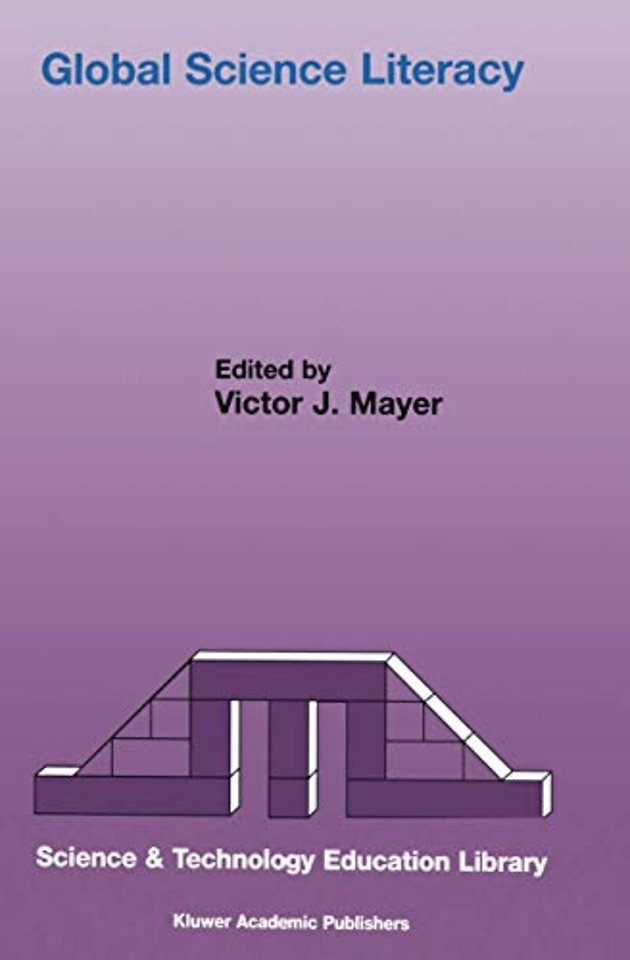
V. J. Mayer
Springer Netherlands
0e druk, 2014
9781402038549
Global Science Literacy
Specificaties
Paperback, 242 blz.
|
Engels
Springer Netherlands |
0e druk, 2014
ISBN13: 9781402038549
Rubricering
Onderdeel van serie
Contemporary Trends and Issues in Science Education
Levertijd ongeveer 8 werkdagen
Samenvatting
The authors propose the science curriculum concept of Global Science Literacy justifying its use internationally with reference to the nature of science, the probable direction of science in the new millennium, the capability for GSL to develop inter-cultural understanding, and its relevance to non-Western cultures and traditions. It is relevant to curriculum developers, researchers, teachers and graduate students.
Specificaties
ISBN13:9781402038549
Taal:Engels
Bindwijze:paperback
Aantal pagina's:242
Uitgever:Springer Netherlands
Druk:0
Hoofdrubriek:Mens en maatschappij
Inhoudsopgave
Preface. Section One: Foundations for Global Science Literacy 1. Evolution of Global Science Literacy as a curriculum construct; V.J. Mayer, A. Tokuyama. 2. A case history of science and science education policies; V.J. Mayer, R.S. Fortner. 3. The philosophy of science and Global Science Literacy; V.J. Mayer, Yoshisuke Kumano. Section Two: Appropriate Learning Environments. 4. The `explanatory stories' approach to a curriculum for Global Science Literacy; C. King. 5. Cooperative learning: A basic instructional methodology for Global Science Literacy; R.W. Fortner. 6. Using the Internet in Earth Systems courses; W. Slattery, et al. 7. Development of Charles Darwin as an Earth-systems scientist: A field experience; D.B. Thompson. 8. A student conducted Earth systems field investigation; H. Shimono, M. Goto. 9. Using historical events to develop ethical and aesthetic attitudes; F. Lillo, J. Lillo. 10. Assessment in a Global Science Literacy and Korean context; J. Nam, V.J. Mayer. Section Three: Issues in Structuring Curriculum 11. An Earth curriculum development model; N. Orion. 12. Enabling Global Science Literacy for all; E.B. Klemm. 13. Developing the concept of deep time; R.D. Trend. 14. How a Japanese science teacher integrates field activities into his curriculum; M. Goto. 15. The potential role for Global Science Literacy in Japanese secondary school; V.J. Mayer, et al. Index.
Anderen die dit kochten, kochten ook
-
 Marianne Heemskerk€ 29,95
 -
Bram Schaper€ 24,99
-
Lammert Kamphuis€ 18,99
-
Dirk De Wachter€ 24,99
-
Jo Caudron€ 34,99
-
Jitske Kramer€ 27,50