, , , e.a.

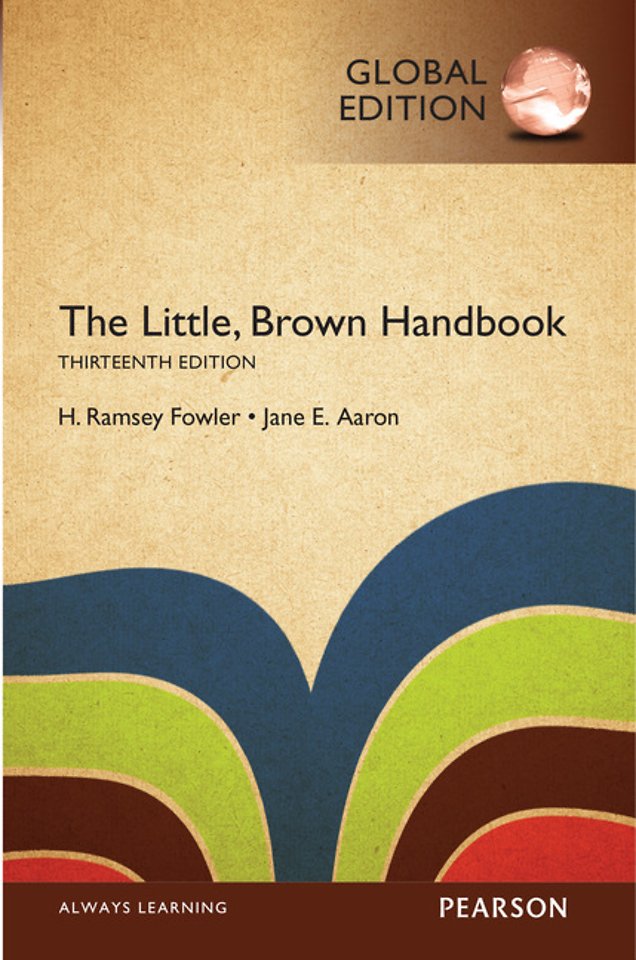
Little, Brown Handbook, The, Global Edition + MyLab Writing with Pearson eText

Specificaties
Paperback, blz. | Engels
Pearson Education | e druk, 2015
ISBN13: 9781292110950
Rubricering
Pearson Education e druk, 2015 9781292110950
€ 113,74
Levertijd ongeveer 8 werkdagen

Samenvatting

For courses in English Composition.  

The gold standard of handbooks – unmatched in accuracy, currency, and reliability
The Little, Brown Handbook is an essential reference tool and classroom resource designed to help students find the answers they need quickly and easily. While keeping pace with rapid changes in writing and its teaching, it offers the most comprehensive research and documentation available–with grammar coverage that is second to none.
 
With detailed discussions of critical reading, media literacy, academic writing, and argument, as well as writing as a process, writing in the disciplines, and writing beyond the classroom, this handbook addresses writers of varying experience and in varying fields.

This package includes MyWritingLab™, an online homework, tutorial, and assessment product designed to personalize learning and improve results. With a wide range of interactive, engaging, and assignable activities, students are encouraged to actively learn and retain tough course concepts.


MyWritingLab should only be purchased when required by an instructor. Please be sure you have the correct ISBN and Course ID. Instructors, contact your Pearson representative for more information.


Specificaties

ISBN13:9781292110950
Taal:Engels
Bindwijze:paperback

Inhoudsopgave

Preface for Students: Using This Book &nbsp; <br>Preface for Instructors &nbsp;&nbsp; &nbsp; <br> <br> PART 1: The Process of Writing&nbsp;&nbsp; &nbsp; <br> <br> 1. Assessing the Writing Situation &nbsp; <br>a. Understanding how writing happens&nbsp;&nbsp; <br>b. Analyzing the writing situation &nbsp; <br>c. Discovering and limiting a subject&nbsp;&nbsp; <br>d. Defining a purpose&nbsp;&nbsp; <br>e. Considering the audience&nbsp; <br>f. Understanding genres&nbsp;&nbsp; &nbsp; <br>&nbsp;&nbsp; &nbsp;&nbsp; <br> 2. Discovering and Shaping Ideas &nbsp; <br>a. Discovering ideas &nbsp; <br>b. Developing a thesis &nbsp; <br>c. Organizing ideas&nbsp;&nbsp; <br>&nbsp;&nbsp; SAMPLE INFORMATIVE ESSAY <br> <br> 3. Drafting, Revising, and Editing&nbsp;&nbsp; <br>&nbsp;&nbsp; a. Writing the first draft&nbsp;&nbsp; <br>&nbsp;&nbsp; b. Revising a draft&nbsp;&nbsp; <br>&nbsp;&nbsp; c. Giving and receiving comments <br>d. Examining a sample revision &nbsp; <br>e. Editing the revised draft &nbsp; <br>&nbsp;&nbsp; f. Preparing and proofreading the final draft&nbsp;&nbsp; <br>&nbsp;&nbsp; g. SAMPLE FINAL DRAFT (RESPONSE ESSAY)&nbsp;&nbsp; <br>&nbsp;&nbsp; h. Preparing a writing portfolio &nbsp; <br> <br> 4. Writing and Revising Paragraphs&nbsp; <br>&nbsp;&nbsp; a. Relating paragraphs in the essay &nbsp;&nbsp; <br>b. Maintaining paragraph unity&nbsp;&nbsp; <br>&nbsp;&nbsp; c. Achieving paragraph coherence&nbsp;&nbsp; <br>&nbsp;&nbsp; d. Developing the paragraph &nbsp; <br>&nbsp;&nbsp; e. Writing special kinds of paragraphs&nbsp;&nbsp; &nbsp; <br>&nbsp; <br> 5. Presenting Writing &nbsp; <br>a. Formatting academic writing&nbsp; <br>&nbsp;&nbsp; SAMPLE MARKETING REPORT &nbsp; <br>b. Using visuals and other media in multimodal writing <br>c. Presenting writing on the Web&nbsp; <br>&nbsp;&nbsp; SAMPLE WEB SITE&nbsp;&nbsp; <br>&nbsp;&nbsp; SAMPLE LITERACY NARRATIVE POSTED TO A BLOG <br>d. Making oral presentations&nbsp;&nbsp; <br>&nbsp;&nbsp; SAMPLE POWERPOINT SLIDES &nbsp; <br> <br> PART 2: Reading and Writing in and out of College &nbsp; <br> <br> 6. Writing in Academic Situations &nbsp; <br>a. Determining purpose and audience <br>b. Using an academic genre <br>c. Choosing structure and content &nbsp; <br>d. Using sources with integrity <br>e. Using academic language &nbsp; <br>f. Communicating with instructors and classmates&nbsp; <br> <br> 7. Critical Reading and Writing&nbsp;&nbsp; <br>&nbsp;&nbsp; a. Using techniques of critical reading&nbsp; <br>&nbsp;&nbsp; b. Summarizing&nbsp; <br>&nbsp;&nbsp; c. Developing a critical response&nbsp;&nbsp; <br>&nbsp;&nbsp; d. Viewing visuals critically <br>e. Writing critically <br>f. Examining sample critical analyses <br>&nbsp;&nbsp; SAMPLE CRITICAL ANALYSIS OF A TEXT&nbsp;&nbsp; <br>&nbsp;&nbsp; SAMPLE CRITICAL ANALYSIS OF AN IMAGE &nbsp; <br> <br> 8. Reading Arguments Critically &nbsp; <br>a. Recognizing the elements of argument &nbsp; <br>b. Testing claims &nbsp; <br>c. Weighing evidence &nbsp; <br>d. Discovering assumptions &nbsp; <br>e. Watching language, hearing tone &nbsp;&nbsp; <br>f. Judging reasonableness &nbsp; <br>g. Recognizing fallacies &nbsp; <br>h. Reading visual arguments <br> <br> 9. Writing an Argument&nbsp;&nbsp; <br>&nbsp;&nbsp; a. Finding a subject&nbsp;&nbsp; <br>&nbsp;&nbsp; b. Conceiving a thesis statement&nbsp;&nbsp; <br>&nbsp;&nbsp; c. Analyzing your purpose and your audience&nbsp;&nbsp; <br>&nbsp;&nbsp; d. Using reason&nbsp;&nbsp; <br>&nbsp;&nbsp; e. Using evidence &nbsp; <br>f. Reaching your readers&nbsp;&nbsp; <br>&nbsp;&nbsp; g. Organizing your argument <br>&nbsp;&nbsp; h. Revising your argument &nbsp; <br>i. SAMPLE PROPOSAL ARGUMENT &nbsp; <br> <br> 10. Taking Essay Exams&nbsp;&nbsp; <br>a. Preparing for an essay examination&nbsp;&nbsp; <br>b. Planning your time and your answer&nbsp; <br>c. Starting the essay &nbsp; <br>d. Developing the essay &nbsp; <br>e. Rereading the essay &nbsp; <br> <br> 11. Pu
€ 113,74
Levertijd ongeveer 8 werkdagen

Rubrieken

    Personen

      Trefwoorden

        Little, Brown Handbook, The, Global Edition + MyLab Writing with Pearson eText