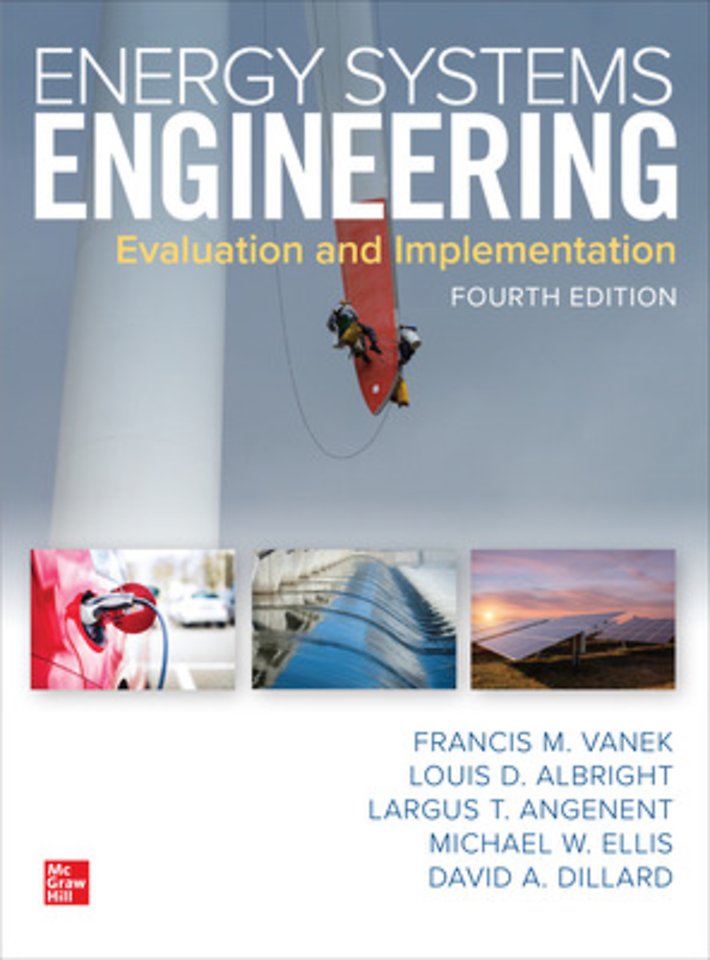
, , , , e.a.

Energy Systems Engineering: Evaluation and Implementation, Fourth Edition

Specificaties
Paperback, blz. | Engels
McGraw-Hill Education | 4e druk, 2022
ISBN13: 9781260456400
Rubricering
McGraw-Hill Education 4e druk, 2022 9781260456400
€ 152,80
Levertijd ongeveer 10 werkdagen

Samenvatting

A definitive guide to energy systems engineering―thoroughly updated for the latest technologies

Fully revised for the latest technologies and data, this hands-on guide clearly explains the design, evaluation, and environmental impact of both conventional and sustainable energy systems. You will get comprehensive coverage of all types of energy systems, from fossil fuels and nuclear energy to solar, wind, and biofuels. Energy Systems Engineering: Evaluation and Implementation, Fourth Edition lays out each technology and discusses applications, benefits, and liabilities. This edition contains brand-new chapters that cover energy conservation, small-scale hydropower, geothermal, and heat pump systems, among other subjects.

Coverage includes:Engineering economic toolsClimate change and climate modelingFossil fuel resourcesStationary combustion systemsEnergy conservationCarbon sequestrationNuclear energy systemsSolar energySolar photovoltaic technologiesActive and passive solar thermal applicationsWind energy systemsBioenergy resources and systemsTransportation energy technologies, including electric vehiclesSystems perspective on transportation energyEmerging technologies and systemsCreating the twenty-first-century energy system

Specificaties

ISBN13:9781260456400
Taal:Engels
Bindwijze:paperback
Druk:4

Inhoudsopgave

<p>Preface to the Fourth Edition</p><p>Acknowledgments</p><p>Note to Instructors</p><p>1. Introduction<br>1-1. Overview<br>1-2. Introduction<br>1-3. Relationship between Energy, Population, and Wealth<br>1-4. Pressures Facing World due to Energy Consumption<br>1-5. Energy Issues and the Contents of This Book<br>1-6. Units of Measure Used in Energy Systems<br>1-7. Summary<br>References<br>Further Reading<br>Exercises</p><p>2. Engineering Economic Tools<br>2-1. Overview<br>2-2. Introduction<br>2-3. Economic Analysis of Energy Projects and Systems<br>2-4. Direct versus External Costs and Benefits<br>2-5. Intervention in Energy Investments to Achieve Social Aims<br>2-6. NPV Case Study Example<br>2-7. Summary<br>References<br>Further Reading<br>Exercises</p><p>3. Climate Change and Climate Modeling<br>3-1. Overview<br>3-2. Introduction<br>3-3. Modeling Climate and Climate Change<br>3-4. Climate in the Future<br>3-5. Summary<br>References<br>Further Reading<br>Exercises</p><p>4. Fossil Fuel Resources<br>4-1. Overview<br>4-2. Introduction<br>4-3. Decline of Conventional Fossil Fuels and a Possible Transition to Nonconventional Alternatives<br>4-4. Summary<br>References<br>Further Reading<br>Exercises</p><p>5. Stationary Combustion Systems<br>5-1. Overview<br>5-2. Introduction<br>5-3. Fundamentals of Combustion Cycle Calculation<br>5-4. Advanced Combustion Cycles for Maximum Efficiency<br>5-5. Economic Analysis of Stationary Combustion Systems<br>5-6. Incorporating Environmental Considerations into Combustion Project Cost Analysis<br>5-7. Reducing CO<sub>2</sub> by Capturing Emissions<br>5-8. Systems Issues in Combustion in the Future<br>5-9. Representative Levelized Cost Calculation for Electricity from Natural Gas<br>5-10. Summary<br>References<br>Further Reading<br>Exercises</p><p>6. Energy Conservation<br>6-1. Overview<br>6-2. Role of Conservation in Energy Sustainability<br>6-3. Understanding Energy Efficiency<br>6-4. Energy Conservation in Buildings<br>6-5. Energy Conservation through Appliance Selection and Operation<br>6-6. Energy Conservation in Industry<br>6-7. Energy Conservation in Agriculture, Water, and Food Production<br>6-8. Conclusion<br>References<br>Further Reading<br>Exercises</p><p>7. Carbon Sequestration<br>7-1. Overview<br>7-2. Introduction<br>7-3. Indirect Sequestration<br>7-4. Geological Storage of CO<sub>2</sub><br>7-5. Sequestration through Conversion of CO<sub>2</sub> into Inert Materials<br>7-6. Direct Removal of CO<sub>2</sub> from Atmosphere for Sequestration<br>7-7. Overall Comparison of Sequestration Options<br>7-8. Summary<br>References<br>Further Reading<br>Exercises</p><p>8. Nuclear Energy Systems<br>8-1. Overview<br>8-2. Introduction<br>8-3. Nuclear Reactions and Nuclear Resources<br>8-4. Reactor Designs: Mature Technologies and Emerging Alternatives<br>8-5. Nuclear Fusion<br>8-6. Nuclear Energy and Society: Environmental, Political, and Security Issues<br>8-7. Representative Levelized Cost Calculation for Electricity from Nuclear Fission<br>8-8. Summary<br>References<br>Further Reading<br>Exercises</p><p>9. The Solar Resource<br>9-1. Overview<br>9-2. Introduction<br>9-3. Definition of Solar Geometric Terms and Calculation of Sun’s Position by Time of Day<br>9-4. Effect of Diffusion on Solar Performance<br>9-5. Summary<br>References<br>Further Reading<br>Exercises</p><p>10. Solar Photovoltaic Technologies<br>10-1. Overview<br>10-2. Introduction<br>10-3. Fundamentals of PV Cell Performance<br>10-4. Design and Operation of Practical PV Systems<br>10-5. Life-Cycle Energy and Environmental Considerations<br>10-6. Representative Levelized Cost Calculation for Electricity from Solar PV<br>10-7. Summary<br>References<br>Further Reading<br>Exercises</p><p>11. Active Solar Thermal Applications<br>11-1. Overview<br>11-2. Symbols Used in This Chapter<br>11-3. General Comments<br>11-4. Flat-Plate Solar Collectors<br>11-5. Concentrating Collectors<br>11-6. Heat Transfer in Flat-Plate Solar Collectors<br>11-7. Summary<br>References<br>Further Reading<br>Exercises</p><p>12. Passive Solar Thermal Applications<br>12-1. Overview<br>12-2. Symbols Used in This Chapter<br>12-3. General Comments<br>12-4. Thermal Comfort Considerations<br>12-5. Building Enclosure Considerations<br>12-6. Heating Degree Days and Seasonal Heat Requirements<br>12-7. Types of Passive Solar Heating Systems<br>12-8. Solar Transmission through Windows<br>12-9. Load:Collector Ratio Method for Analysis<br>12-10. Conservation Factor Addendum to the LCR Method<br>12-11. Load:Collector Ratio Method for Design<br>12-12. Passive Ventilation by Thermal Buoyancy<br>12-13. Designing Window Overhangs for Passive Solar Systems<br>12-14. Summary<br>References<br>Exercises</p><p>13. Wind Energy Systems<br>13-1. Overview<br>13-2. Introduction<br>13-3. Using Wind Data to Evaluate a Potential Location<br>13-4. Estimating Output from a Specific Turbine for a Proposed Site<br>13-5. Turbine Design<br>13-6. Economic and Social Dimensions of Wind Energy Feasibility<br>13-7. Representative Levelized Cost Calculation for Electricity from Utility-Scale Wind<br>13-8. Summary<br>References<br>Further Reading<br>Exercises</p><p>14. Bioenergy Resources and Systems<br>14-1. Overview<br>14-2. Introduction<br>14-3. Biomass<br>14-4. Platforms<br>14-5. Alcohol<br>14-6. Biodiesel<br>14-7. Methane and Hydrogen (Biogas)<br>14-8. Summary<br>References<br>Further Reading<br>Exercises</p><p>15. Transportation Energy Technologies<br>15-1. Overview<br>15-2. Introduction<br>15-3. Vehicle Design Considerations and Alternative Propulsion Designs<br>15-4. Alternatives to ICEVs: Alternative Fuels and Propulsion Platforms<br>15-5. Well-to-Wheel Analysis as a Means of Comparing Alternatives<br>15-6. Summary<br>References<br>Further Reading<br>Exercises</p><p>16. Systems Perspective on Transportation Energy<br>16-1. Overview<br>16-2. Introduction<br>16-3. Recent Trends and Current Assessment of Energy Use in Transportation Systems<br>16-4. Applying a Systems Approach to Transportation Energy<br>16-5. Understanding Transition Pathways for New Technology<br>16-6. Toward a Policy for Future Transportation Energy from a Systems Perspective<br>16-7. Summary<br>References<br>Further Reading<br>Exercises</p><p>17. Other Technologies and Systems<br>17-1. Overview<br>17-2. Introduction<br>17-3. Biomass Energy Application for Heat and Power<br>17-4. Energy from Water: Hydropower, Tidal, and Wave Energy<br>17-5. Energy Extraction Using Heat Pumps<br>17-6. Energy Recovery from the Waste Stream<br>17-7. Summary<br>References<br>Further Reading<br>Exercises</p><p>18. Conclusion: Creating the Twenty-First-Century Energy System<br>18-1. Overview<br>18-2. Introduction: Energy in the Context of the Economic-Ecologic Conflict<br>18-3. Sustainable Energy for Developing Countries<br>18-4. Pathways to a Sustainable Energy Future: A Case Study<br>18-5. The Role of the Energy Professional in Creating the Energy Systems of the Future<br>18-6. Summary<br>References<br>Further Reading<br>Exercise</p><p>A. Guide to Online Appendices</p><p>Index</p>
€ 152,80
Levertijd ongeveer 10 werkdagen

Rubrieken

    Personen

      Trefwoorden

        Energy Systems Engineering: Evaluation and Implementation, Fourth Edition