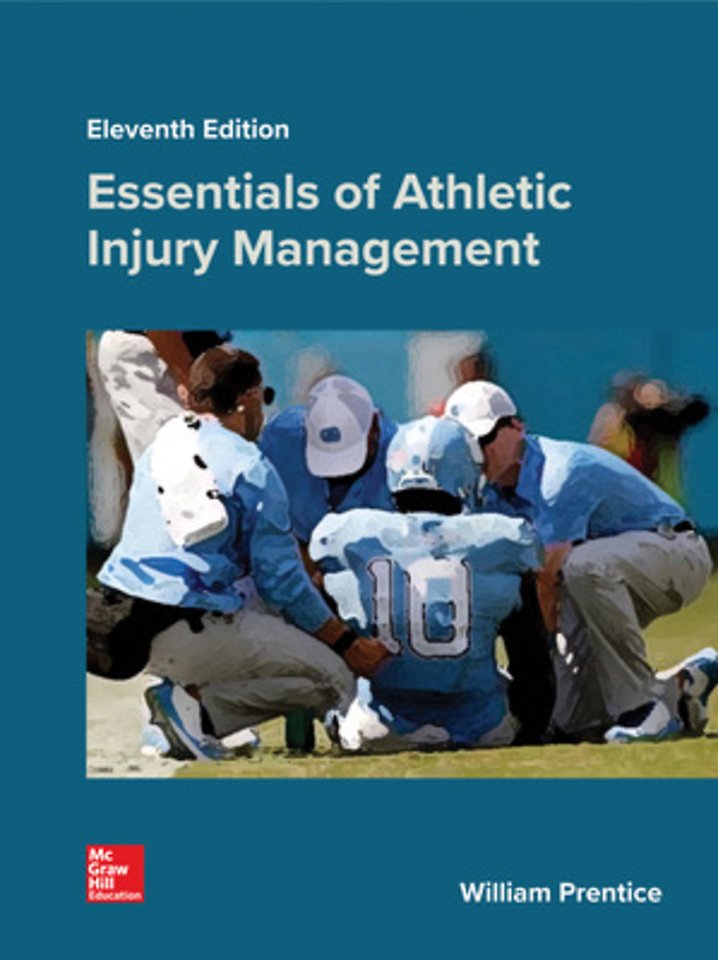
William Prentice
McGraw-Hill Education
11e druk, 2019
9781259912474
Essentials of Athletic Injury Management
Specificaties
Paperback, blz.
|
Engels
McGraw-Hill Education |
11e druk, 2019
ISBN13: 9781259912474
Rubricering
Levertijd ongeveer 10 werkdagen
Samenvatting
Essentials of Athletic Injury Management provides the information you need to manage the care of athletic injuries—from prevention, identification and assessment of injuries to interaction with players, parents and physicians. Designed for those beginning careers in coaching, physical education and the fitness profession, this text prepares students to manage injury and emergency situations when an athletic trainer or physician is not available. Action plans, checklists and applications of universal precautions in athletic environments are included to provide the practical tools needed to get started in the field.
Specificaties
Inhoudsopgave
Essentials of Athletic Injury Management, 11e<br>CHAPTER 1: Fitness Professionals, Coaches, and the Sports Medicine Team: Defining Roles<br>CHAPTER 2: Organizing and Administering an Athletic Health Care Program<br>CHAPTER 3: Legal Liability and Insurance<br>CHAPTER 4: Preventing Injuries Through Fitness Training<br>CHAPTER 5: Sports Nutrition and Supplements<br>CHAPTER 6: Selecting and Using Protective Sports Equipment<br>CHAPTER 7: Understanding the Potential Dangers of Adverse Environmental Conditions<br>CHAPTER 8: Handling Emergency Situations and Injury Assessment<br>CHAPTER 9: Bloodborne Pathogens, Universal Precautions, and Wound Care<br>CHAPTER 10: Wrapping and Taping Techniques<br>CHAPTER 11: Understanding the Basics of Injury Rehabilitation<br>CHAPTER 12: Helping the Injured Athlete Psychologically<br>CHAPTER 13: Recognizing Different Sports Injuries<br>CHAPTER 14: The Foot and Toes<br>CHAPTER 15: The Ankle and Lower Leg<br>CHAPTER 16: The Knee and Related Structures<br>CHAPTER 17: The Thigh, Hip, Groin, and Pelvis<br>CHAPTER 18: The Shoulder Complex<br>CHAPTER 19: The Elbow, Forearm, Wrist, and Hand<br>CHAPTER 20: The Spine<br>CHAPTER 21: The Thorax and Abdomen<br>CHAPTER 22: The Head, Face, Eyes, Ears, Nose, and Throat<br>CHAPTER 23: General Medical Conditions and Additional Health Concerns<br>CHAPTER 24: Substance Abuse<br>CHAPTER 25: Preventing and Managing Injuries in Young Athletes<br><br>