
,

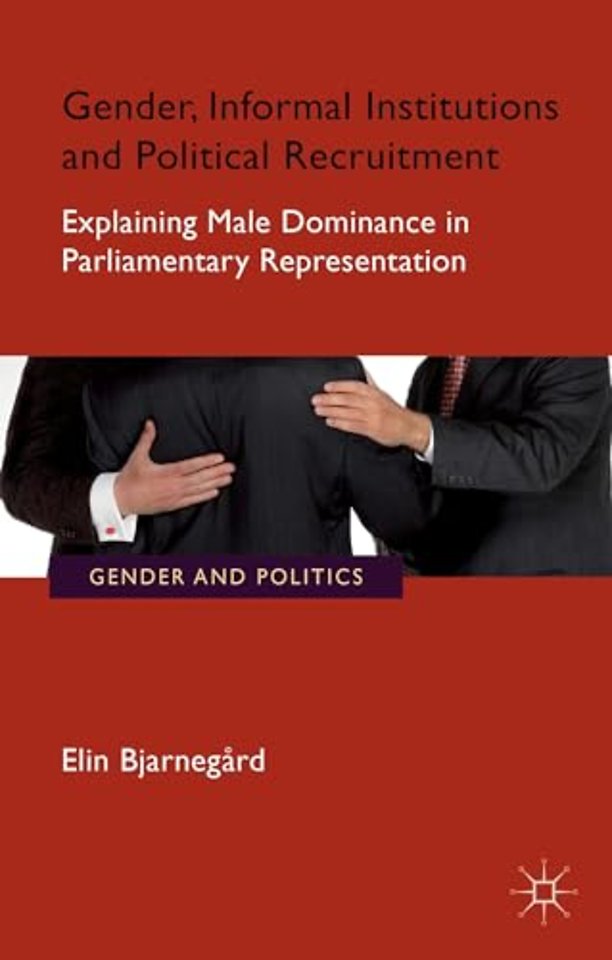
Gender, Informal Institutions and Political Recruitment

Explaining Male Dominance in Parliamentary Representation

Specificaties
Paperback, blz. | Engels
Palgrave Macmillan UK | e druk, 2013
ISBN13: 9781137545312
Rubricering
Palgrave Macmillan UK e druk, 2013 9781137545312
Onderdeel van serie Gender and Politics
€ 68,09
Levertijd ongeveer 8 werkdagen

Samenvatting

Parliaments around the world are still overwhelmingly populated by men, yet studies of male dominance are much rarer than are studies of female under-representation. In this book, men in politics are the subjects of a gendered analysis.

How do men manage to hold on to positions of power despite societal trends in the opposite direction? And why do men seek to cooperate mainly with other men? Elin Bjarnegård studies how male networks are maintained and expanded and seeks to improve our understanding of the rationale underlying male dominance in politics. The findings build on results both from statistical analyses of parliamentary composition worldwide and from extensive field work in Thailand. A new concept, homosocialcapital, is coined and developed to help us understand the persistence of male political dominance.

Specificaties

ISBN13:9781137545312
Taal:Engels
Bindwijze:paperback
Uitgever:Palgrave Macmillan UK

Inhoudsopgave

Upholding Male Parliamentary Dominance Revisiting Patterns Of Gendered Representation Structure Of The Book Studying Men And Masculinities In Politics Constructing Homosocial Capital Clientelism And Unpredictability Clientelism As A Likely Producer Of Homosocial Capital Clientelism And Male Dominance Institutional Enablers Of Clientelism Combining Methods The Quantitative Approach The Qualitative Approach The Representation Of Men Worldwide Capturing Clientelism – Measuring The Immeasurable? The Models, Data And Operationalizations Clientelism And Male Parliamentary Dominance Results And Implications Of The Quantitative Study Situating The Thai Case The Thai Gender Paradox Democratic Instability In Thailand Informal Influence Assessing The Clientelist Political Logic The Thai Case: Clientelism And Male Dominance Candidate Selection In Thai Political Parties The Importance Of Candidate Selection The Rules Of The Game Who Decides? Summarizing Thai Candidate Selection Clientelist NetworksAnd Homosocial Capital The Role And Function Of Clientelist Networks Network Maintenance And Homosocial Capital Theorizing Homosocial Capital The Gendered Consequences Of Clientelist Competition The Added Value Of Homosocial Capital Concluding Remarks A Summary Of The Findings The Contributions Of The Book Interviews References Notes
€ 68,09
Levertijd ongeveer 8 werkdagen

Rubrieken

    Personen

      Trefwoorden

        Gender, Informal Institutions and Political Recruitment