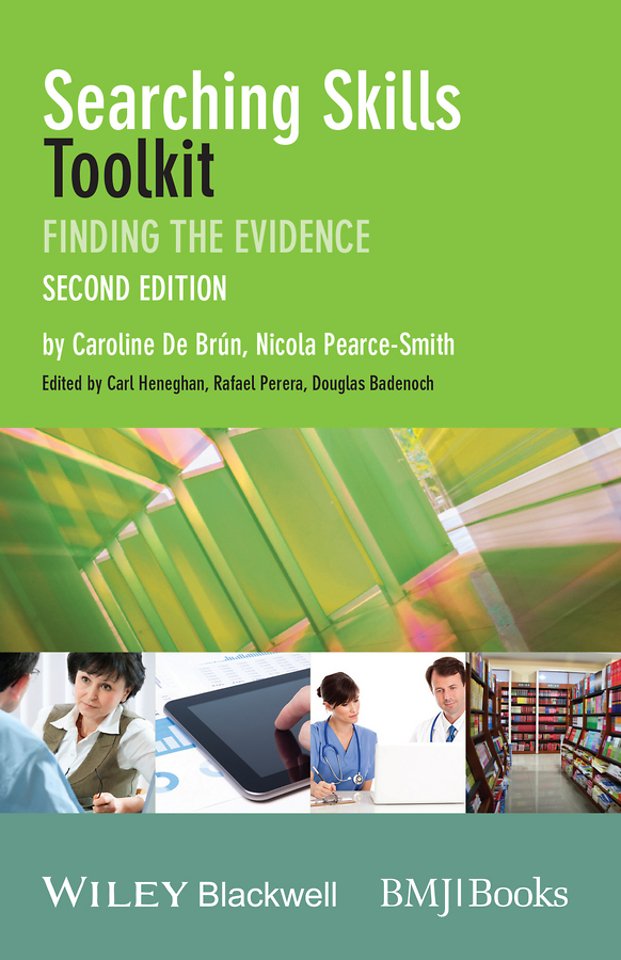
Searching Skills Toolkit – Finding the Evidence 2e
Finding the Evidence
Samenvatting
Searching Skills Toolkit is an expert guide to help you find the clinical evidence you need more easily and effectively.
Clearly presented with useful tips and advice, flow charts, diagrams and real–life clinical scenarios, it shows the best methods for finding quality evidence. From deciding where to start, to building a search strategy, refining results and critical appraisal, it is a step–by–step guide to the process of finding healthcare evidence, and is designed for use by all health and social care professionals.
This second edition has been expanded with new chapters on searching for sources to support evidence–based management decision making and how to better enable your patients to make informed choices. It has also been fully updated to include new web sources, open source reference management software, and new training resources and exercises.
Searching Skills Toolkit is an ideal reference for doctors, nurses, allied health professionals, managers and decision makers, researchers and students.
Specificaties
Inhoudsopgave
<p>Evidence–based medicine, 1</p>
<p>Why search?, 2</p>
<p>How do you keep up to date, 4</p>
<p>Further reading, 5</p>
<p>Chapter 2 Where to start, 6</p>
<p>The hierarchy of evidence, 6</p>
<p>The hierarchy of searching, 7</p>
<p>1. How much time do I have?, 8</p>
<p>2. What type of publication am I looking for?, 10</p>
<p>3. Is my query about a specifi c topic?, 13</p>
<p>Chapter 3 Clinical information: sources, 15</p>
<p>Medical libraries, 15</p>
<p>The Internet, 15</p>
<p>Chapter 4 Searching the Internet, 26</p>
<p>Search engines and directories, 26</p>
<p>Evaluating material found on the World Wide Web, 29</p>
<p>Saving useful websites, 35</p>
<p>Chapter 5 Formulating searchable questions, 37</p>
<p>Types of question, 37</p>
<p>Breaking down the clinical scenario, 38</p>
<p>Identifying keywords, 39</p>
<p>Further reading, 39</p>
<p>Chapter 6 Building a search strategy, 41</p>
<p>Identifying synonyms, 41</p>
<p>Synonym sources, 42</p>
<p>Truncation and wildcards, 42</p>
<p>Combining terms (using Boolean operators), 46</p>
<p>Construction of the final search strategy, 47</p>
<p>Chapter 7 Free text and thesaurus searching, 50</p>
<p>Free text searching, 50</p>
<p>Thesaurus searching, 51</p>
<p>Chapter 8 Searching healthcare databases, 55</p>
<p>Finding the evidence: key steps, 55</p>
<p>Medline, 57</p>
<p>PubMed, 57</p>
<p>Ovid Medline, 64</p>
<p>CINAHL, 68</p>
<p>Cochrane Library, 73</p>
<p>Further reading, 80</p>
<p>Chapter 9 Refining search results, 81</p>
<p>Limits, 81</p>
<p>Methodological fi lters, 85</p>
<p>Clinical Queries, 86</p>
<p>Sensitivity versus specificity, 87</p>
<p>Systematic reviews, 89</p>
<p>Further reading, 90</p>
<p>Chapter 10 Saving citations, 93</p>
<p>Logbooks, 93</p>
<p>Reference management software, 94</p>
<p>Chapter 11 Citation pearl searching, 98</p>
<p>Related items, 98</p>
<p>Author search, 99</p>
<p>Keywords, 99</p>
<p>Journals, 100</p>
<p>Snowballing, 100</p>
<p>Alerts, 101</p>
<p>RSS feeds, 101</p>
<p>Chapter 12 Quality improvement and value: sources, 102</p>
<p>Examples of quality improvement and value questions, 102</p>
<p>Current awareness, 102</p>
<p>Searching for evidence on quality improvement and value, 103</p>
<p>Other useful sources of information, 105</p>
<p>Networks, 113</p>
<p>Further reading, 114</p>
<p>Chapter 13 Patient information: sources, 115</p>
<p>Shared decision–making, 115</p>
<p>Poor quality health information, 116</p>
<p>Good quality health information, 116</p>
<p>Appraising online consumer health information, 117</p>
<p>Trusted information sources, 118</p>
<p>Rarer conditions, 120</p>
<p>Third–party assistance, 121</p>
<p>Patient decision aids, 121</p>
<p>Writing patient information, 122</p>
<p>Keeping up to date with patient information, 122</p>
<p>Further reading, 123</p>
<p>Chapter 14 Critical appraisal, 124</p>
<p>Definition, 124</p>
<p>Critical appraisal checklists, 124</p>
<p>Further reading, 125</p>
<p>Chapter 15 Glossary of terms, 126</p>
<p>Appendix 1 Ten tips for effective searching, 135</p>
<p>Appendix 2 Teaching resources, 138</p>
<p>Record your favourite resources, 142</p>
<p>Index, 143</p>

