I Ramzan
John Wiley & Sons
e druk, 2015
9781118268063
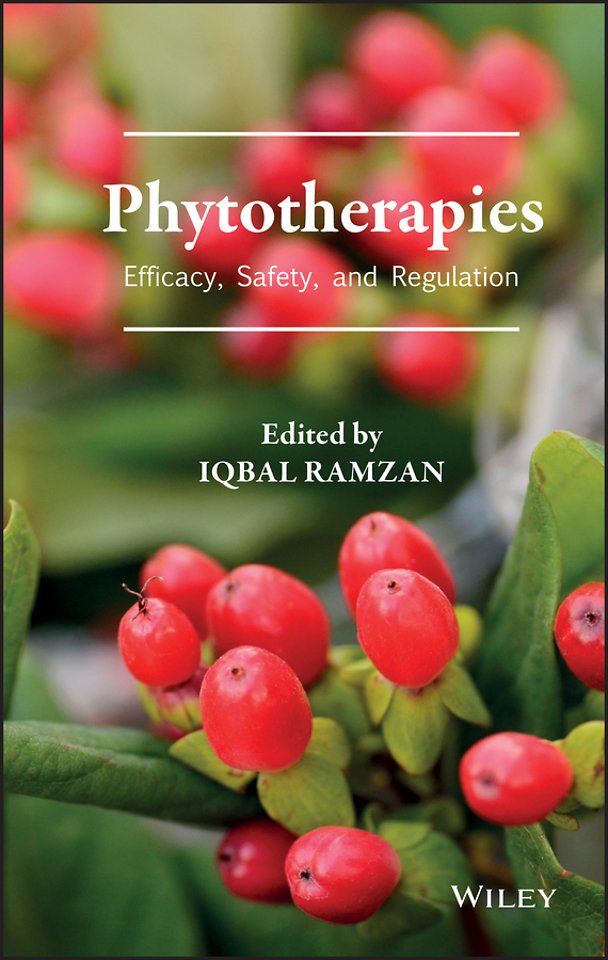
Phytotherapies – Efficacy, Safety, and Regulation
Efficacy, Safety, and Regulation
Specificaties
Gebonden, 672 blz.
|
Engels
John Wiley & Sons |
e druk, 2015
ISBN13: 9781118268063
Rubricering
Levertijd ongeveer 8 werkdagen
Samenvatting
Covering fundamentals and new developments in phytotherapy, this book combines pharmaceutical sciences and chemistry with clinical issues.
Helps readers better understand phytotherapy and learn the fundamentals of and how to analyze phytotherapeutic agents
Discusses phytotherapy in modern medicine, chemoprevention of disease, and alternatives to western medicines for specific diseases
Chapters summarizes the uses and applications of phytomedicines, by type like Chinese, Greco–Arab, Indian, European, and Ayurvedic
Includes international regulatory perspectives and discusses emerging regulations for various established and emerging markets
Specificaties
Inhoudsopgave
<p>List of Contributors xvii</p>
<p>Preface xxi</p>
<p>1 Phytotherapies Past, Present, and Future 1<br />Iqbal Ramzan and George Q. Li</p>
<p>1.1 Overview of Phytotherapy 1</p>
<p>1.1.1 Definition 1</p>
<p>1.1.2 International Trend in the Usage of Complementary Medicines 2</p>
<p>1.2 Preclinical Research on Phytotherapies 3</p>
<p>1.2.1 Pharmacognosy and Quality Standardization of Phytotherapies 3</p>
<p>1.2.2 Pharmacological Studies and Identification of Bioactive Compounds 4</p>
<p>1.2.3 Application of Proteomics and Metabolomics in Phytotherapy Research 5</p>
<p>1.3 Clinical Research on Phytotherapies 6</p>
<p>1.3.1 Efficacy of Popular Phytotherapies 6</p>
<p>1.3.2 Chinese Herbal Medicines 7</p>
<p>1.3.3 Food Nutrition and Translational Research 7</p>
<p>1.4 Safety of Phytotherapies 8</p>
<p>1.5 Profile of Research in Complementary Medicine 9</p>
<p>1.5.1 International Profile 9</p>
<p>1.5.2 Australian Profile of Research in Complementary Medicines 10</p>
<p>1.6 Summary and Future Directions 12</p>
<p>References 12</p>
<p>2 Quality Control and Quality Assurance of Phytomedicines: Key Considerations, Methods, and Analytical Challenges 18<br />Wai ]Ping Yau, Cheong Hian Goh, and Hwee ]Ling Koh</p>
<p>2.1 Introduction 18</p>
<p>2.2 Key Considerations in Qc/Qa of Phytomedicines 20</p>
<p>2.2.1 Identification and Good Agricultural and Collection Practices (GACP) 20</p>
<p>2.2.2 Contamination 22</p>
<p>2.2.3 Substitution 25</p>
<p>2.2.4 Adulteration 25</p>
<p>2.2.5 Contents and Standardization 26</p>
<p>2.2.6 Stability 26</p>
<p>2.2.7 Processing 26</p>
<p>2.3 Methods for Qc/Qa of Phytomedicines 27</p>
<p>2.3.1 Macroscopic Evaluation 27</p>
<p>2.3.2 Microscopic Evaluation 27</p>
<p>2.3.3 Physicochemical Analysis 29</p>
<p>2.3.4 Chemical Fingerprinting 29</p>
<p>2.3.5 DNA Fingerprinting 35</p>
<p>2.3.6 Omics Technology 36</p>
<p>2.4 Challenges 37</p>
<p>2.5 Conclusions 40</p>
<p>References 40</p>
<p>3 Preclinical (In Vivo) and Laboratory (In Vitro) Evidence of Phytomedicine Efficacy 49<br />Mohi Iqbal Mohammed Abdul and Tom Hsun ]Wei Huang</p>
<p>3.1 Introduction to Development of Drugs from Nature 49</p>
<p>3.2 Use of In Vitro and in Vivo Models in Herb Drug Research: Learning Thus Far 50</p>
<p>3.2.1 In Vitro Assays 50</p>
<p>3.2.2 In Vivo Assays 51</p>
<p>3.3 Cardiovascular ] and Stroke ]Related Diseases: In Vitro and In Vivo Focus 53</p>
<p>3.3.1 Cardiovascular Diseases 53</p>
<p>3.3.2 Stroke 55</p>
<p>3.4 Conclusions 60</p>
<p>References 61</p>
<p>4 Clinical Efficacy Trials with Natural Products and Herbal Medicines 65<br />Christina L. Nance</p>
<p>4.1 Introduction 65</p>
<p>4.2 Trials in Various Disease States 66</p>
<p>4.2.1 Profile: RCT of Natural Product in Rheumatoid Arthritis (RA) 66</p>
<p>4.2.2 Asthma 67</p>
<p>4.2.3 Cancer 68</p>
<p>4.2.4 Cardiovascular Disease 68</p>
<p>4.2.5 Diabetes 69</p>
<p>4.2.6 Dermatology 70</p>
<p>4.2.7 Gastroenterology 70</p>
<p>4.2.8 Viral Infections 72</p>
<p>4.3 Natural Product: Green Tea 73</p>
<p>4.3.1 Green Tea Catechin, Epigallocatechin Gallate (EGCG) 73</p>
<p>4.4 Egcg Clinical Trials 75</p>
<p>4.4.1 Polyphenon E 75</p>
<p>4.4.2 Safety, Toxicity, and Pharmacokinetics 75</p>
<p>4.4.3 Metabolism 76</p>
<p>4.4.4 Clinical Studies 76</p>
<p>4.4.5 Cancer Studies 77</p>
<p>4.5 Human Clinical Study: Egcg and Hiv ]1 Infection 78</p>
<p>4.5.1 Translational Medicine: EGCG: Bench ]to ]Bedside 78</p>
<p>4.5.2 Phase I Clinical Trial: Polyphenon E in HIV ]1 Infection 79</p>
<p>4.6 Conclusion 80</p>
<p>References 80</p>
<p>5 Novel Formulations and Drug Delivery Systems for Phytotherapies 89<br />Shengpeng Wang, Meiwan Chen, Qi (Tony) Zhou, and Hak ]Kim Chan</p>
<p>5.1 Limitations of Conventional Formulations for Herbal Medicines 89</p>
<p>5.1.1 Barriers in Physicochemical and Biological Properties 89</p>
<p>5.1.2 Challenges in Quality and Safety Assurance 90</p>
<p>5.1.3 Conventional Formulations Limit the Therapeutic Efficacy of Herbal Medicines 90</p>
<p>5.2 Crucial Issues of Developing Novel Delivery Systems for Herbal Medicines 91</p>
<p>5.2.1 How Novel Delivery Systems Follow the Tradition? 91</p>
<p>5.2.2 Pharmacokinetic Research on Delivery Systems for Herbal Medicines 92</p>
<p>5.2.3 Safety Considerations on Delivery Systems for Herbal Medicines 92</p>
<p>5.3 Novel Delivery Systems of Herbal Medicines 93</p>
<p>5.3.1 Pulmonary Delivery of Herbal Medicines 93</p>
<p>5.3.2 Nanocarriers of Herbal Medicines for Drug/Gene Delivery 94</p>
<p>5.3.3 Surface Modification of Nanocarriers by Herbal Medicines 95</p>
<p>5.3.4 Herbal Medicines as Photosensitizers for Photodynamic Therapy 95</p>
<p>5.4 Summary 96</p>
<p>References 97</p>
<p>6 Phytotherapies Used by Indigenous Populations 101<br />Bradley S. Simpson and Susan J. Semple</p>
<p>6.1 Introduction 101</p>
<p>6.2 Phytotherapies of Indigenous Australians 103</p>
<p>6.2.1 Introduction 103</p>
<p>6.2.2 Philosophy and Knowledge Transmission 104</p>
<p>6.2.3 Ailments Treated with Medicinal Plants 106</p>
<p>6.2.4 How Plant Medicines Have Been Used 107</p>
<p>6.2.5 Methods of Plant Preparation 109</p>
<p>6.2.6 Prized and Commonly Used Plants in Australian Indigenous Medicine 111</p>
<p>6.3 Challenges of a Changing Environment 114</p>
<p>6.3.1 Safety of Australian Phytotherapies 115</p>
<p>6.3.2 Development and Regulation of Australian Indigenous Medicines 116</p>
<p>6.3.3 Integration of Traditional and Western Medicine in Indigenous Populations 117</p>
<p>6.4 Conclusions 117</p>
<p>References 118</p>
<p>7 Phytotherapies from Traditional Chinese Medicine 122<br />Michael Rieder</p>
<p>7.1 Traditional Chinese Medicine 122</p>
<p>7.2 Key Concepts in Traditional Chinese Medicine 124</p>
<p>7.3 Herbal Medicine and Traditional Chinese Medicine 126</p>
<p>7.4 Issues in the Development of Phytotherapy from Traditional Chinese Medicine 130</p>
<p>7.5 Phytotherapies Developed from Traditional Chinese Medicine 131</p>
<p>7.6 Huang Qin Tang and the Development of Phy906 134</p>
<p>7.7 Ginseng 136</p>
<p>7.8 Moving Forward 138</p>
<p>References 138</p>
<p>8 Integrating Traditional Greco ]Arab and Islamic Diet and Herbal Medicines in Research and Clinical Practice 142<br />Bashar Saad</p>
<p>8.1 Introduction 142</p>
<p>8.2 Food Therapy in Greco ]Arab and Islamic Medicine 147</p>
<p>8.2.1 Honey 148</p>
<p>8.2.2 Olive Oil 149</p>
<p>8.2.3 Dates 151</p>
<p>8.2.4 Carob (Ceratonia siliqua) 152</p>
<p>8.2.5 Fig (Ficus carica) 153</p>
<p>8.2.6 Pomegranate (Punica granatum) 153</p>
<p>8.2.7 Garlic (Allium sativum) and Onion (Allium cepa) 154</p>
<p>8.2.8 Edible Wild Plants 154</p>
<p>8.3 Medicinal Plants 157</p>
<p>8.3.1 Black Seed (Nigella sativa) 160</p>
<p>8.3.2 Fenugreek (Trigonella foenum ]graecum) 167</p>
<p>8.3.3 Sage (Salvia officinalis) 168</p>
<p>8.3.4 Khella (Ammi visnaga) 168</p>
<p>8.3.5 Milk Thistle (Silybum marianum) 168</p>
<p>8.3.6 Marjoram (Origanum majorana) 171</p>
<p>8.3.7 Garlic (Allium sativum) and Onion (Allium cepa) 172</p>
<p>8.3.8 Tayun (Inula viscose) 172</p>
<p>8.3.9 Rocket (Eruca sativa) 172</p>
<p>8.3.10 Nettle (Urtica dioica) 173</p>
<p>8.3.11 Peppermint (Mentha piperita) 173</p>
<p>8.3.12 Chamomile (Chamomilla recutita) 174</p>
<p>8.3.13 Coriander (Coriandrum sativum) 175</p>
<p>8.3.14 Anise (Pimpinella anisum) 175</p>
<p>8.3.15 Rosemary (Rosmarinus officinalis) 175</p>
<p>8.3.16 Devil s Dung (Ferula asafetida) 176</p>
<p>8.3.17 Ginger (Zingiber officinale) 176</p>
<p>References 177</p>
<p>9 Evolution of Herbal Medicines in Europe and its Relationship with Modern Medicine 183<br />Elizabeth M. Williamson and Kelvin Chan</p>
<p>9.1 Background 183</p>
<p>9.2 Historical Perspective 184</p>
<p>9.3 European Herbal Medicine: Relationship with Modern Medicine 194</p>
<p>9.4 Summary 194</p>
<p>References 196</p>
<p>10 Chemical Classification and Chemistry of Phytotherapeutics Constituents 199<br />Pei H. Cui and Colin C. Duke</p>
<p>10.1 Introduction 199</p>
<p>10.2 Phytochemicals 201</p>
<p>10.2.1 Alkaloids 201</p>
<p>10.2.2 Flavonoids 205</p>
<p>10.2.3 Glycosides and Saponins 208</p>
<p>10.2.4 Phytosterols 209</p>
<p>10.2.5 Fatty Acids 212</p>
<p>10.2.6 Essential Oils 214</p>
<p>10.2.7 Terpenes 214</p>
<p>10.3 Other Phytochemicals 215</p>
<p>10.4 Medicinal Effects Relating to Dietary Intake 217</p>
<p>10.4.1 Anti ]oxidants 217</p>
<p>10.4.2 Omega ]3 Long Chain Fatty Acids and Derivatives 220</p>
<p>10.5 Natural Products as Leads for Drug Development 223</p>
<p>10.5.1 Catechol Moiety of Piceatannol: Implication and Significance 224</p>
<p>10.5.2 SAR Studies for Drug Development 226</p>
<p>10.6 Summary 230</p>
<p>References 230</p>
<p>11 Therapeutic Potential of Ginsenosides in Management of Atherosclerosis 236<br />Xiao ]Jing Zhang, Huanxing Su, Yi–Tao Wang, and Jian–Bo Wan</p>
<p>11.1 Introduction 236</p>
<p>11.2 Chemical Diversity of Ginsenosides and Distribution 238</p>
<p>11.3 Anti ]Atherosclerotic Effects of Ginsenosides 240</p>
<p>11.4 Underlying Mechanisms of Ginsenosides Against Atherosclerosis 244</p>
<p>11.4.1 Regulation of Blood Lipid Profile 244</p>
<p>11.4.2 Anti ]oxidant Activity 251</p>
<p>11.4.3 Anti ]vascular Inflammation 252</p>
<p>11.4.4 Effect on Vascular Cells 255</p>
<p>11.4.5 Anti ]platelet Effects 257</p>
<p>11.4.6 Anti ]angiogenesis Effects 257</p>
<p>11.5 Conclusions and Future Perspectives 258</p>
<p>Acknowledgments 258</p>
<p>References 258</p>
<p>12 Phytotherapy Pharmacophores for Major Cellular Drug Targets 268<br />Jennifer A. Ong, Paul W. Groundwater, and David E. Hibbs</p>
<p>12.1 Introduction 268</p>
<p>12.2 What is a Pharmacophore? 269</p>
<p>12.3 Pharmacophore Models of Cardiovascular Drugs 270</p>
<p>12.4 Pharmacophore Models for Anticancer Drugs 285</p>
<p>12.5 Pharmacophore Models for Anti ]Inflammatory Drugs 290</p>
<p>12.6 Pharmacophore Models for Anti ]Infective Drugs 297</p>
<p>12.7 Pharmacophore Models for Neurological Drugs 299</p>
<p>12.8 Pharmacophore Models for Miscellaneous Drugs 305</p>
<p>12.9 Conclusions 309</p>
<p>References 309</p>
<p>13 Use of Kava as a Phytotherapeutic Agent and Kava ]Related Hepatotoxicity 312<br />Dong Fu and Iqbal Ramzan</p>
<p>13.1 Introduction 312</p>
<p>13.2 Active Components in Kava 313</p>
<p>13.3 Therapeutic Applications of Kava 314</p>
<p>13.4 Pharmacology of Kava 314</p>
<p>13.4.1 Anti ]psychotic Effects of Kava 314</p>
<p>13.4.2 Anti ]cancer Effects of Kava 316</p>
<p>13.5 Side Effects of Kava 317</p>
<p>13.6 Hepatotoxicity of Kava 318</p>
<p>13.6.1 Inhibition of Cytochrome P450 Enzymes Activities 318</p>
<p>13.6.2 Reduction of Liver Glutathione 319</p>
<p>13.6.3 Induction of Hepatic Inflammatory Responses 320</p>
<p>13.6.4 Inhibition of Cyclooxygenase Enzyme Activity 320</p>
<p>13.6.5 Inhibition of Hepatic Transporters 321</p>
<p>13.6.6 Damage of Hepatic Mitochondria 321</p>
<p>13.7 Summary and Future Challenges 322</p>
<p>References 323</p>
<p>14 Phytotherapies as New Drug Sources: Gossypol and Curcumin 330<br />Vivian Wan Yu Liao, Rajeshwar Narlawar, David E. Hibbs, and Paul W. Groundwater</p>
<p>14.1 Botanical Sources of Gossypol and Curcumin 330</p>
<p>14.2 Stereoisomerism, Tautomerism, and Reactivity 332</p>
<p>14.2.1 Stereoisomerism 332</p>
<p>14.2.2 Tautomerism 333</p>
<p>14.2.3 Reactivity 333</p>
<p>14.3 Biological Activity of Gossypol and its Analogues 337</p>
<p>14.3.1 Antifertility 337</p>
<p>14.3.2 Anticancer 338</p>
<p>14.3.3 Antiviral 341</p>
<p>14.3.4 Antimalarial 345</p>
<p>14.3.5 Other Biological Activity 346</p>
<p>14.4 Biological Activity of Curcumin and its Analogues 346</p>
<p>14.4.1 Introduction 346</p>
<p>14.4.2 Anticancer 348</p>
<p>14.4.3 Anti ]inflammatory and Antioxidant 354</p>
<p>14.4.4 Curcumin in Neurodegenerative Diseases 357</p>
<p>14.4.5 Antimalarial 359</p>
<p>14.4.6 Other Biological Activity 360</p>
<p>References 360</p>
<p>15 Phytotherapies for the Management of Obesity and Diabetes 370<br />Michel Rapinski and Alain Cuerrier</p>
<p>15.1 Introduction 370</p>
<p>15.2 Plants from the North American Pharmacopoeia 372</p>
<p>15.3 Pharmacological Screening: Providing Empirical Evidence for Phytotherapies 379</p>
<p>15.3.1 Diabetes 379</p>
<p>15.3.2 Obesity 384</p>
<p>15.4 Community ]Based Participation: Developing Phytotherapies from Traditional Knowledge 385</p>
<p>15.5 Conclusions 387</p>
<p>References 387</p>
<p>16 Phytotherapeutics for Cancer Therapy 394<br />Daniel M. ]Y. Sze, Hao Liu, Maureen V. Boost, Raimond Wong, and Stephen Sagar</p>
<p>16.1 Introduction 394</p>
<p>16.2 Anticancer Phytotherapeutics With Nk Enhancement 395</p>
<p>16.2.1 Effects of Clinically Useful Phytocompounds on Cancer Patients NK Cell Immunity, Quality of Life (QoL), and Overall Survival 395</p>
<p>16.2.2 Commonly Used Phytotherapeutics in Cancer Management 395</p>
<p>16.2.3 Phytotherapeutic Formulae for Cancer via NK Modulation 409</p>
<p>16.3 Conclusions 423</p>
<p>References 425</p>
<p>17 Phytomedicines for Fatty Liver Disease and Functional Gastrointestinal Conditions 429<br />George Q. Li, Moon ]Sun Kim, Fangming Jin, and Jun ]Lae Cho</p>
<p>17.1 Introduction 429</p>
<p>17.2 Phytomedicines for Fld 430</p>
<p>17.2.1 Introduction and Pharmacotherapy 430</p>
<p>17.2.2 Treatment of Fatty Liver with Herbal Medicines 433</p>
<p>17.2.3 Common Herbs Used in Fatty Liver Management 433</p>
<p>17.3 Phytomedicines for Ibs 439</p>
<p>17.3.1 Introduction and Pharmacotherapy 439</p>
<p>17.3.2 Treatment of IBS in Traditional Medicine 440</p>
<p>17.3.3 Common Herbs Used in the Management of IBS 440</p>
<p>17.4 Phytomedicines for Constipation 444</p>
<p>17.4.1 Treatment of Constipation with Herbal Medicines 445</p>
<p>17.4.2 Common Herbs Used in the Management of Constipation 446</p>
<p>17.5 Summary and Future Perspectives 448</p>
<p>References 448</p>
<p>18 Phytomedicines for Inflammatory Conditions 464<br />Sigrun Chrubasik ]Hausmann</p>
<p>18.1 Traditional Medicines for Inflammatory Conditions in Europe 464</p>
<p>18.2 Twenty ]First ]Century Update on Paids 465</p>
<p>18.3 Oral Extracts from Salix Species 465</p>
<p>18.3.1 Efficacy 467</p>
<p>18.3.2 Safety 467</p>
<p>18.4 Oral Extracts from Harpagophytum procumbens 468</p>
<p>18.4.1 Efficacy 469</p>
<p>18.4.2 Safety 469</p>
<p>18.5 Oral Avocado Soybean Unsaponifiables 469</p>
<p>18.5.1 Efficacy 470</p>
<p>18.5.2 Safety 473</p>
<p>18.6 Oral Extracts From Tripterygium wilfordii 473</p>
<p>18.6.1 Efficacy 473</p>
<p>18.6.2 Safety 474</p>
<p>18.7 Oral Paids Containing Unsaturated Fatty Acids 475</p>
<p>18.7.1 Efficacy 475</p>
<p>18.7.2 Safety 475</p>
<p>18.8 Other Oral Paids 476</p>
<p>18.9 Topical Paids 477</p>
<p>18.9.1 Efficacy 478</p>
<p>18.9.2 Safety 478</p>
<p>References 478</p>
<p>19 Phytotherapies for Infectious Diseases: Are These Really Useful? 483<br />Gail B. Mahady, Gabrielle Escalante, Pooja Mikkilineni, Laura J. Mahady, Temitope O. Lawal, and Bolanle A. Adeniyi</p>
<p>The History of Medicine 483</p>
<p>19.1 Introduction 484</p>
<p>19.2 Historical Precedent for Natural Products as Antimicrobial Drugs 486</p>
<p>19.3 Are Phytotherapies Useful for the Treatment of Infectious Diseases? 487</p>
<p>19.3.1 Cranberry (Vaccinium macrocarpon Ait) 488</p>
<p>19.3.2 Turmeric (Curcuma longa L.) as an Antimicrobial Agent 492</p>
<p>19.3.3 Ginger (Zingiber officinale L.) as an Antimicrobial Agent 494</p>
<p>19.4 Naturally Occurring Compounds that may Reduce Zoonosis 495</p>
<p>19.5 Synergistic and Additive Effects with Antibiotics 496</p>
<p>19.6 New Emerging Infectious Diseases and those with no Known Treatments 496</p>
<p>19.7 Sars 497</p>
<p>19.8 Reducing Mrsa Carriage 498</p>
<p>19.9 Conclusions 499</p>
<p>References 500</p>
<p>20 Phytomedicines for CNS Disorders: Safety Issues for use with Antiepileptic Drugs 504<br />Sophia Yui Kau Fong, Rosina Yau Mok, Qiong Gao, Yin Cheong Wong, and Zhong Zuo</p>
<p>20.1 Introduction 504</p>
<p>20.2 Methodology of Systematic Literature Search 506</p>
<p>20.3 Pharmacokinetic Interactions 506</p>
<p>20.3.1 Carbamazepine 507</p>
<p>20.3.2 Phenytoin 507</p>
<p>20.3.3 Valproate 510</p>
<p>20.3.4 Diazepam 511</p>
<p>20.3.5 Phenobarbitone 511</p>
<p>20.3.6 Newer Generations of Antiepileptic Drugs 512</p>
<p>20.4 Pharmacodynamic Interactions 512</p>
<p>20.4.1 Antiepileptic Effects 513</p>
<p>20.4.2 Sedative Effects 517</p>
<p>20.4.3 Anxiolytic Effects 520</p>
<p>20.4.4 Memory Impairment Effects 520</p>
<p>20.4.5 Motor Incoordination Effects 523</p>
<p>20.5 Conclusions 524</p>
<p>References 524</p>
<p>21 Phytotherapies: Drug Interactions in Cancer 536<br />Andrew J. McLachlan and Stephen J. Clarke</p>
<p>21.1 Introduction 536</p>
<p>21.2 Use of Herbal and Complementary Medicines by People Living with Cancer 537</p>
<p>21.3 Mechanisms of Phytotherapy Drug Interactions 538</p>
<p>21.4 Selected Examples of Phytotherapy Medicines that have the Potential to Cause Drug Interactions in Cancer 540</p>
<p>21.4.1 Black Cohosh (Cimicifuga racemosa) 540</p>
<p>21.4.2 Echinacea (Echinacea purpurea) 541</p>
<p>21.4.3 Fenugreek (Trigonella foenum graecum) 541</p>
<p>21.4.4 Ginkgo Biloba 542</p>
<p>21.4.5 Asian Ginseng (Panax ginseng) 542</p>
<p>21.4.6 Green Tea (Camellia sinensis) 543</p>
<p>21.4.7 Kava Kava (Piper methysticum Forst. f.) 544</p>
<p>21.4.8 Liquorice (Glycyrrhiza uralensis) 544</p>
<p>21.4.9 Milk Thistle (Silybum marianum) 544</p>
<p>21.4.10 St. John s Wort (Hypericum perforatum) 545</p>
<p>21.4.11 Valerian (Valeriana officinalis) 546</p>
<p>21.5 Future Perspectives: Need for Evidence and Advice to Cancer Patients and Physicians 546</p>
<p>21.6 Conclusions 547</p>
<p>Acknowledgments 547</p>
<p>Conflict of Interest 547</p>
<p>References 547</p>
<p>22 Quality Use of Medicines: Considerations in Phytotherapy 554<br />Lynn Weekes</p>
<p>22.1 Introduction 554</p>
<p>22.1.1 Judicious Use 554</p>
<p>22.1.2 Appropriate Selection 555</p>
<p>22.1.3 Safe and Effective Use 555</p>
<p>22.1.4 The QUM Paradigm 555</p>
<p>22.2 Relevance of Qum for Herbal Medicines 556</p>
<p>22.2.1 Is the QUM Framework Relevant for Herbal Therapies? 556</p>
<p>22.3 Use of Phytotherapies by Consumers 558</p>
<p>22.4 Consumer Attitudes and Beliefs about Herbal Medicines 559</p>
<p>22.4.1 Holistic View of Health and Well ]Being 559</p>
<p>22.4.2 It is Natural, So it Must be Safe 560</p>
<p>22.5 Applying the Qum Framework to Phytotherapies 561</p>
<p>22.5.1 Judicious Use 561</p>
<p>22.5.2 Appropriate Selection 562</p>
<p>22.5.3 Safe and Effective Use 563</p>
<p>22.5.4 Adverse Reactions 563</p>
<p>22.5.5 Interactions 564</p>
<p>22.5.6 Allergy 565</p>
<p>22.5.7 Safe Formulation 565</p>
<p>22.5.8 Effectiveness 565</p>
<p>22.6 Building Blocks for Quality Use of Herbal Medicines 566</p>
<p>22.6.1 Objective Information and Ethical Promotion 566</p>
<p>22.6.2 Education and Training 568</p>
<p>22.6.3 Systems and Interventions 569</p>
<p>22.6.4 Shared Decision Making 569</p>
<p>22.7 Conclusion 570</p>
<p>References 570</p>
<p>23 Intellectual Property and Patent Issues with Phytotherapy Products 573<br />Gint Silins, Jennifer Tan, and Kelvin Chan</p>
<p>23.1 Introduction 573</p>
<p>23.1.1 Historical and Current Aspects of Intellectual Property 573</p>
<p>23.1.2 Types of Intellectual Property Rights 574</p>
<p>23.1.3 Worldwide IP Laws Have Yet to Be Harmonized 575</p>
<p>23.2 Ip Rights Phyto ]Industry 575</p>
<p>23.2.1 IP Protection for Phytotherapy Products and Phytotherapies 575</p>
<p>23.2.2 Patents 576</p>
<p>23.2.3 Patents as IP Assets 576</p>
<p>23.2.4 Patents for Protecting Phyto ]Inventions 577</p>
<p>23.2.5 Exclusions to Patentability 577</p>
<p>23.3 Brief Overview of Patents and the Patenting Process 578</p>
<p>23.3.1 Patent Searching 578</p>
<p>23.3.2 Patent Ownership 578</p>
<p>23.3.3 Patent Filing 579</p>
<p>23.3.4 Examination and Classification 579</p>
<p>23.3.5 Allowance and Grant 579</p>
<p>23.3.6 Extension of Patent Term 579</p>
<p>23.4 Other Types of IP Rights 585</p>
<p>23.4.1 Trade Secrets 585</p>
<p>23.4.2 Regulatory Exclusivity and Restricted Third ]Party Access 585</p>
<p>23.4.3 Plant Variety Protection 586</p>
<p>23.4.4 Industrial Designs 586</p>
<p>23.4.5 Trademarks 586</p>
<p>23.5 Patenting Trends for Phytotherapeutics 587</p>
<p>23.6 Traditional Knowledge and IP Rights 587</p>
<p>Disclaimer 589</p>
<p>References 590</p>
<p>24 International Regulatory Status of Phytotherapies 593<br />Ernest V. Linek</p>
<p>24.1 Introduction 593</p>
<p>24.1.1 Country Law Sources 594</p>
<p>24.1.2 Common Requirement: Good Manufacturing Practices 594</p>
<p>24.2 Specific Country Regulations 596</p>
<p>24.2.1 Current Regulations in Australia 596</p>
<p>24.2.2 Current Regulations in Canada 597</p>
<p>24.2.3 Current Regulations in China 604</p>
<p>24.2.4 Current Regulations in the European Union (EU) 609</p>
<p>24.2.5 Current Regulations in India 616</p>
<p>24.2.6 Current Regulations in Japan 619</p>
<p>24.2.7 Current Regulations: United Kingdom 622</p>
<p>24.2.8 Current Regulations in the United States 625</p>
<p>24.3 Future of Phytotherapies: World Health Organization (Who) 631</p>
<p>Further Reading 634</p>
<p>Index 635</p>
<p>Preface xxi</p>
<p>1 Phytotherapies Past, Present, and Future 1<br />Iqbal Ramzan and George Q. Li</p>
<p>1.1 Overview of Phytotherapy 1</p>
<p>1.1.1 Definition 1</p>
<p>1.1.2 International Trend in the Usage of Complementary Medicines 2</p>
<p>1.2 Preclinical Research on Phytotherapies 3</p>
<p>1.2.1 Pharmacognosy and Quality Standardization of Phytotherapies 3</p>
<p>1.2.2 Pharmacological Studies and Identification of Bioactive Compounds 4</p>
<p>1.2.3 Application of Proteomics and Metabolomics in Phytotherapy Research 5</p>
<p>1.3 Clinical Research on Phytotherapies 6</p>
<p>1.3.1 Efficacy of Popular Phytotherapies 6</p>
<p>1.3.2 Chinese Herbal Medicines 7</p>
<p>1.3.3 Food Nutrition and Translational Research 7</p>
<p>1.4 Safety of Phytotherapies 8</p>
<p>1.5 Profile of Research in Complementary Medicine 9</p>
<p>1.5.1 International Profile 9</p>
<p>1.5.2 Australian Profile of Research in Complementary Medicines 10</p>
<p>1.6 Summary and Future Directions 12</p>
<p>References 12</p>
<p>2 Quality Control and Quality Assurance of Phytomedicines: Key Considerations, Methods, and Analytical Challenges 18<br />Wai ]Ping Yau, Cheong Hian Goh, and Hwee ]Ling Koh</p>
<p>2.1 Introduction 18</p>
<p>2.2 Key Considerations in Qc/Qa of Phytomedicines 20</p>
<p>2.2.1 Identification and Good Agricultural and Collection Practices (GACP) 20</p>
<p>2.2.2 Contamination 22</p>
<p>2.2.3 Substitution 25</p>
<p>2.2.4 Adulteration 25</p>
<p>2.2.5 Contents and Standardization 26</p>
<p>2.2.6 Stability 26</p>
<p>2.2.7 Processing 26</p>
<p>2.3 Methods for Qc/Qa of Phytomedicines 27</p>
<p>2.3.1 Macroscopic Evaluation 27</p>
<p>2.3.2 Microscopic Evaluation 27</p>
<p>2.3.3 Physicochemical Analysis 29</p>
<p>2.3.4 Chemical Fingerprinting 29</p>
<p>2.3.5 DNA Fingerprinting 35</p>
<p>2.3.6 Omics Technology 36</p>
<p>2.4 Challenges 37</p>
<p>2.5 Conclusions 40</p>
<p>References 40</p>
<p>3 Preclinical (In Vivo) and Laboratory (In Vitro) Evidence of Phytomedicine Efficacy 49<br />Mohi Iqbal Mohammed Abdul and Tom Hsun ]Wei Huang</p>
<p>3.1 Introduction to Development of Drugs from Nature 49</p>
<p>3.2 Use of In Vitro and in Vivo Models in Herb Drug Research: Learning Thus Far 50</p>
<p>3.2.1 In Vitro Assays 50</p>
<p>3.2.2 In Vivo Assays 51</p>
<p>3.3 Cardiovascular ] and Stroke ]Related Diseases: In Vitro and In Vivo Focus 53</p>
<p>3.3.1 Cardiovascular Diseases 53</p>
<p>3.3.2 Stroke 55</p>
<p>3.4 Conclusions 60</p>
<p>References 61</p>
<p>4 Clinical Efficacy Trials with Natural Products and Herbal Medicines 65<br />Christina L. Nance</p>
<p>4.1 Introduction 65</p>
<p>4.2 Trials in Various Disease States 66</p>
<p>4.2.1 Profile: RCT of Natural Product in Rheumatoid Arthritis (RA) 66</p>
<p>4.2.2 Asthma 67</p>
<p>4.2.3 Cancer 68</p>
<p>4.2.4 Cardiovascular Disease 68</p>
<p>4.2.5 Diabetes 69</p>
<p>4.2.6 Dermatology 70</p>
<p>4.2.7 Gastroenterology 70</p>
<p>4.2.8 Viral Infections 72</p>
<p>4.3 Natural Product: Green Tea 73</p>
<p>4.3.1 Green Tea Catechin, Epigallocatechin Gallate (EGCG) 73</p>
<p>4.4 Egcg Clinical Trials 75</p>
<p>4.4.1 Polyphenon E 75</p>
<p>4.4.2 Safety, Toxicity, and Pharmacokinetics 75</p>
<p>4.4.3 Metabolism 76</p>
<p>4.4.4 Clinical Studies 76</p>
<p>4.4.5 Cancer Studies 77</p>
<p>4.5 Human Clinical Study: Egcg and Hiv ]1 Infection 78</p>
<p>4.5.1 Translational Medicine: EGCG: Bench ]to ]Bedside 78</p>
<p>4.5.2 Phase I Clinical Trial: Polyphenon E in HIV ]1 Infection 79</p>
<p>4.6 Conclusion 80</p>
<p>References 80</p>
<p>5 Novel Formulations and Drug Delivery Systems for Phytotherapies 89<br />Shengpeng Wang, Meiwan Chen, Qi (Tony) Zhou, and Hak ]Kim Chan</p>
<p>5.1 Limitations of Conventional Formulations for Herbal Medicines 89</p>
<p>5.1.1 Barriers in Physicochemical and Biological Properties 89</p>
<p>5.1.2 Challenges in Quality and Safety Assurance 90</p>
<p>5.1.3 Conventional Formulations Limit the Therapeutic Efficacy of Herbal Medicines 90</p>
<p>5.2 Crucial Issues of Developing Novel Delivery Systems for Herbal Medicines 91</p>
<p>5.2.1 How Novel Delivery Systems Follow the Tradition? 91</p>
<p>5.2.2 Pharmacokinetic Research on Delivery Systems for Herbal Medicines 92</p>
<p>5.2.3 Safety Considerations on Delivery Systems for Herbal Medicines 92</p>
<p>5.3 Novel Delivery Systems of Herbal Medicines 93</p>
<p>5.3.1 Pulmonary Delivery of Herbal Medicines 93</p>
<p>5.3.2 Nanocarriers of Herbal Medicines for Drug/Gene Delivery 94</p>
<p>5.3.3 Surface Modification of Nanocarriers by Herbal Medicines 95</p>
<p>5.3.4 Herbal Medicines as Photosensitizers for Photodynamic Therapy 95</p>
<p>5.4 Summary 96</p>
<p>References 97</p>
<p>6 Phytotherapies Used by Indigenous Populations 101<br />Bradley S. Simpson and Susan J. Semple</p>
<p>6.1 Introduction 101</p>
<p>6.2 Phytotherapies of Indigenous Australians 103</p>
<p>6.2.1 Introduction 103</p>
<p>6.2.2 Philosophy and Knowledge Transmission 104</p>
<p>6.2.3 Ailments Treated with Medicinal Plants 106</p>
<p>6.2.4 How Plant Medicines Have Been Used 107</p>
<p>6.2.5 Methods of Plant Preparation 109</p>
<p>6.2.6 Prized and Commonly Used Plants in Australian Indigenous Medicine 111</p>
<p>6.3 Challenges of a Changing Environment 114</p>
<p>6.3.1 Safety of Australian Phytotherapies 115</p>
<p>6.3.2 Development and Regulation of Australian Indigenous Medicines 116</p>
<p>6.3.3 Integration of Traditional and Western Medicine in Indigenous Populations 117</p>
<p>6.4 Conclusions 117</p>
<p>References 118</p>
<p>7 Phytotherapies from Traditional Chinese Medicine 122<br />Michael Rieder</p>
<p>7.1 Traditional Chinese Medicine 122</p>
<p>7.2 Key Concepts in Traditional Chinese Medicine 124</p>
<p>7.3 Herbal Medicine and Traditional Chinese Medicine 126</p>
<p>7.4 Issues in the Development of Phytotherapy from Traditional Chinese Medicine 130</p>
<p>7.5 Phytotherapies Developed from Traditional Chinese Medicine 131</p>
<p>7.6 Huang Qin Tang and the Development of Phy906 134</p>
<p>7.7 Ginseng 136</p>
<p>7.8 Moving Forward 138</p>
<p>References 138</p>
<p>8 Integrating Traditional Greco ]Arab and Islamic Diet and Herbal Medicines in Research and Clinical Practice 142<br />Bashar Saad</p>
<p>8.1 Introduction 142</p>
<p>8.2 Food Therapy in Greco ]Arab and Islamic Medicine 147</p>
<p>8.2.1 Honey 148</p>
<p>8.2.2 Olive Oil 149</p>
<p>8.2.3 Dates 151</p>
<p>8.2.4 Carob (Ceratonia siliqua) 152</p>
<p>8.2.5 Fig (Ficus carica) 153</p>
<p>8.2.6 Pomegranate (Punica granatum) 153</p>
<p>8.2.7 Garlic (Allium sativum) and Onion (Allium cepa) 154</p>
<p>8.2.8 Edible Wild Plants 154</p>
<p>8.3 Medicinal Plants 157</p>
<p>8.3.1 Black Seed (Nigella sativa) 160</p>
<p>8.3.2 Fenugreek (Trigonella foenum ]graecum) 167</p>
<p>8.3.3 Sage (Salvia officinalis) 168</p>
<p>8.3.4 Khella (Ammi visnaga) 168</p>
<p>8.3.5 Milk Thistle (Silybum marianum) 168</p>
<p>8.3.6 Marjoram (Origanum majorana) 171</p>
<p>8.3.7 Garlic (Allium sativum) and Onion (Allium cepa) 172</p>
<p>8.3.8 Tayun (Inula viscose) 172</p>
<p>8.3.9 Rocket (Eruca sativa) 172</p>
<p>8.3.10 Nettle (Urtica dioica) 173</p>
<p>8.3.11 Peppermint (Mentha piperita) 173</p>
<p>8.3.12 Chamomile (Chamomilla recutita) 174</p>
<p>8.3.13 Coriander (Coriandrum sativum) 175</p>
<p>8.3.14 Anise (Pimpinella anisum) 175</p>
<p>8.3.15 Rosemary (Rosmarinus officinalis) 175</p>
<p>8.3.16 Devil s Dung (Ferula asafetida) 176</p>
<p>8.3.17 Ginger (Zingiber officinale) 176</p>
<p>References 177</p>
<p>9 Evolution of Herbal Medicines in Europe and its Relationship with Modern Medicine 183<br />Elizabeth M. Williamson and Kelvin Chan</p>
<p>9.1 Background 183</p>
<p>9.2 Historical Perspective 184</p>
<p>9.3 European Herbal Medicine: Relationship with Modern Medicine 194</p>
<p>9.4 Summary 194</p>
<p>References 196</p>
<p>10 Chemical Classification and Chemistry of Phytotherapeutics Constituents 199<br />Pei H. Cui and Colin C. Duke</p>
<p>10.1 Introduction 199</p>
<p>10.2 Phytochemicals 201</p>
<p>10.2.1 Alkaloids 201</p>
<p>10.2.2 Flavonoids 205</p>
<p>10.2.3 Glycosides and Saponins 208</p>
<p>10.2.4 Phytosterols 209</p>
<p>10.2.5 Fatty Acids 212</p>
<p>10.2.6 Essential Oils 214</p>
<p>10.2.7 Terpenes 214</p>
<p>10.3 Other Phytochemicals 215</p>
<p>10.4 Medicinal Effects Relating to Dietary Intake 217</p>
<p>10.4.1 Anti ]oxidants 217</p>
<p>10.4.2 Omega ]3 Long Chain Fatty Acids and Derivatives 220</p>
<p>10.5 Natural Products as Leads for Drug Development 223</p>
<p>10.5.1 Catechol Moiety of Piceatannol: Implication and Significance 224</p>
<p>10.5.2 SAR Studies for Drug Development 226</p>
<p>10.6 Summary 230</p>
<p>References 230</p>
<p>11 Therapeutic Potential of Ginsenosides in Management of Atherosclerosis 236<br />Xiao ]Jing Zhang, Huanxing Su, Yi–Tao Wang, and Jian–Bo Wan</p>
<p>11.1 Introduction 236</p>
<p>11.2 Chemical Diversity of Ginsenosides and Distribution 238</p>
<p>11.3 Anti ]Atherosclerotic Effects of Ginsenosides 240</p>
<p>11.4 Underlying Mechanisms of Ginsenosides Against Atherosclerosis 244</p>
<p>11.4.1 Regulation of Blood Lipid Profile 244</p>
<p>11.4.2 Anti ]oxidant Activity 251</p>
<p>11.4.3 Anti ]vascular Inflammation 252</p>
<p>11.4.4 Effect on Vascular Cells 255</p>
<p>11.4.5 Anti ]platelet Effects 257</p>
<p>11.4.6 Anti ]angiogenesis Effects 257</p>
<p>11.5 Conclusions and Future Perspectives 258</p>
<p>Acknowledgments 258</p>
<p>References 258</p>
<p>12 Phytotherapy Pharmacophores for Major Cellular Drug Targets 268<br />Jennifer A. Ong, Paul W. Groundwater, and David E. Hibbs</p>
<p>12.1 Introduction 268</p>
<p>12.2 What is a Pharmacophore? 269</p>
<p>12.3 Pharmacophore Models of Cardiovascular Drugs 270</p>
<p>12.4 Pharmacophore Models for Anticancer Drugs 285</p>
<p>12.5 Pharmacophore Models for Anti ]Inflammatory Drugs 290</p>
<p>12.6 Pharmacophore Models for Anti ]Infective Drugs 297</p>
<p>12.7 Pharmacophore Models for Neurological Drugs 299</p>
<p>12.8 Pharmacophore Models for Miscellaneous Drugs 305</p>
<p>12.9 Conclusions 309</p>
<p>References 309</p>
<p>13 Use of Kava as a Phytotherapeutic Agent and Kava ]Related Hepatotoxicity 312<br />Dong Fu and Iqbal Ramzan</p>
<p>13.1 Introduction 312</p>
<p>13.2 Active Components in Kava 313</p>
<p>13.3 Therapeutic Applications of Kava 314</p>
<p>13.4 Pharmacology of Kava 314</p>
<p>13.4.1 Anti ]psychotic Effects of Kava 314</p>
<p>13.4.2 Anti ]cancer Effects of Kava 316</p>
<p>13.5 Side Effects of Kava 317</p>
<p>13.6 Hepatotoxicity of Kava 318</p>
<p>13.6.1 Inhibition of Cytochrome P450 Enzymes Activities 318</p>
<p>13.6.2 Reduction of Liver Glutathione 319</p>
<p>13.6.3 Induction of Hepatic Inflammatory Responses 320</p>
<p>13.6.4 Inhibition of Cyclooxygenase Enzyme Activity 320</p>
<p>13.6.5 Inhibition of Hepatic Transporters 321</p>
<p>13.6.6 Damage of Hepatic Mitochondria 321</p>
<p>13.7 Summary and Future Challenges 322</p>
<p>References 323</p>
<p>14 Phytotherapies as New Drug Sources: Gossypol and Curcumin 330<br />Vivian Wan Yu Liao, Rajeshwar Narlawar, David E. Hibbs, and Paul W. Groundwater</p>
<p>14.1 Botanical Sources of Gossypol and Curcumin 330</p>
<p>14.2 Stereoisomerism, Tautomerism, and Reactivity 332</p>
<p>14.2.1 Stereoisomerism 332</p>
<p>14.2.2 Tautomerism 333</p>
<p>14.2.3 Reactivity 333</p>
<p>14.3 Biological Activity of Gossypol and its Analogues 337</p>
<p>14.3.1 Antifertility 337</p>
<p>14.3.2 Anticancer 338</p>
<p>14.3.3 Antiviral 341</p>
<p>14.3.4 Antimalarial 345</p>
<p>14.3.5 Other Biological Activity 346</p>
<p>14.4 Biological Activity of Curcumin and its Analogues 346</p>
<p>14.4.1 Introduction 346</p>
<p>14.4.2 Anticancer 348</p>
<p>14.4.3 Anti ]inflammatory and Antioxidant 354</p>
<p>14.4.4 Curcumin in Neurodegenerative Diseases 357</p>
<p>14.4.5 Antimalarial 359</p>
<p>14.4.6 Other Biological Activity 360</p>
<p>References 360</p>
<p>15 Phytotherapies for the Management of Obesity and Diabetes 370<br />Michel Rapinski and Alain Cuerrier</p>
<p>15.1 Introduction 370</p>
<p>15.2 Plants from the North American Pharmacopoeia 372</p>
<p>15.3 Pharmacological Screening: Providing Empirical Evidence for Phytotherapies 379</p>
<p>15.3.1 Diabetes 379</p>
<p>15.3.2 Obesity 384</p>
<p>15.4 Community ]Based Participation: Developing Phytotherapies from Traditional Knowledge 385</p>
<p>15.5 Conclusions 387</p>
<p>References 387</p>
<p>16 Phytotherapeutics for Cancer Therapy 394<br />Daniel M. ]Y. Sze, Hao Liu, Maureen V. Boost, Raimond Wong, and Stephen Sagar</p>
<p>16.1 Introduction 394</p>
<p>16.2 Anticancer Phytotherapeutics With Nk Enhancement 395</p>
<p>16.2.1 Effects of Clinically Useful Phytocompounds on Cancer Patients NK Cell Immunity, Quality of Life (QoL), and Overall Survival 395</p>
<p>16.2.2 Commonly Used Phytotherapeutics in Cancer Management 395</p>
<p>16.2.3 Phytotherapeutic Formulae for Cancer via NK Modulation 409</p>
<p>16.3 Conclusions 423</p>
<p>References 425</p>
<p>17 Phytomedicines for Fatty Liver Disease and Functional Gastrointestinal Conditions 429<br />George Q. Li, Moon ]Sun Kim, Fangming Jin, and Jun ]Lae Cho</p>
<p>17.1 Introduction 429</p>
<p>17.2 Phytomedicines for Fld 430</p>
<p>17.2.1 Introduction and Pharmacotherapy 430</p>
<p>17.2.2 Treatment of Fatty Liver with Herbal Medicines 433</p>
<p>17.2.3 Common Herbs Used in Fatty Liver Management 433</p>
<p>17.3 Phytomedicines for Ibs 439</p>
<p>17.3.1 Introduction and Pharmacotherapy 439</p>
<p>17.3.2 Treatment of IBS in Traditional Medicine 440</p>
<p>17.3.3 Common Herbs Used in the Management of IBS 440</p>
<p>17.4 Phytomedicines for Constipation 444</p>
<p>17.4.1 Treatment of Constipation with Herbal Medicines 445</p>
<p>17.4.2 Common Herbs Used in the Management of Constipation 446</p>
<p>17.5 Summary and Future Perspectives 448</p>
<p>References 448</p>
<p>18 Phytomedicines for Inflammatory Conditions 464<br />Sigrun Chrubasik ]Hausmann</p>
<p>18.1 Traditional Medicines for Inflammatory Conditions in Europe 464</p>
<p>18.2 Twenty ]First ]Century Update on Paids 465</p>
<p>18.3 Oral Extracts from Salix Species 465</p>
<p>18.3.1 Efficacy 467</p>
<p>18.3.2 Safety 467</p>
<p>18.4 Oral Extracts from Harpagophytum procumbens 468</p>
<p>18.4.1 Efficacy 469</p>
<p>18.4.2 Safety 469</p>
<p>18.5 Oral Avocado Soybean Unsaponifiables 469</p>
<p>18.5.1 Efficacy 470</p>
<p>18.5.2 Safety 473</p>
<p>18.6 Oral Extracts From Tripterygium wilfordii 473</p>
<p>18.6.1 Efficacy 473</p>
<p>18.6.2 Safety 474</p>
<p>18.7 Oral Paids Containing Unsaturated Fatty Acids 475</p>
<p>18.7.1 Efficacy 475</p>
<p>18.7.2 Safety 475</p>
<p>18.8 Other Oral Paids 476</p>
<p>18.9 Topical Paids 477</p>
<p>18.9.1 Efficacy 478</p>
<p>18.9.2 Safety 478</p>
<p>References 478</p>
<p>19 Phytotherapies for Infectious Diseases: Are These Really Useful? 483<br />Gail B. Mahady, Gabrielle Escalante, Pooja Mikkilineni, Laura J. Mahady, Temitope O. Lawal, and Bolanle A. Adeniyi</p>
<p>The History of Medicine 483</p>
<p>19.1 Introduction 484</p>
<p>19.2 Historical Precedent for Natural Products as Antimicrobial Drugs 486</p>
<p>19.3 Are Phytotherapies Useful for the Treatment of Infectious Diseases? 487</p>
<p>19.3.1 Cranberry (Vaccinium macrocarpon Ait) 488</p>
<p>19.3.2 Turmeric (Curcuma longa L.) as an Antimicrobial Agent 492</p>
<p>19.3.3 Ginger (Zingiber officinale L.) as an Antimicrobial Agent 494</p>
<p>19.4 Naturally Occurring Compounds that may Reduce Zoonosis 495</p>
<p>19.5 Synergistic and Additive Effects with Antibiotics 496</p>
<p>19.6 New Emerging Infectious Diseases and those with no Known Treatments 496</p>
<p>19.7 Sars 497</p>
<p>19.8 Reducing Mrsa Carriage 498</p>
<p>19.9 Conclusions 499</p>
<p>References 500</p>
<p>20 Phytomedicines for CNS Disorders: Safety Issues for use with Antiepileptic Drugs 504<br />Sophia Yui Kau Fong, Rosina Yau Mok, Qiong Gao, Yin Cheong Wong, and Zhong Zuo</p>
<p>20.1 Introduction 504</p>
<p>20.2 Methodology of Systematic Literature Search 506</p>
<p>20.3 Pharmacokinetic Interactions 506</p>
<p>20.3.1 Carbamazepine 507</p>
<p>20.3.2 Phenytoin 507</p>
<p>20.3.3 Valproate 510</p>
<p>20.3.4 Diazepam 511</p>
<p>20.3.5 Phenobarbitone 511</p>
<p>20.3.6 Newer Generations of Antiepileptic Drugs 512</p>
<p>20.4 Pharmacodynamic Interactions 512</p>
<p>20.4.1 Antiepileptic Effects 513</p>
<p>20.4.2 Sedative Effects 517</p>
<p>20.4.3 Anxiolytic Effects 520</p>
<p>20.4.4 Memory Impairment Effects 520</p>
<p>20.4.5 Motor Incoordination Effects 523</p>
<p>20.5 Conclusions 524</p>
<p>References 524</p>
<p>21 Phytotherapies: Drug Interactions in Cancer 536<br />Andrew J. McLachlan and Stephen J. Clarke</p>
<p>21.1 Introduction 536</p>
<p>21.2 Use of Herbal and Complementary Medicines by People Living with Cancer 537</p>
<p>21.3 Mechanisms of Phytotherapy Drug Interactions 538</p>
<p>21.4 Selected Examples of Phytotherapy Medicines that have the Potential to Cause Drug Interactions in Cancer 540</p>
<p>21.4.1 Black Cohosh (Cimicifuga racemosa) 540</p>
<p>21.4.2 Echinacea (Echinacea purpurea) 541</p>
<p>21.4.3 Fenugreek (Trigonella foenum graecum) 541</p>
<p>21.4.4 Ginkgo Biloba 542</p>
<p>21.4.5 Asian Ginseng (Panax ginseng) 542</p>
<p>21.4.6 Green Tea (Camellia sinensis) 543</p>
<p>21.4.7 Kava Kava (Piper methysticum Forst. f.) 544</p>
<p>21.4.8 Liquorice (Glycyrrhiza uralensis) 544</p>
<p>21.4.9 Milk Thistle (Silybum marianum) 544</p>
<p>21.4.10 St. John s Wort (Hypericum perforatum) 545</p>
<p>21.4.11 Valerian (Valeriana officinalis) 546</p>
<p>21.5 Future Perspectives: Need for Evidence and Advice to Cancer Patients and Physicians 546</p>
<p>21.6 Conclusions 547</p>
<p>Acknowledgments 547</p>
<p>Conflict of Interest 547</p>
<p>References 547</p>
<p>22 Quality Use of Medicines: Considerations in Phytotherapy 554<br />Lynn Weekes</p>
<p>22.1 Introduction 554</p>
<p>22.1.1 Judicious Use 554</p>
<p>22.1.2 Appropriate Selection 555</p>
<p>22.1.3 Safe and Effective Use 555</p>
<p>22.1.4 The QUM Paradigm 555</p>
<p>22.2 Relevance of Qum for Herbal Medicines 556</p>
<p>22.2.1 Is the QUM Framework Relevant for Herbal Therapies? 556</p>
<p>22.3 Use of Phytotherapies by Consumers 558</p>
<p>22.4 Consumer Attitudes and Beliefs about Herbal Medicines 559</p>
<p>22.4.1 Holistic View of Health and Well ]Being 559</p>
<p>22.4.2 It is Natural, So it Must be Safe 560</p>
<p>22.5 Applying the Qum Framework to Phytotherapies 561</p>
<p>22.5.1 Judicious Use 561</p>
<p>22.5.2 Appropriate Selection 562</p>
<p>22.5.3 Safe and Effective Use 563</p>
<p>22.5.4 Adverse Reactions 563</p>
<p>22.5.5 Interactions 564</p>
<p>22.5.6 Allergy 565</p>
<p>22.5.7 Safe Formulation 565</p>
<p>22.5.8 Effectiveness 565</p>
<p>22.6 Building Blocks for Quality Use of Herbal Medicines 566</p>
<p>22.6.1 Objective Information and Ethical Promotion 566</p>
<p>22.6.2 Education and Training 568</p>
<p>22.6.3 Systems and Interventions 569</p>
<p>22.6.4 Shared Decision Making 569</p>
<p>22.7 Conclusion 570</p>
<p>References 570</p>
<p>23 Intellectual Property and Patent Issues with Phytotherapy Products 573<br />Gint Silins, Jennifer Tan, and Kelvin Chan</p>
<p>23.1 Introduction 573</p>
<p>23.1.1 Historical and Current Aspects of Intellectual Property 573</p>
<p>23.1.2 Types of Intellectual Property Rights 574</p>
<p>23.1.3 Worldwide IP Laws Have Yet to Be Harmonized 575</p>
<p>23.2 Ip Rights Phyto ]Industry 575</p>
<p>23.2.1 IP Protection for Phytotherapy Products and Phytotherapies 575</p>
<p>23.2.2 Patents 576</p>
<p>23.2.3 Patents as IP Assets 576</p>
<p>23.2.4 Patents for Protecting Phyto ]Inventions 577</p>
<p>23.2.5 Exclusions to Patentability 577</p>
<p>23.3 Brief Overview of Patents and the Patenting Process 578</p>
<p>23.3.1 Patent Searching 578</p>
<p>23.3.2 Patent Ownership 578</p>
<p>23.3.3 Patent Filing 579</p>
<p>23.3.4 Examination and Classification 579</p>
<p>23.3.5 Allowance and Grant 579</p>
<p>23.3.6 Extension of Patent Term 579</p>
<p>23.4 Other Types of IP Rights 585</p>
<p>23.4.1 Trade Secrets 585</p>
<p>23.4.2 Regulatory Exclusivity and Restricted Third ]Party Access 585</p>
<p>23.4.3 Plant Variety Protection 586</p>
<p>23.4.4 Industrial Designs 586</p>
<p>23.4.5 Trademarks 586</p>
<p>23.5 Patenting Trends for Phytotherapeutics 587</p>
<p>23.6 Traditional Knowledge and IP Rights 587</p>
<p>Disclaimer 589</p>
<p>References 590</p>
<p>24 International Regulatory Status of Phytotherapies 593<br />Ernest V. Linek</p>
<p>24.1 Introduction 593</p>
<p>24.1.1 Country Law Sources 594</p>
<p>24.1.2 Common Requirement: Good Manufacturing Practices 594</p>
<p>24.2 Specific Country Regulations 596</p>
<p>24.2.1 Current Regulations in Australia 596</p>
<p>24.2.2 Current Regulations in Canada 597</p>
<p>24.2.3 Current Regulations in China 604</p>
<p>24.2.4 Current Regulations in the European Union (EU) 609</p>
<p>24.2.5 Current Regulations in India 616</p>
<p>24.2.6 Current Regulations in Japan 619</p>
<p>24.2.7 Current Regulations: United Kingdom 622</p>
<p>24.2.8 Current Regulations in the United States 625</p>
<p>24.3 Future of Phytotherapies: World Health Organization (Who) 631</p>
<p>Further Reading 634</p>
<p>Index 635</p>