F Stirpe
John Wiley & Sons
e druk, 2014
9781118125656
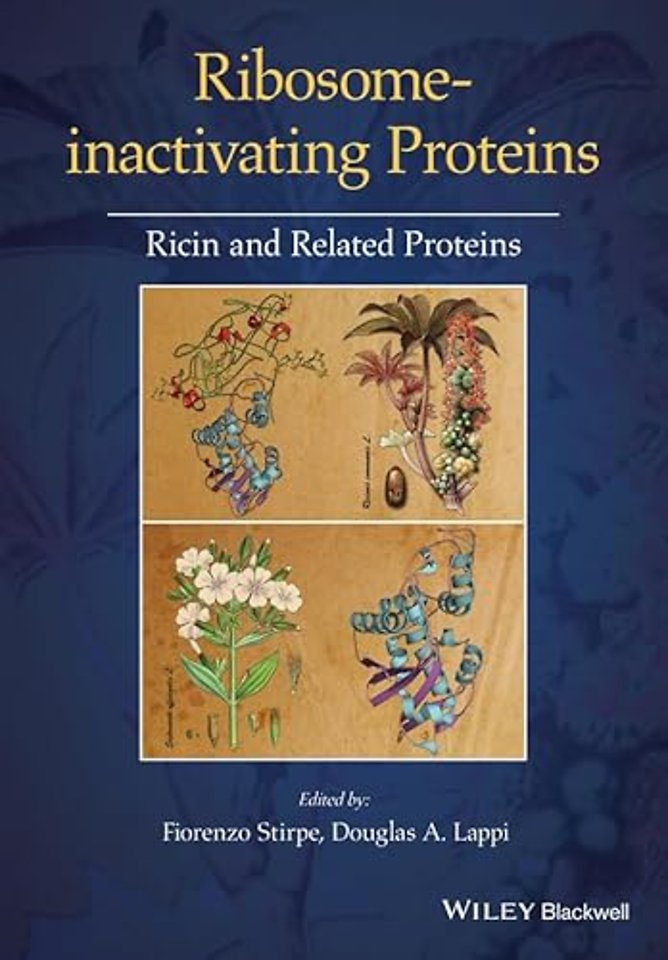
Ribosome–inactivating Proteins – Ricin and Related Proteins
Ricin and Related Proteins
Specificaties
Gebonden, 328 blz.
|
Engels
John Wiley & Sons |
e druk, 2014
ISBN13: 9781118125656
Rubricering
Levertijd ongeveer 15 werkdagen
Samenvatting
This important reference provides up–to–date information on all aspects of ribosome–inactivating proteins (RIPs). Including a list of all known RIPs, their distribution in nature, structure, genetics and chemical and immunological properties, this reference covers mechanisms of action, including the enzymatic activity on various polynucleotide substrates; the interaction with, and entry into cells; the toxicity to animals, including the pathology of poisoning; and the immunomodulatory and allergenic activity. The book further emphasizes the use of immunotoxins and other conjugates in clinical trials for the therapy of cancer and intractable pain.
Specificaties
Inhoudsopgave
<p>Contributors vii</p>
<p>Preface xi</p>
<p>1 Introduction and History 1<br /> Fiorenzo Stirpe</p>
<p>2 Occurrence and Taxonomical Distribution of Ribosome–inactivating Proteins Belonging to the Ricin/Shiga Toxin Superfamily 11<br /> Chenjing Shang, Willy J. Peumans, and Els J. M. Van Damme</p>
<p>3 Ribosome–inactivating Proteins from Phytolaccaceae 28<br /> Augusto Parente, Angela Chambery, Antimo Di Maro, Rosita Russo, and Valeria Severino</p>
<p>4 Ribosome–inactivating Proteins in Caryophyllaceae, Cucurbitaceae, and Euphorbiaceae 44<br /> Tzi Bun Ng and Jack Ho Wong</p>
<p>5 Non–toxic Type 2 Ribosome–inactivating Proteins 67<br /> Pilar Jiménez, Manuel José Gayoso, and Tomás Girbés</p>
<p>6 The Intracellular Journey of Type 2 Ribosome–inactivating Proteins 83<br /> Robert A. Spooner and J. Michael Lord</p>
<p>7 Shiga Toxins: The Ribosome–inactivating Proteins from Pathogenic Bacteria 97<br /> Maurizio Brigotti</p>
<p>8 The Structure and Action of Ribosome–inactivating Proteins 111<br /> Jon D. Robertus and Arthur F. Monzingo</p>
<p>9 Updated Model of the Molecular Evolution of RIP Genes 134<br /> Willy J Peumans, Chenjing Shang, and Els J. M. Van Damme</p>
<p>10 Enzymology of the Ribosome–inactivating Proteins 151<br /> Yaeta Endo</p>
<p>11 A Long Journey to the Cytosol: What do We Know about Entry of Type 1 RIPs Inside a Mammalian Cell? 161<br /> Rodolfo Ippoliti and Maria Serena Fabbrini</p>
<p>12 Ribosome–inactivating Proteins: Pathology from Cells to Organs 178<br /> Gareth D. Griffiths</p>
<p>13 Antiviral and Antifungal Properties of RIPs 198<br /> Gabriela Krivdova, Kira C. M. Neller, Bijal A. Parikh, and Katalin A. Hudak</p>
<p>14 Insecticidal and Antifungal Activities of Ribosome–inactivating Proteins 212<br /> Lúcia Rosane Bertholdo Vargas and Célia Regina Carlini</p>
<p>15 Immunology of RIPs and their Immunotoxins 223<br /> Giulio Fracasso and Marco Colombatti</p>
<p>16 Ribosome–inactivating Proteins in Cancer Treatment 244<br /> Douglas A. Lappi and Fiorenzo Stirpe</p>
<p>17 Nervous System Research with RIP Conjugates: From Determination of Function to Therapy 253<br /> Douglas A. Lappi, Jack Feldman, Dale Sengelaub, and Jill McGaughy</p>
<p>18 Embryotoxic and Abortifacient Activities of Ribosome–inactivating Proteins 270<br /> Wood Yee Chan, Jack Ho Wong, and Tzi Bun Ng</p>
<p>19 The Potential for Misuse of Ribosome–inactivating Proteins 281<br /> Gareth D. Griffiths</p>
<p>Index 287</p>
<p>Color plates appear between pages 116 and 117</p>
<p>Preface xi</p>
<p>1 Introduction and History 1<br /> Fiorenzo Stirpe</p>
<p>2 Occurrence and Taxonomical Distribution of Ribosome–inactivating Proteins Belonging to the Ricin/Shiga Toxin Superfamily 11<br /> Chenjing Shang, Willy J. Peumans, and Els J. M. Van Damme</p>
<p>3 Ribosome–inactivating Proteins from Phytolaccaceae 28<br /> Augusto Parente, Angela Chambery, Antimo Di Maro, Rosita Russo, and Valeria Severino</p>
<p>4 Ribosome–inactivating Proteins in Caryophyllaceae, Cucurbitaceae, and Euphorbiaceae 44<br /> Tzi Bun Ng and Jack Ho Wong</p>
<p>5 Non–toxic Type 2 Ribosome–inactivating Proteins 67<br /> Pilar Jiménez, Manuel José Gayoso, and Tomás Girbés</p>
<p>6 The Intracellular Journey of Type 2 Ribosome–inactivating Proteins 83<br /> Robert A. Spooner and J. Michael Lord</p>
<p>7 Shiga Toxins: The Ribosome–inactivating Proteins from Pathogenic Bacteria 97<br /> Maurizio Brigotti</p>
<p>8 The Structure and Action of Ribosome–inactivating Proteins 111<br /> Jon D. Robertus and Arthur F. Monzingo</p>
<p>9 Updated Model of the Molecular Evolution of RIP Genes 134<br /> Willy J Peumans, Chenjing Shang, and Els J. M. Van Damme</p>
<p>10 Enzymology of the Ribosome–inactivating Proteins 151<br /> Yaeta Endo</p>
<p>11 A Long Journey to the Cytosol: What do We Know about Entry of Type 1 RIPs Inside a Mammalian Cell? 161<br /> Rodolfo Ippoliti and Maria Serena Fabbrini</p>
<p>12 Ribosome–inactivating Proteins: Pathology from Cells to Organs 178<br /> Gareth D. Griffiths</p>
<p>13 Antiviral and Antifungal Properties of RIPs 198<br /> Gabriela Krivdova, Kira C. M. Neller, Bijal A. Parikh, and Katalin A. Hudak</p>
<p>14 Insecticidal and Antifungal Activities of Ribosome–inactivating Proteins 212<br /> Lúcia Rosane Bertholdo Vargas and Célia Regina Carlini</p>
<p>15 Immunology of RIPs and their Immunotoxins 223<br /> Giulio Fracasso and Marco Colombatti</p>
<p>16 Ribosome–inactivating Proteins in Cancer Treatment 244<br /> Douglas A. Lappi and Fiorenzo Stirpe</p>
<p>17 Nervous System Research with RIP Conjugates: From Determination of Function to Therapy 253<br /> Douglas A. Lappi, Jack Feldman, Dale Sengelaub, and Jill McGaughy</p>
<p>18 Embryotoxic and Abortifacient Activities of Ribosome–inactivating Proteins 270<br /> Wood Yee Chan, Jack Ho Wong, and Tzi Bun Ng</p>
<p>19 The Potential for Misuse of Ribosome–inactivating Proteins 281<br /> Gareth D. Griffiths</p>
<p>Index 287</p>
<p>Color plates appear between pages 116 and 117</p>