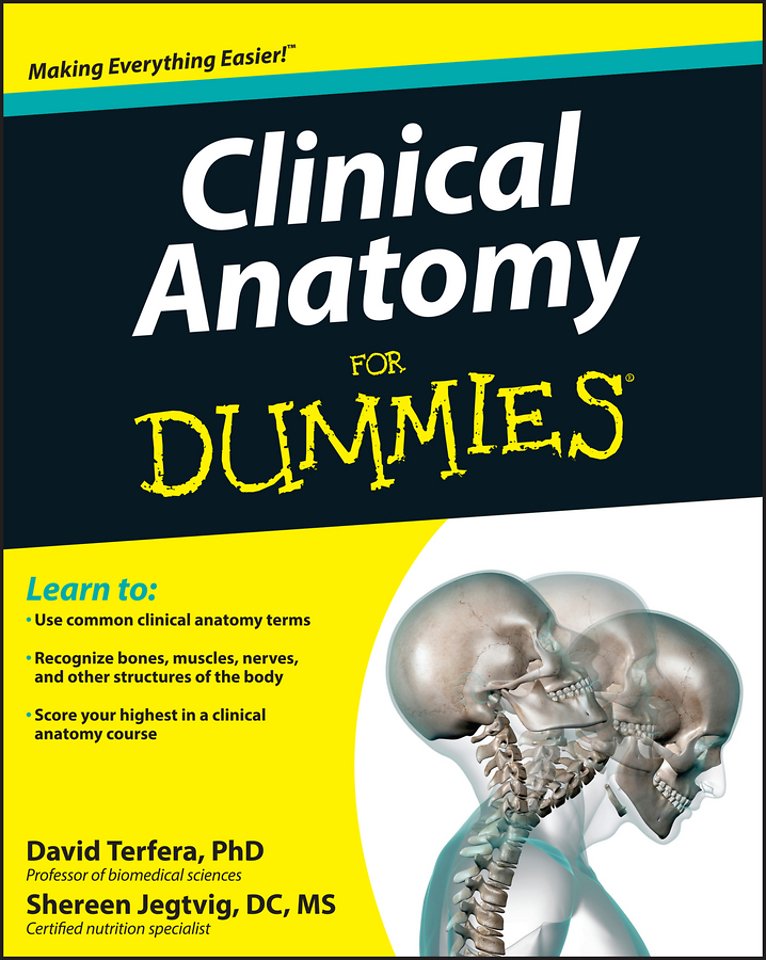
Clinical Anatomy For Dummies
Samenvatting
Your ticket to acing Clinical Anatomy
Clinical anatomy is the study of human anatomy as it relates to clinical practice. Unlike a basic anatomy and physiology course designed to teach general anatomical knowledge, clinical anatomy focuses on specific structures and issues that people may encounter in a clinical setting.
Clinical Anatomy For Dummies presents a friendly, unintimidating overview of the material covered in a typical college–level Clinical Anatomy course. Clear definitions, concise explanations, and plenty of full–color illustrations make Clinical Anatomy For Dummies the most accessible book available to supplement your classroom texts.
Plain–English explanations make difficult concepts easy to grasp
Tracks to a typical college–level Clinical Anatomy course
Features a 16–page color insert
Whether you′re a student or a practicing healthcare worker, Clinical Anatomy for Dummies makes this subject accessible and easy to grasp.
Specificaties
Inhoudsopgave
<p>Part I: Beginning with Clinical Anatomy Basics 5</p>
<p>Chapter 1: Entering the World of Clinical Anatomy 7</p>
<p>Chapter 2: Getting a Grip on Terms Used in Clinical Anatomy 13</p>
<p>Chapter 3: Examining the Integumentary, Musculoskeletal, and Nervous Systems 23</p>
<p>Chapter 4: Moving Along with the Cardiovascular and Respiratory Systems 39</p>
<p>Chapter 5: Looking at the Immune and Lymphatic Systems 49</p>
<p>Chapter 6: Delving into the Digestive, Urinary, and Endocrine Systems 57</p>
<p>Part II: Understanding the Thorax, Abdomen, and Pelvis 67</p>
<p>Chapter 7: Checking Out the Thoracic Cage and Coverings 69</p>
<p>Chapter 8: Assessing the Thoracic Organs 85</p>
<p>Chapter 9: Bellying Up to the Abdominal Wall 105</p>
<p>Chapter 10: Probing the Abdominal Organs 119</p>
<p>Chapter 11: Seeing the Pelvis and the Perineum 145</p>
<p>Part III: Looking at the Head, Neck, and Back 167</p>
<p>Chapter 12: Head of the Class 169</p>
<p>Chapter 13: Seeing, Smelling, Tasting, and Hearing 193</p>
<p>Chapter 14: It s Neck and Neck 219</p>
<p>Chapter 15: Back to Back 239</p>
<p>Part IV: Moving to the Upper and Lower Extremities 257</p>
<p>Chapter 16: Shouldering the Load: The Pectoral Girdle and the Arm 259</p>
<p>Chapter 17: Bending the Elbow and Focusing on the Forearm 277</p>
<p>Chapter 18: Shaking Hands and Grabbing the Wrist 287</p>
<p>Chapter 19: Getting Hip to the Hip and the Thigh 303</p>
<p>Chapter 20: Knowing the Knee and the Leg 319</p>
<p>Chapter 21: Finding the Ankle and the Foot 335</p>
<p>Part V: The Part of Tens 349</p>
<p>Chapter 22: Ten Helpful Clinical Anatomy Mnemonics 351</p>
<p>Chapter 23: Ten Ways to Look into the Body without Cutting It Open 357</p>
<p>Index 361</p>